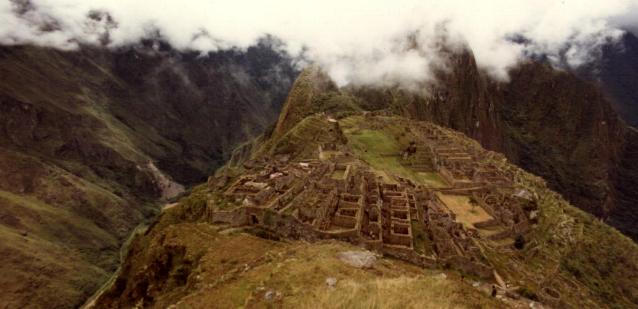
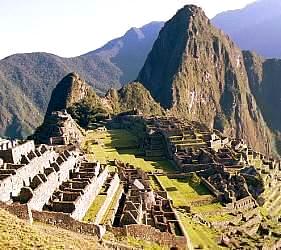
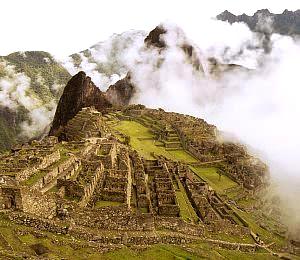
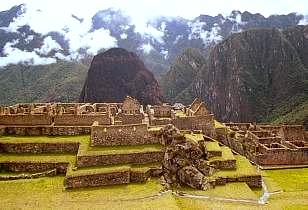
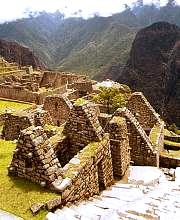
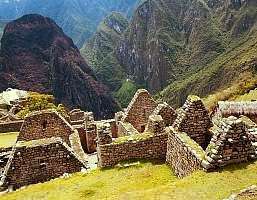
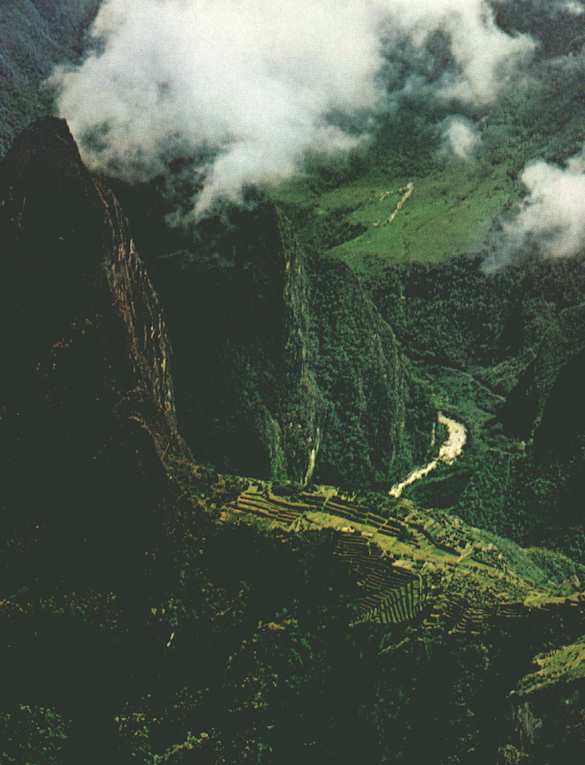
Hanging from the clouds, the citadel of Machu Picchu (unknown to the Spanish conquerors) remained hidden from the outside world until discovered by explorer Hiram Bingham in 1911. The ruins are located about 2400m above sea level on the eastern slopes of the Andes.
Excavations supported by the National Geographic Society and Yale University drew back the green veil of jungle to reveal the most spectacular remnant of the Incas vast empire ever found intact. Scores of sparkling granite shrines, fountains lodgings, and steep stairways encrust the saddle between pinnacles of some 2,000 feet above the Amazon-bound Urubamba River in Peru.
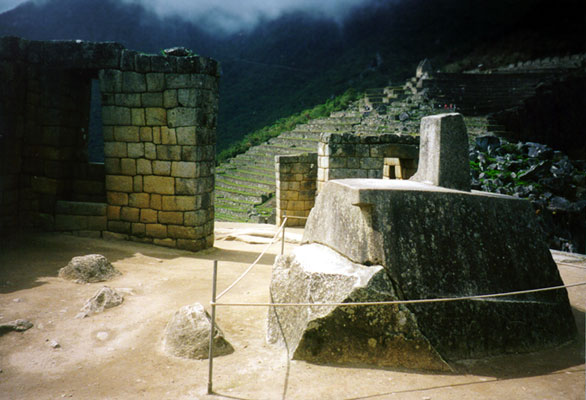
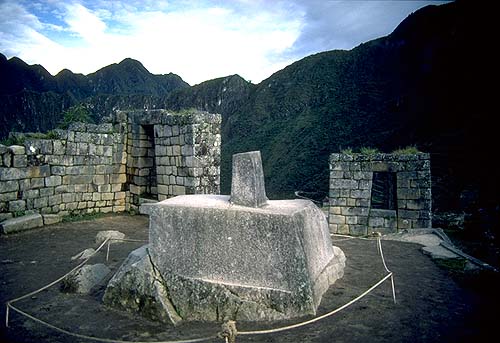
Here the "Sons of the Sun," as the Inca lords called themselves, worshiped their host of gods, including the mighty Inti, who personified the sun itself. A sacred rock is called the "hitching post of the sun," reflecting a tradition that worshipers once tethered the god to it, lest he stray too far from their domain.
Bingham speculated that a remnant of Inca nobility took refuge here after the Spaniards dismembered their realm in the 1500's. Later investigators concluded that it was a military garrison (oddly, most of the skeletal remains found in the city were those of females). In any case, sustaining the mountaintop aerie without an empire apparently proved impossible. Its occupants eventually melted away into the jungle, which concealed Machu Picchu (known to the Incas as Vilcapampa) from outsider�s eyes for nearly four centuries. Its spectacular setting on a high precipice between steep mountain peaks has made it one the most famous archaeological monuments in the world.
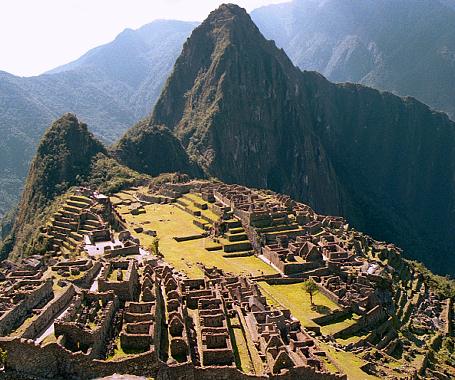
A grassy central plaza divides Machu Picchu. To the left is the upper urban area that contains the most interesting and important buildings in Machu Picchu, including those with the most religious significance. To the right and extending downhill is the more mundane lower urban area. The peak behind is Huayna Picchu. This is a stunning site in either bright sun or when cloud sweeps in across the Andes.
Machu Picchu is best known for its architecture, which combines fine stone buildings with extensive agriculture terraces, creating the appearance of a settlement literally carved out of the mountain sides. The style of its buildings and pottery as well as its careful planning suggest that the town was built under the supervision of the Inca State, which was centred at Cuzco. Perhaps the most famous feature of the site is a carved natural stone, known as Intihuatana, enclosed by curved walls of dressed stone with trapezoidal windows. The stone and its complex of surrounding walls are probably related to the sun religion of the Inca as well as to their veneration of certain natural stones.
|