| Model 931 Equasonne | ||||||||||||||||||||||
![]() |
||||||||||||||||||||||
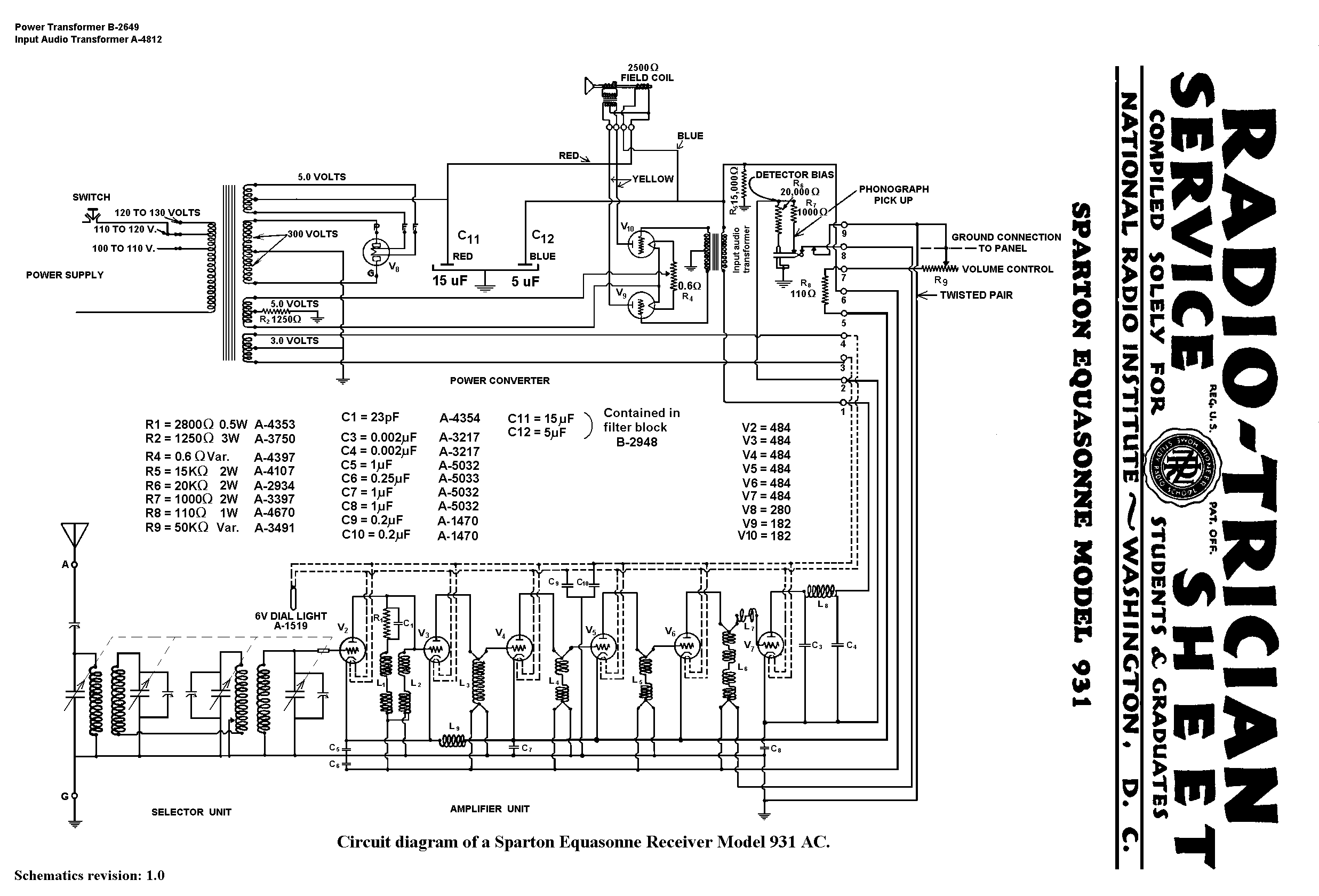
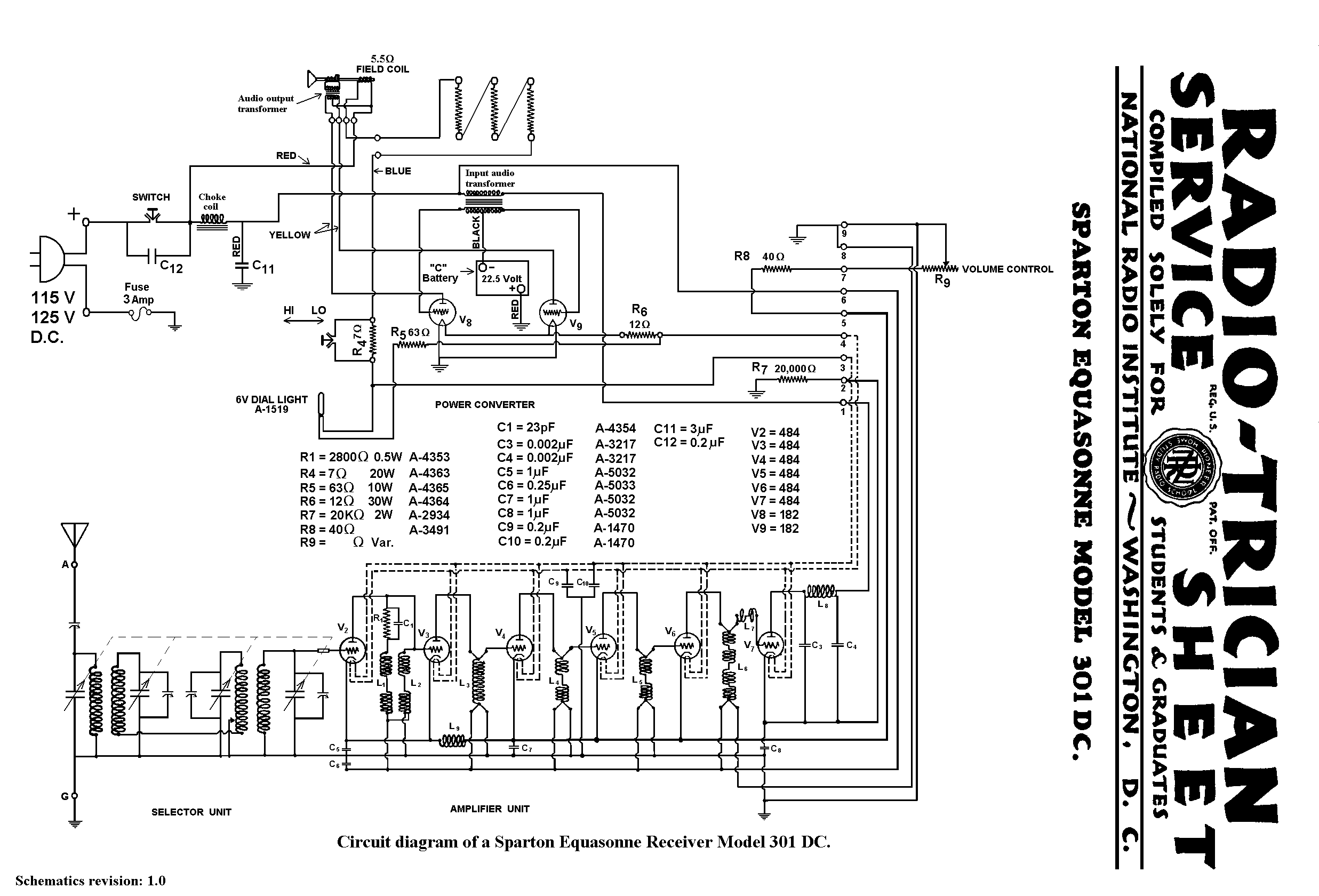
| Download schematics for the 931 AC model Download schematics for the 931 DC model Selector RF Amplifier Power converter Speaker Tubes Service Notes |
||||||||||||||||||||||
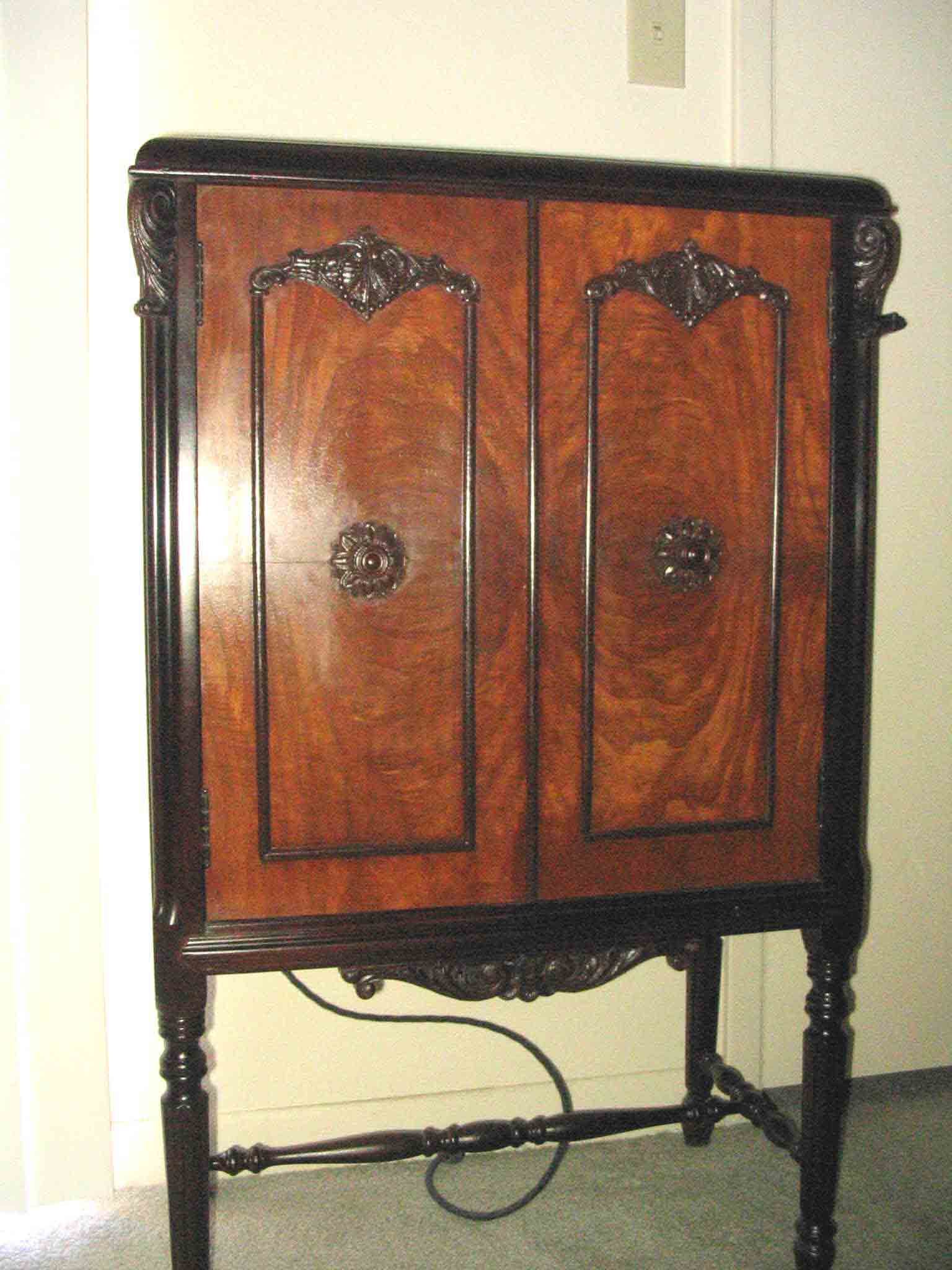
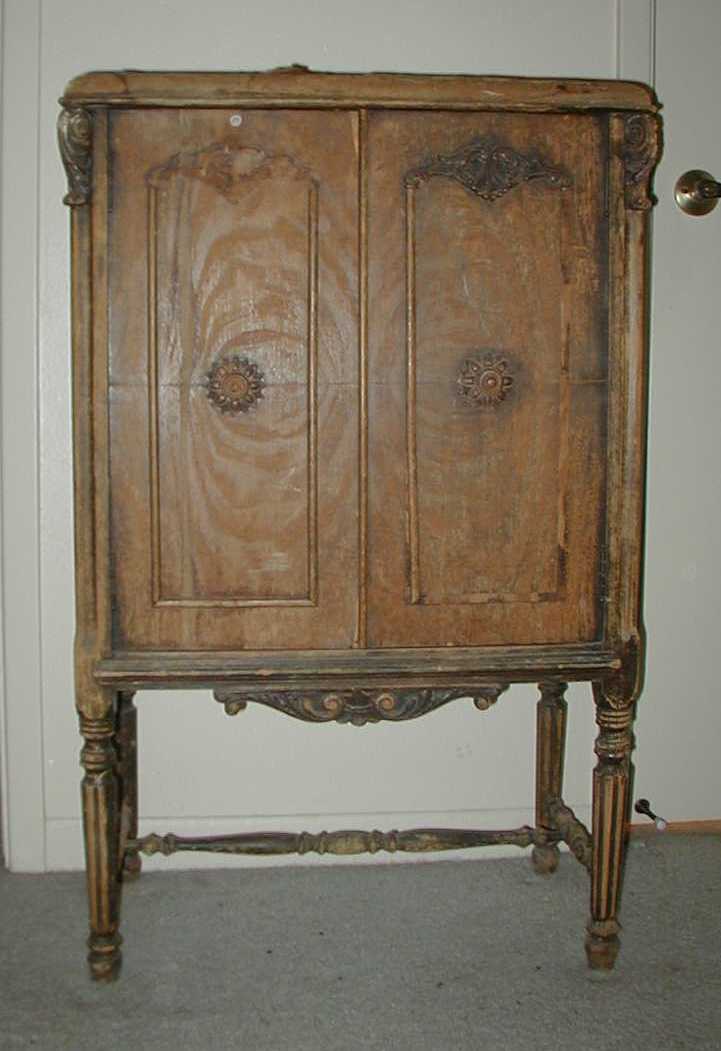
| A 931 Equasonne, photo courtesy of Clay Turner. | ||||||||||||||||||||||
![]() |
||||||||||||||||||||||
![]() |
||||||||||||||||||||||
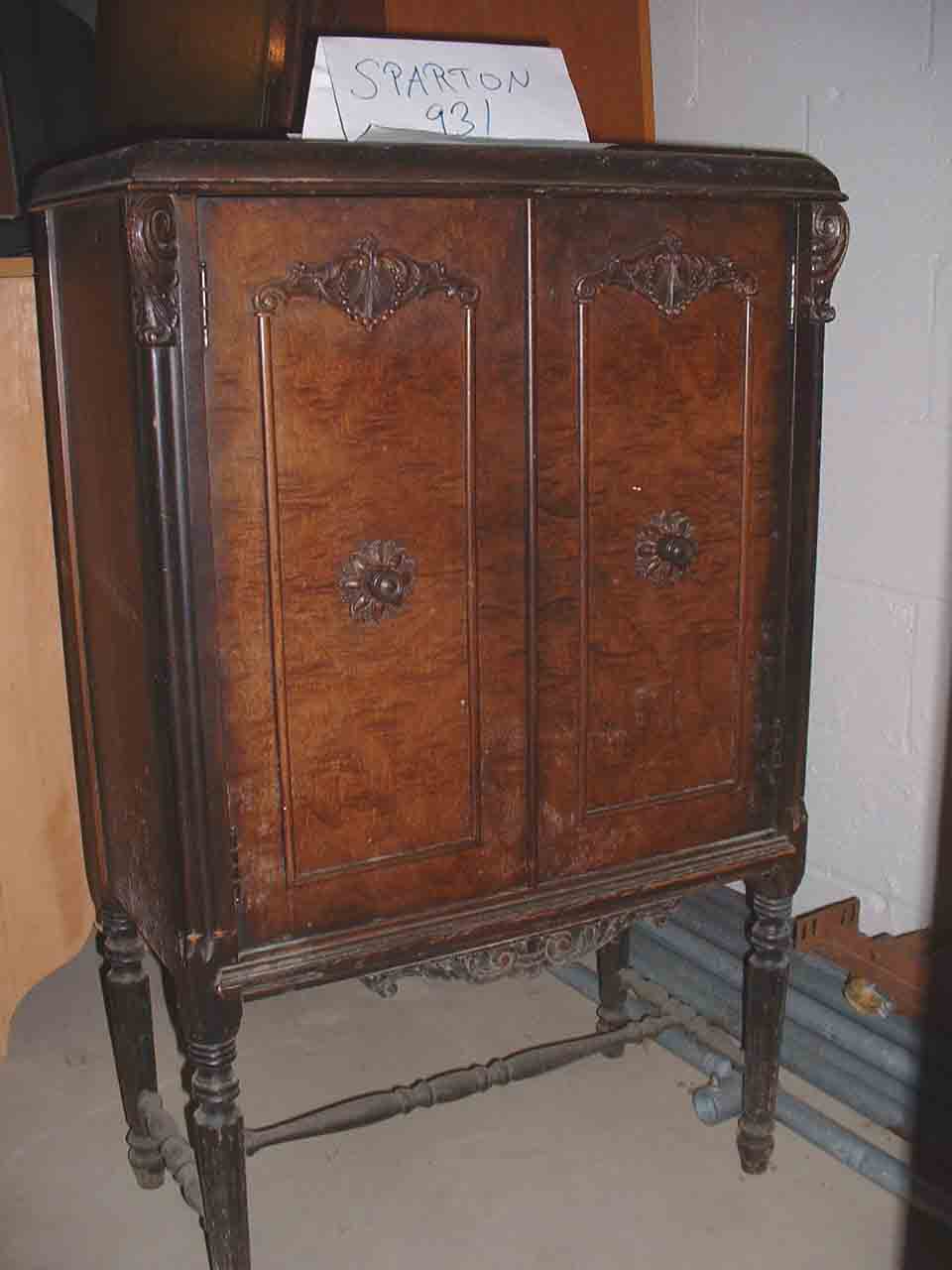
| The cabinet of my 931 Equasonne, in desperate need of some restoration. | ||||||||||||||||||||||
| The cabinet of my 931 Equasonne after restoration. | ||||||||||||||||||||||
| The model 931 (manufactured 1930-31?) is very similar to the model 930 which it replaced. The cabinets differ a bit, the 931 is more ornate. The electronics of the 2 models are very similar and differ mainly in the construction of the filter cirucit in the power converter unit, the 931 taking advantage of larger value primative wet electrolytics that had become available There are also some minor differences in the RF amplifier unit circuit and selector units. The RF Amplifier unit of the 931 is identical with that found in virtually all models, AC and DC. The selector unit of the 931 is identical to that of Models 301, 591, and 593 (Both AC and DC models). The AC model of the 931 is designed for use with an alternating current power supply. A switch on the power transformer allows you to adjust the set to operate on one of three possible AC line voltage ranges (100-110 Volts, 110-120 Volts, or 120-130 Volts). The DC model was designed for use in areas where household power was supplied as direct current, presumably no longer the case anywhere in the Continental US. The power converter unit of the DC model is completely different from that of the AC model (obviously), but in all other respects, the two versions of the 931 are the same. The DC power converter does not require a rectifier tube, or a filter capacitor section, as it has no need to convert AC volts to DC. The DC model still contains a pair of 182 power output tubes, but does not feature a phono jack as does the AC Model. Thus the power supply of the DC model can easily be distinguished from that of the AC model as it contains only 2 tubes, while that of the AC model contains 3. As far as I can tell, the chassis of the 931 DC is identical to that of the 301 DC. The two models differed only in the nature of the cabinet in which they were housed. |
||||||||||||||||||||||
![]() |
||||||||||||||||||||||
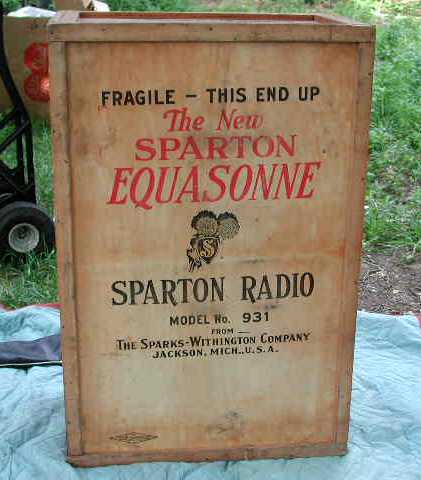
| Ever wonder how a Sparton Equasonne radio found its way from the factory to its new home? This fascinating glimpse into the past was kindly provided by Sharon Mayor. | ||||||||||||||||||||||