|
Parts of an MP3 Player
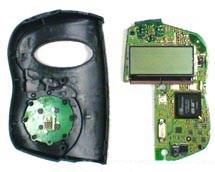
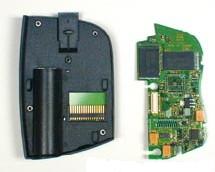
A typical MP3 Player is made up of
various components such as Data Port, Memory, Microprocessor,
Digital Signal Processor (DSP), Display, Playback Controls, Audio
Port, Amplifier and Power Supply.
The player plugs into your computer's USB port or
parallel port to transfer data. USB-based players transfer data many
times faster than those that use the parallel port. The MP3 files
are saved in the player's memory. Various memory types include
Internal Flash memory, Compact Flash cards, Smart Media cards,
Memory Stick, Internal micro drive, Iomega Clik! removable media,
etc.
With the exception of the last two, these are all
types of solid state memory. The advantage to solid state
memory is that there are no moving parts and no moving parts means
better reliability and no skips in the music. |
|
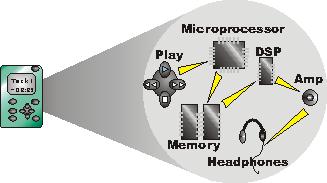
The microprocessor is the brain of the player. It monitors user
input through the playback controls, displays information about the
current song on the LCD panel and sends directions to the DSP chip
that tells it exactly how to process the audio.
The DSP pulls the song data from memory, applies any special
effects, or EQ, and streams it to the amplifier. The DSP runs a
decompression algorithm that undoes the compression of the MP3 file
and then a Digital-to-analog converter turns the bytes back into
waves.
The amplifier boosts the strength of the signal and sends it to the
audio port, where a pair of headphones or ear buds are connected.
|