
|
|
|
|
|
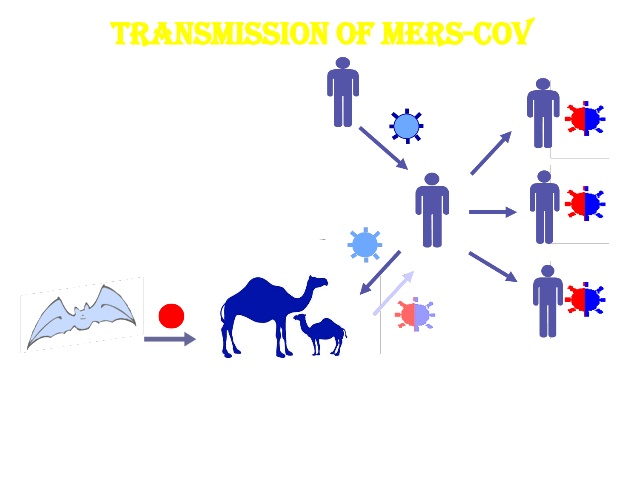
FAQs:Where is MERS occurring?The following 26 countries have reported cases of MERS: Iran, Jordan, Kuwait, Lebanon, Oman, Qatar, Saudi Arabia, the United Arab Emirates, and Yemen (Middle East); Austria, France, Germany, Greece, Italy, Netherlands, Turkey, and the United Kingdom (UK) (Europe); Algeria, Tunisia and Egypt (Africa); China, Malaysia, Republic of Korea, the Philippines and Thailand (Asia); and the United States of America (Americas). What are the symptoms of MERS? How severe is the syndrome?A typical case of MERS includes of fever, cough, and/or shortness of breath. Pneumonia is a common finding on examination. Gastrointestinal symptoms, including diarrhoea, have also been reported. Severe illness can cause respiratory failure that requires mechanical ventilation and support in an intensive‐care unit. Some patients have had organ failure, especially of the kidneys, or septic shock. The virus appears to cause more severe disease in people with weakened immune systems, older people, and those with such chronic diseases as diabetes, cancer and chronic lung disease. Transmission from animals to humans It is not yet fully understood how people become infected with MERS‐CoV, which is a zoonotic virus. It is believed that humans can be infected through direct or indirect contact with infected dromedary camels in the Middle East. Strains of MERS-CoV have been identified in camels in several countries, including Egypt, Oman, Qatar and Saudi Arabia. Transmission from humans to humans The virus does not appear to pass easily from person to person unless there is close contact such as providing clinical care to an infected patient while not applying strict hygiene measures. This has been seen among family members, patients, and health‐care workers. The majority of cases have resulted from human-to-human transmission in health care settings. Yes, but apparently only to a limited extent. The virus does not seem to pass easily from person to person unless there is close contact, such as occurs when providing unprotected care to a patient. There have been clusters of cases in health‐care facilities, where human‐to‐human transmission appears to be more efficient, especially when infection prevention and control practices are inadequate. Thus far, no sustained human-to-human transmission has been documented. Can a person be infected with the MERS virus and not be ill?Yes. Infected persons with no symptoms have been found because they were tested for MERS‐CoV during follow‐up studies of contacts of people with MERS infection. It is not always possible to identify patients with MERS-CoV early because the early symptoms are non-specific. For this reason, all health care facilities should have standard infection prevention and control practices in place for infectious diseases. No vaccine or specific treatment is currently available. Treatment is supportive and based on the patient’s clinical condition. |
Additional Information:Below is a picture of where MERS is present: 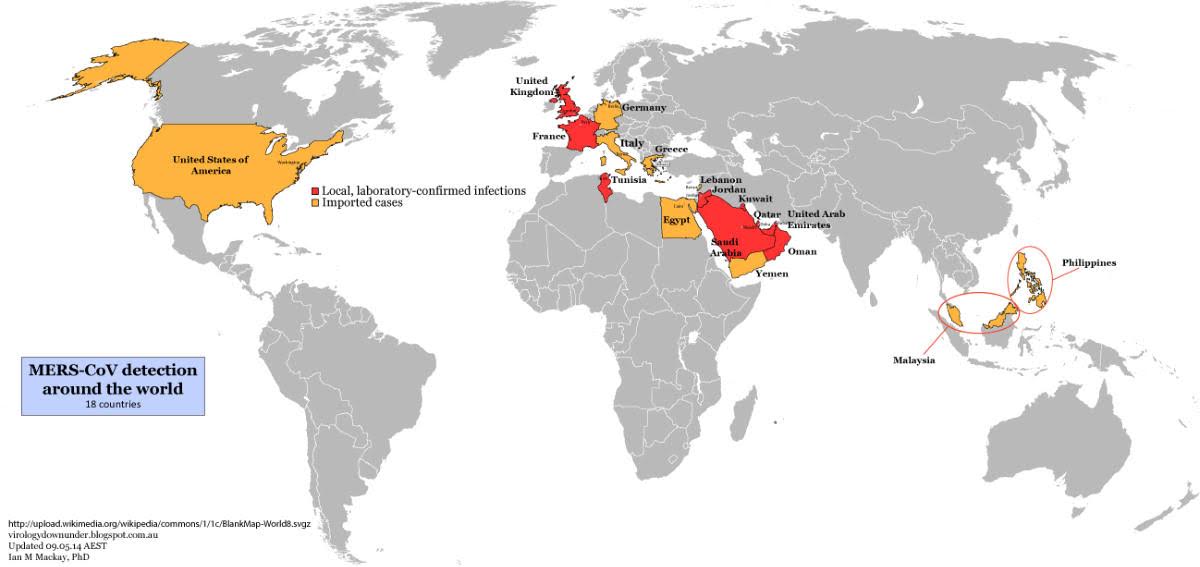
|