






(Coming soon!)
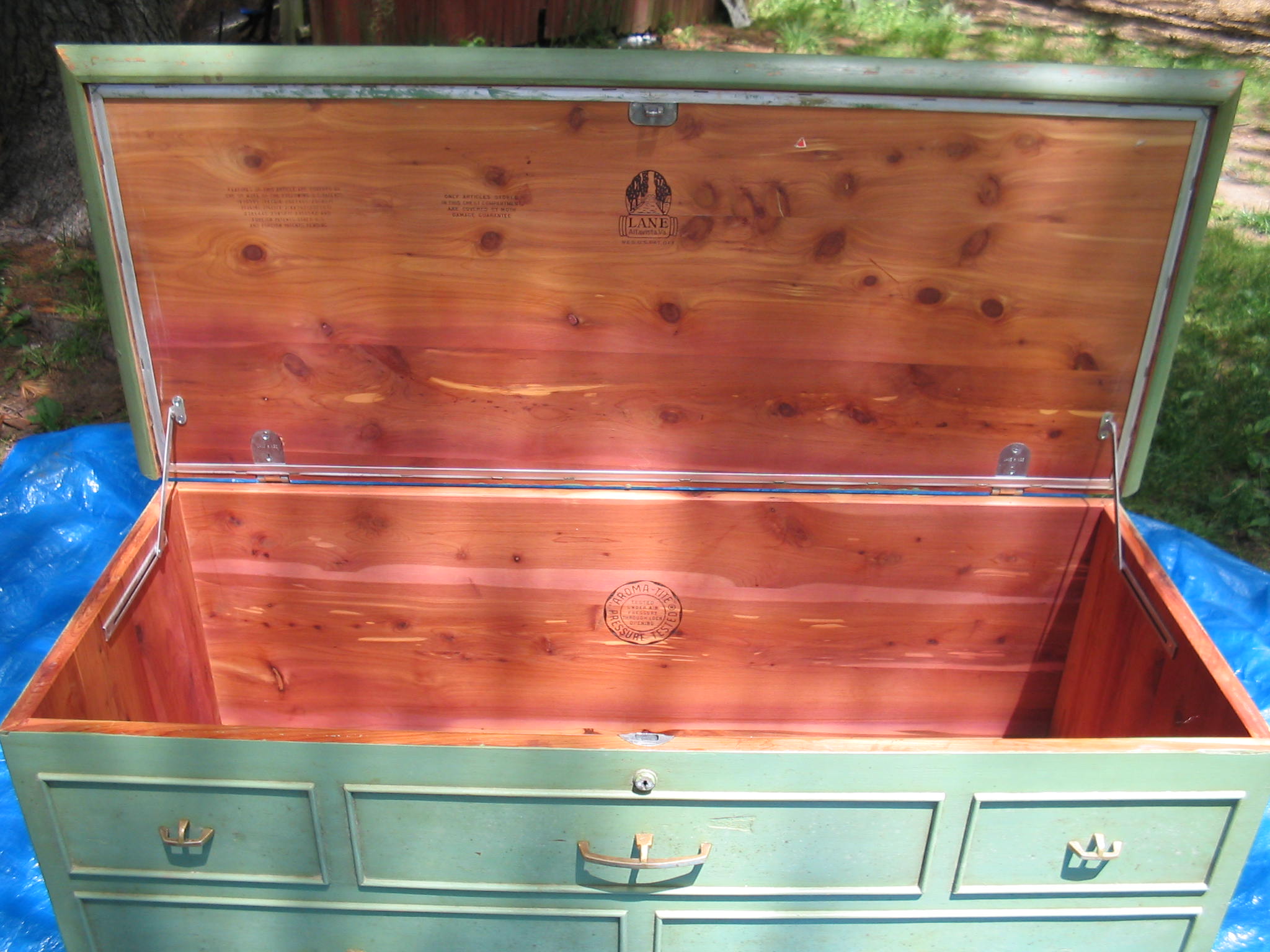
HISTORY OF THE HOPE CHEST
"The Dowry Chest, also known as Hope Chest or Bride's Chest, was and still is a traditional and functional component of American culture. [T]he most popular American dowry chests were filled with linens, laces, jewelry, letters, money, medicinal-herbs, clothing for future children, and even important documents noting marriages, births, and other family histories.
The parents or fiance of the future bride constructed the dowry chest well in advance, usually when the girl was ten years old. [T]he dower chest was built with the sturdiest wood, usually pine, poplar, and walnut. Three to four feet long, these chests were kept in the living room or bedroom and were often used as steps to a high bed, benches, and even tables.
Despite their functional purpose, dowry chests were ornately decorated. Most were painted blue, green, or brown with daisies, tulips, stars, birds, hearts, angels, and unicorns added for design. The size and beauty of the dowry chest indicated the bride's taste and wealth. Most chests were inscribed with the maiden's name and date of presentation or marriage. More prominent in rural settings, the dowry chests made today continue the American custom of keeping safe family heirlooms and histories."
From the Index of American Design.
