
Nepal's Fighting Men
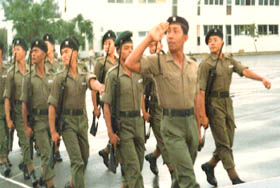
| "Gurkhas", Nepalese mercenaries, have served under the British flag since 1815. They are not a tribe, but come only from the Magar, Gurung, Limbu and Rai tribes of central eastern hill districts. They got their name from the principality of Gurkha, whose troops unified Nepal in the 18th century. Soon afterwards these soldiers won the respect of the British by repelling their attempt to invade from India. |
|
|
There are many tales about the bravery, toughness and loyalty of the Gurkhas. In 1890
one Lieutenant Swinton was killed when a bullet ricocheted off the hard head of his
Gurkha orderly. The mountain men had never seen the ocean untill sent to Europe during
World War I. They wondered how the troop ships could find their way when " the trail
is all behind us and nothing in front".
In World War II, Gurkhas distinguish themselves in hand to hand fighting with their curved Khukuri (knives) in North Africa, at Monte Cassino in Italy, and in Burma 9000 Gurkhas died in that war and 24000 were severaly wounded. They earned 2700 decorations and mentions for gallantry. Gurkhas have own 13 Victoria crosses, Britain's highest millitary medal. After India gained Independence, the Gurkha regiments were devided between the Indian and the British armies. Those with the British army have seen service in the falklands war, in Belize, Cyprus and the Congo. Pensions paid to retired Gurkhas are an important source of foreign exchange in Nepal. |
Prev .. Main Page .. Next