ACHIEVEMENTS & VISIONS
| Home | |
| Sons & Daughters |
Education
The early years of Maulvi Ferozuddin's education began at home. His father taught him "Bismillah",
and this was a beginning of a very long journey, indeed. When his father passed
away, his uncle and brother helped him study a few beginner's books.
In 1878, he was admitted to Oriental College. He possessed a good memory from the very beginning. In his spare time, he used to read books and reflect upon ideas. Then at college, he discussed what he had learnt with his teachers and sought solutions from them.
He was really good at translating Farsi passages to Urdu at college. One day he came across a translated passage done by a class fellow of his. He was very impressed by his colleague's work. He praised it and discovered that the colleague had gone out and bought a book with all the translations in it and had simply copied them out. Maulvi Ferozuddin thought this was very unbecoming of his colleague and was nothing short of cheating. He was unimpressed by this sort of behaviour and found it unappealing. From an early age, Maulvi Sahib had a sense of dignity, honesty and responsibility that surpassed those of his colleagues.
Maulvi Sahib's brother Fatehdin had a friend called Munshi Buni Buksh Khan who had once been a student of Maulvi Sahib's father. He used to visit their house frequently. Fatehdin Sahib asked Munshi Buni Buksh to teach his younger brother Ferozuddin; Farsi translations. They had frequent Mehfils where various verses of poetry were discussed. Once they came across a very difficult verse and no one was able to translate it correctly. Maulvi Ferozuddin, however, spoke up and translated it beautifully. On hearing this, Munshi Buni Buksh exclaimed, "Aaj to yeh ladka hum sub se baazi le gaya".
The Newspaper
His brother Fatehdin died in 1879, leaving his only son who was at the time, only four years old. Therefore, Maulvi Ferozuddin had to take over the newspaper. Fatehdin Sahib had been in a debt of Rs. 1900 and was paying an interest of Rs.12 each month on a house he owned. Maulvi Ferozuddin believed that if someone died without paying debts off, all his good deeds were given to the creditor. Hence, he paid off all his brother's debts within a year. This shows his family commitment and the feeling of obligation, responsibility and love for his family members. In this, there is a deep lesson for us all as there is in most of the things small or big that Maulvi Sahib did.
Hajj
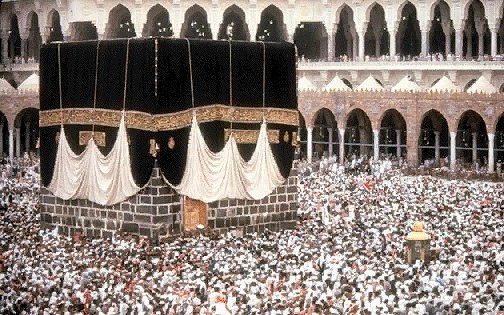
He performed Hajj sometime in 1930. Maulvi Sahib did not want to show off this fact to everyone he knew that he was going on hajj as he thought most people made a big deal out if it started referring them to as Hajjis. Only his family knew of his intentions. Abdul Hameed Sahib, his son, arranged for the passport. Maulvi Sahib's companion was his wife's elderly uncle. He was called Kaka Abdul Samd and was a hundred years old at that time.
The two set off by train from Lahore to Karachi. Maulvi Sahib was taking care of Kaka Abdul Samd's boarding and meals. However, he felt that on such a sacred journey as their's, Kaka Sahib should at least pay the travelling fare so that he would not feel that he was performing hajj wholly on someone else's expense. Here again, we are reminded of his foresight and thoughtfulness.
On reaching Karachi, Maulvi Sahib stayed with a friend, where he gave some money to buy clothes for the poor people. They wore the traditional dress "Ihram" and took some cloth for "Kafan" which normally is taken on hajj so that it can be dipped in the Holy Water called Zam Zam.
In Lahore, they had been vaccinated against small pox and in Karachi, they got vaccinated against plague. They stayed in Karachi for three days and then boarded the ship to Jeddah.
The Hajj was performed successfully and on his return, Maulvi Sahib thanked Allah for giving him the opportunity to go on this sacred journey and to have completed it successfully.
His First Book
His first published book was the Urdu translation of Hazrat Daata Ganj Buksh Sahib's book "Kushuf-ul-Majoob". He wrote many books, including "Yaadgarey Saadi" and "Tareekhay Punjab" and won many prizes for his efforts.
Book Publications
He started publishing books on the request of the Director of Education at that time; Mr William Bell. He published books like Map of the World and British Empire. He also made the first Urdu globe.
Feroz-ul-lughat
The series of dictionaries under the name of Feroz-ul-lughat were all started by Maulvi Sahib. Abdul Hameed Sahib has played a phenomenal role in the compilation of these dictionaries. They are used throught out the world today.
Translation of the Holy Quran
Maulvi Sahib did the translations of Quran Majeed and also published them in the Feroze printing press.
Eastern Times
Muslim Outlook was the first English newspaper for the Muslims. However, after it stopped printing and the public had no English newspaper for Muslims, Eastern Times became a reality. It was the voice of the Muslims in a language that was understood the world over.
House of Ferozsons
More than than 111 years ago in 1894, Maulvi Ferozuddin established the business
House of Ferozsons through the creation of a publishing House - Ferozsons
Limited in Chohotay Mufti Baqar inside the historical walled city of Lahore. From the beginning, Maulvi Ferozuddin's vision of business extended
beyond wealth creation, and firmly incorporated the enrichment of human life in
the under-developed South Asian region.
Thus the publishing house was created not only as a means of creating wealth,
but as one of spreading literacy and education among the masses of the
sub-continent.
In 1904, the company offices and printing plant then moved to its own purpose built premises on Circular Road, Sheranwala Gate. Ferozsons opened its first bookshop in 1947 on the Mall in Lahore which is also the company's headoffice.
Now Ferozsons Ltd are Pakistan's largest and oldest publishers, booksellers and printers. The operations include publishing, printing and distribution of books, stationery, magazines and gift items. For more information, please visit the official website at: http://www.ferozsons.com.pk/
Fatima Memorial Hospital 
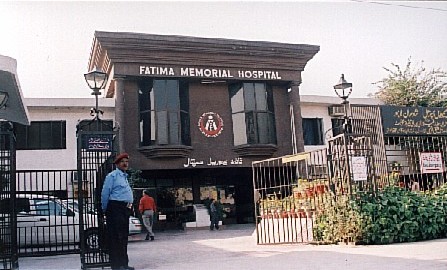
Maulvi Sahib divided all his properties amongst his children during his lifetime, fair-minded, that he was. He also left aside money as his wish was to make a trust hospital where poor people could be treated freely. His son, Dr Waheed Sahib trustee of the Ferozsons Trust and his wife Begum Saeeda Waheed, founder of Fatima Memorial Hospital have done a lot of work in building and maintaining Fatima Memorial Hospital in memory of Kaneez Fatima, Maulvi Sahib's wife who died in child labour due to the lack of proper medical facilities. The hospital started out as a maternity hospital but is now a general hospital. For further information on the hospital, please visit: http://www.fmhospital.org/Final_frame.htm
In the same spirit, Ferozsons Laboratories Limited was created in 1956 as one of the first pharmaceutical manufacturing facilities in the fledgling state of Pakistan, to ensure a constant and reliable source of quality medicines for the people of the nation. For further information on Ferozsons Laboratories please visit: http://www.ferozsons-labs.com
The Legend
Maulvi Ferozuddin received the title of "Khan" due to the love he had for Daata Gunj Buksh and his frequent visits to Daata Sahib Lahore where he did a lot of work for the maintenance and renovations and the way he helped the poor people who visited the place.
He is now buried at Daata Sahib, only a few feet away from Daata Gunj Baksh. Maulvi Sahib's grave is always laden with fresh flowers as tens of thousands of people pray Fatiha for him everyday. This simple, pious, wonderful man was loved by many during his lifetime and is remembered with love so many years after his death.
We, his children can only aspire to be like him. He has left us with a legend...
In his words:
"Our honour is equal, if not more, in value and worth to our lives"
and
"Our new generation is not familiar with the aspects of spirituality and God"
I believe that his life is a good model for us to follow. He was a great man and touched the world in a profound way. He gave purpose to his life and left his mark on the world, which makes him an extraordinary person. May Allah Bless his soul! Ameen.