 |
|
|
|
|
|
|
|
|
|
|
|
|
|
|
|
|
|
|
|
|
|
|
|
|
|
|
|
|
|
|
|
|
|
|
|
|
|
|
|
|
|
|
|
|
|
|
|
20th Pursuit Group Part 2 plus the 7th Bomb Group |
|
|
|
 |
|
|
|
Rebuilding site.
Please check at a later day |
|
|
|
 |
|
|
 |
|
|
|
|
|
|
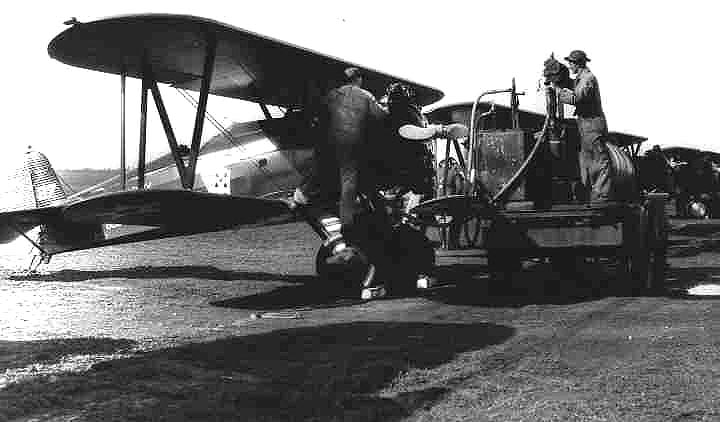
A Boeing P-12 from the 77th Pursuit Squadron, takes on fuel before going on a flight. (circa 1932, SAMCC Photo) |
|
|
|
|
|
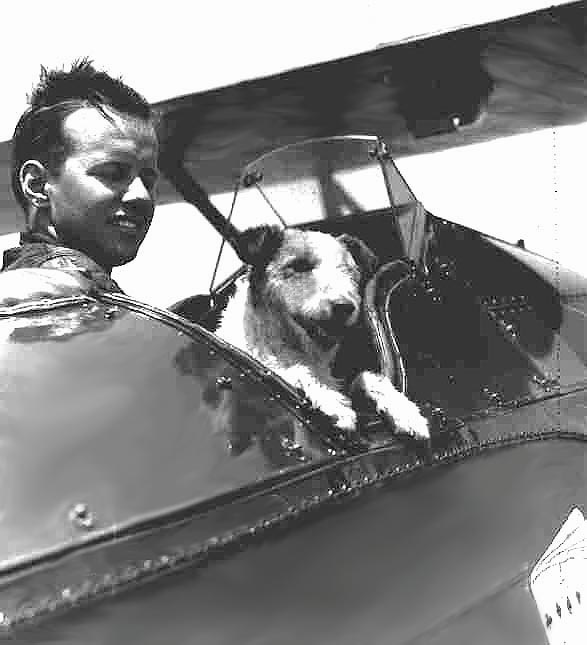
�� A young pilot from the 77th with his friend in the cockpit of a P-12.� It's not known if the little dog ever went along for a ride.� If he did, he would be able of enjoy the wind in his face, which dogs seem to like� (circa 1932, SAMCC Photo) |
|
|
|
|
|
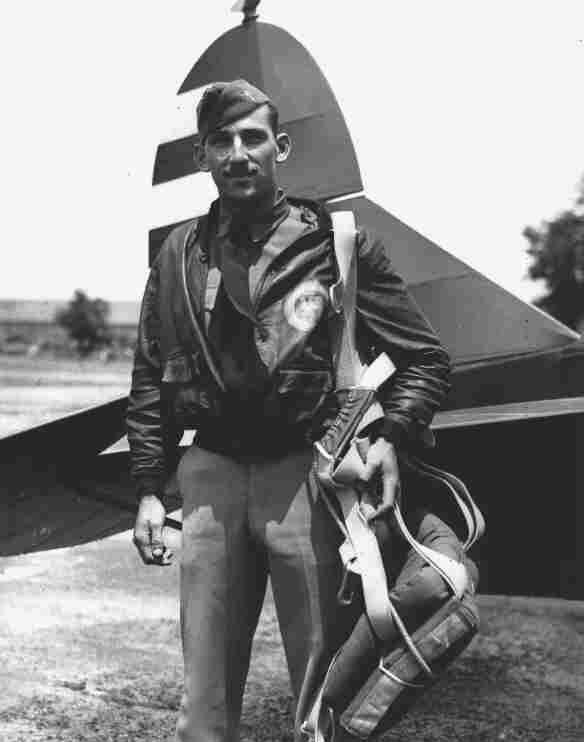
� This unidentified pilot from the 55th Pursuit Squadron is either going on a flight, or just� returned.� The aircraft in the background appears to be a Fokker of some sort.
���� In October 1932, the 20th Pursuit Group packed up and left Mather Field.� The aircraft were flown to Barksdale, Louisiana.� Most of the personnel also went to Barksdale, but they traveled by ship on the U. S. Grant.� The Grant sailed through the Panama Canal and up to New Orleans.� When the ship stopped in Panama, The 20th lost the 80th Service Squadron to the 19th Composite Wing at France Field, Panama.
���� Others went to the Philippines and some shipped to other bases in the states.� Major Tinker was transferred to March Field, California, where he would become the commander of another pursuit group.
���� This would not be the last time Tinker would come to Mather Field.� In 1935 he would be a lieutenant colonel and the Commander of the 7th Bomb Group at Hamilton Field, California, and return to a different Mather Field.� (circa 1932, SAMCC Photo) |
|
|
 |
|
|
|
|
|
 |
|
|
|
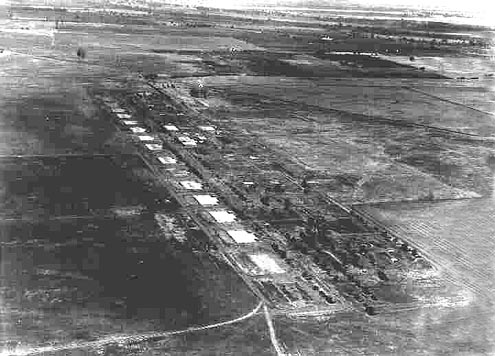
� In September of 1933, it was apparent that Mather Field was on its way to becoming a home for jackrabbits and ground squirrels again.� The bids were opened for seventy-four buildings to be dimolished on the old airfield�� The job went to Globe Wrecking Company of Chicago.� All buildings would be torn down� except for six hangars, which were built with steel frames.� These were dismantled and were apparently shipped to Hamilton Field and reassembled there.� Globe had been given six months to complete the job.� The base water tower was the last structure to come down.� When if fell in April 1934, everything was hauled away.� All that remained was the cement blocks that the buildings sat on and the cement floors of the hangars. (circa 1934, SAMCC Photo) |
|
|
|
 |
|
|
|
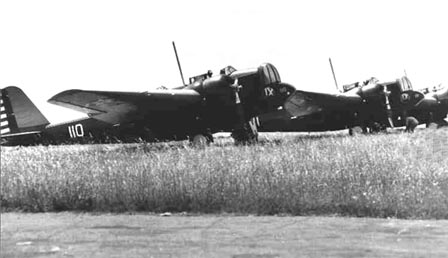
�� On Monday, May 20, 1935, Lieutenant Colonel Clarence L. Tinker was back at Mather Field.� At this time he was Commander, 7th Bombardment Group, Hamilton Field, located north of San Francisco in Marin County, California.� Tinker brought with him twenty-four Martin B-12 twin engine bombers.� These aircraft were the latest in bombers. The B-12 flew at 207 miles per hour, and was faster than most of the pursuit aircraft of the day.
���� Besides the bombers, the 7th brought along sixty-six trucks, motorcyceles, reconnaissance cars, and ambulances that arrived by road from Hamilton Field.
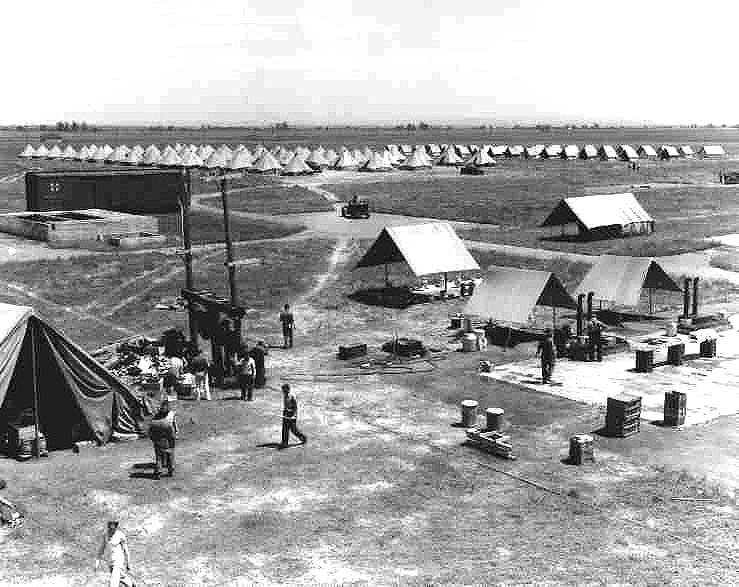
���� The reason fo the trip to Mather was that the 7th was having a field exercise and Mather was an ideal place to train.� The 70th Service Squadron arrived about a week before the rest of the personnel would arrive to set up tents for living quarters and other needed shelter.
���� The air crew members would be doing a lot of flying.� On one of the assignments, Tinker had the crews fly 500 miles along a radio beam and making only three stops along the way.� These radio beams were transmitted from stations along the route and picked up by the aircraft's radio.� When they completed the 500 miles out, they had to turn around and do the same thing back to Mather Field.� (circa 1935, SAMCC Photo)
���� |
|
|
|
 |
|
|
�� This is the tent city where the 7th Bombardment Group lived for the ten days they were on a field exercise at Mather in May of 1935.� (circa 1935, SAMCC Photo) |
|
|
|
|
|
|
��� Mather Field/Air Force Base had a long and successful history.� Just before the United States entered World War II, Mather Field began rebuilding.� The mission of the base has mostly been training.�� First in 1918, the airfield trained pilots in 90 horsepower Curtiss "Jenny" aircraft.� At the end of the life of Mather Air Force Base, navigation students were training in powerful Boeing T-43 Jet navigation Trainers.
���� In 1941, before the rebuilding was completed, the Army Air Corps was training pilots again.� Later, navigator training was added.� Navigators were training at Mather Air Force Base up to just before the base was closed in 1993, and turned into a civilian airport.
���� Building this web page has been a pleasure for me.� I hope you have received as much pleasure viewing it.� Thanks for visiting. |
|
|
|
��� I would like to thank Richard Tsuda for helping me put this together. |
|
|
 |
|
|
|
Please Sign My Guestbook |
|
|
|
|
Return to home page |
|
|
E-mail |
|
|
|


|
|
|
|
|
|
|
|
|
|
[email protected] |
|
|
|
|
Your entry in the guestbook will appear within 24 hours |
|
|
|
|
|
|
You are visitor number |
|
|
|
 |
|
