
MALAYSIA OUR NATION / Johor / Malacca

Johor is a Malaysian state, located in the southern portion of Peninsular Malaysia. It is one of the most developed states in Malaysia. The state capital city and royal city of Johor is Johor Bahru, formerly known as Tanjung Puteri (Malay for Princess's Cape) and Muar respectively. The old state capital is Johor Lama.
Johor is surrounded by Pahang to the north, Malacca and Negeri Sembilan to the northwest, and the Straits of Johor to the south which separates Johor and the Republic of Singapore. The state also shares a maritime border with the Riau Archipelago from the east and Riau mainland on the west by the South China Sea and the Strait of Malacca respectively, both of Indonesian territories.
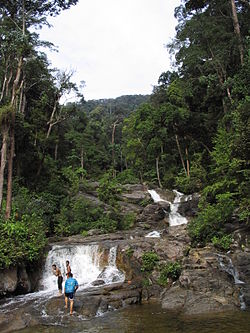
GUNUNG LEDANG

DANGA BAY

TANJUNG PIAI

LEGOLAND
GUNUNG LEDANG
Mount Ophir, or more commonly known by its Malay name, Gunung Ledang, is a mountain situated in the Gunung Ledang National Park located in Ledang District (northwestern Johor), Malaysia. The summit is located between the border of Muar and Malacca. Standing at 1,276 m (4,186 ft),[1] with a clear trail leading to the peak, the mountain is a popular destination among amateur climbers. Mount Ophir is also the 64th highest mountain in Malaysia and arguably the most climbed mountain in the country.
DANGA BAY
Danga Bay or Teluk Danga is the largest recreational park in the city of Johor Bahru, Johor, Malaysia. It is located near Istana Bukit Serene, about 7 km from Johor Bahru's city center. Events are held there.
The site is accessible via a network of main roads, International
Airports, cargo hubs and seaports. Large projects have been earmarked
for this area, including a new financial and commercial hub, hotels,
exhibition and convention centre, marina and upmarket residential
properties.
TANJUNG PIAI
Tanjung Piai is a cape in Johor which is the southernmost point of Peninsular Malaysia and thus the most southern point of mainland Eurasia. The skyline of Singapore is visible across the Johor Strait from the point. It features seafood restaurants, perched on wooden jetties that are surrounded by a rugged and rarefied coastline of unspoiled mangrove forests.
LEGOLAND
Legoland (trademark in uppercase as LEGOLAND) is a chain of Lego-themed theme parks. They are not fully owned by Lego Group itself; rather they are owned and operated by the British theme park company Merlin Entertainments
NASI AMBANG

LAKSA JOHOR
MEE SIPUT
LAKSA JOHOR
Johor laksa , from Johor state in southern Malaysia, resembles Penang laksa only in the kind of fish used but differs in everything else. Johor laksa has coconut milk, use kerisik, dried prawns, lemon grass, galangal and spices akin to curry. The garnishing comprises slices of onion, beansprouts (taugeh), mint leaves, Vietnamese coriander or 'daun kesum', cucumber and pickled white radish. Sambal belacan (a kind of chili paste) is placed on the side. Finally, just before eating, freshly squeezed lime juice is sprinkled on the dish. Unique to Johor laksa is its Italian connection – spaghetti is used instead of the normal rice noodles or vermicelli. Johor laksa is traditionally eaten using the hand and the noodles are usually knitted (cetak) into a disk for each serving.
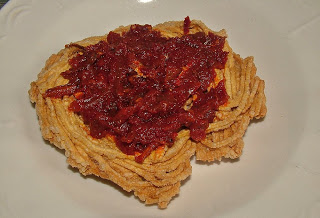
MEE SIPUT
Mee Siput; a local delicious snack eaten with sambal, local chili paste
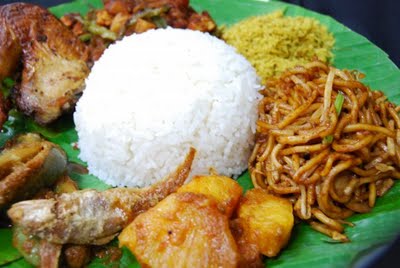
NASI AMBANG
Nasi ambeng or Nasi ambang is a fragrant rice dish consists of white rice prepared with chicken curry or chicken cooked in soy sauce, vegetables, fried noodles, some salted fish, fried coconut flesh, and so on. It is a popular Javanese cuisine, especially in every Javanese-Malay communities in Malaysian states of Selangor and Johor and also in Java, Indonesia. It is served during the festivities and served in a tray and enjoyed together in a tray by four to five people.

ZAPIN

KUDA KEPANG
BAJU MELAYU CEKAK MUSANG
ZAPIN
Zapin is a dance form which is popular in Malaysia, especially in the state of Johor. It is believed to have been introduced by Muslim missionaries from the Middle East in the 14th century.
In the old days only males were allowed to perform it, but nowadays female dancers are included. It used to be performed exclusively for religious ceremonies but through the years it has become a form of traditional entertainment.
The dancers usually perform in pairs and are accompanied by a traditional music ensemble normally consisting of the gambus, accordion, violin, marwas (bongos), rebana (drum) and dok.
There are various types of Zapin in Johore namely Zapin Melayu, Zapin
Pekajang, Zapin Tenglu, Zapin Pulau, Zapin Parit Mastar, Zapin Lenga
and so on. These variants are caused by the districts and on how the
dance is performed.
KUDA KEPANG
BAJU MELAYU CEKAK MUSANG
- Cekak Musang and Teluk Belanga are types of collar design for the male garment 'baju melayu'. It is said that Teluk Belanga was designed by Sultan Abu Bakar in 1866 to commemorate the shift of Johor's capital from Teluk Belanga to Johor Bahru. The Teluk Belanga design is a simple hemmed round collar with a stiff stitching called 'tulang belut' or 'eel's spine', with a loop at the end to fit a 'kancing'. This collar design creates an exposed neck in contrast to the neck-covering Cekak Musang design that is a raised stiff collar of about 1–2 cm with an opening down to the chest. The collar ends have matching holes to fit buttons]