
| Home | Pupae's Gallery | Farm | About Butterfly |
| Authors Profile | Education | Contact me: | Terms & Condition |
| Butterfly Release | Dried Butterflies order | Crafts & Souvenirs | Butterfly & Pupae's export |

"The living Butterfly's Gallery"
Marl Insects and Butterfly Culture
Leodigario Layron
Amoingon, Boac, Marinduque
4900 Philippines
Tele/Fax: 0063-42-332-1558
Marl Insects and Butterfly Gardening

 Butterfly gardening has become one of the hottest
gardening topics in recent years - there is a great deal of interest in
nurturing these colorful, airborne insects and attracting them to the
garden.
Butterfly gardening has become one of the hottest
gardening topics in recent years - there is a great deal of interest in
nurturing these colorful, airborne insects and attracting them to the
garden.
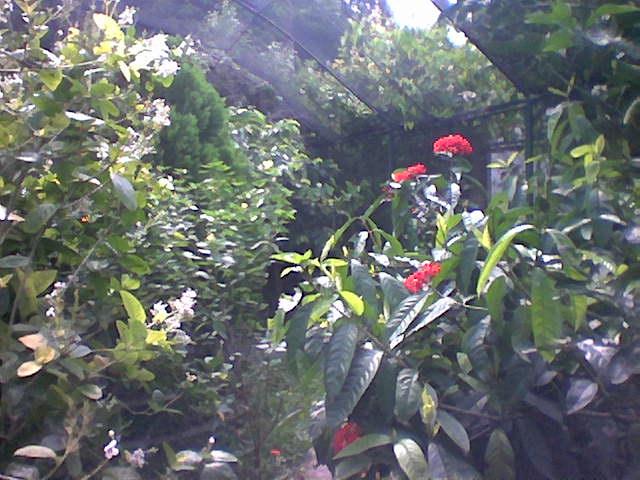
 Few outdoor activities are more rewarding and easily
available than attracting butterflies to a well-designed garden.
Few outdoor activities are more rewarding and easily
available than attracting butterflies to a well-designed garden.
 Attracting butterflies adds a whole new
dimension to gardening - by enticing butterflies into your yard you will not
only be able to interact with these living jewels of nature in a way that may
not be possible with larger wildlife, in the process you will also learn more
about plants and our natural environment.
Attracting butterflies adds a whole new
dimension to gardening - by enticing butterflies into your yard you will not
only be able to interact with these living jewels of nature in a way that may
not be possible with larger wildlife, in the process you will also learn more
about plants and our natural environment.
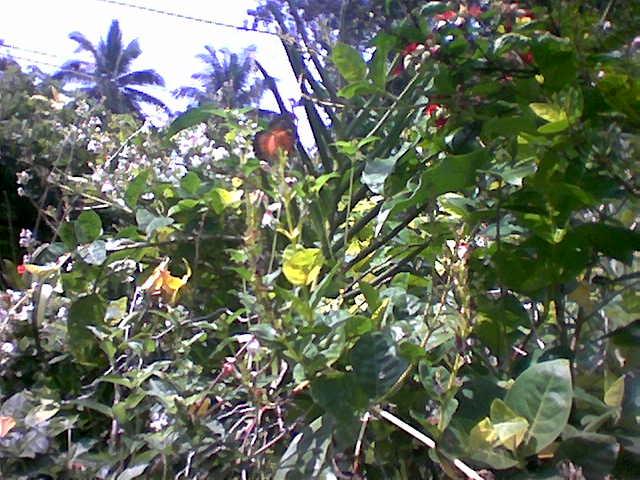
 Marl farm is a
great place for butterfly gardening - our mild climate and diversity of
ecosystems ensures that butterfly gardening can be enjoyed nearly
Marl farm is a
great place for butterfly gardening - our mild climate and diversity of
ecosystems ensures that butterfly gardening can be enjoyed nearly
year round. The possibilities for
butterfly gardens are dizzying - they can be simple or complex.
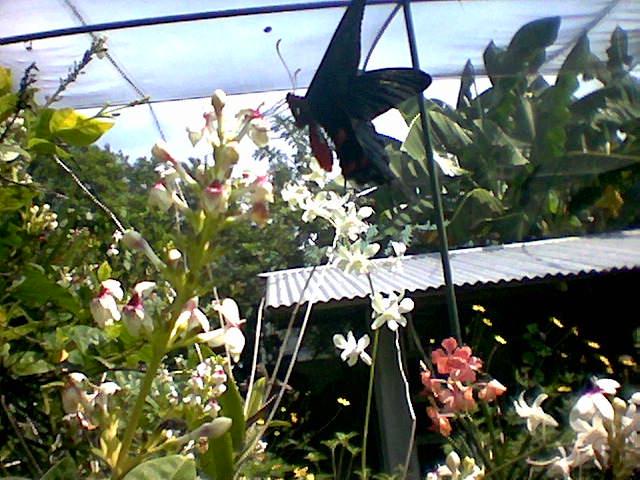
 Marl farm is a great home of growing butterfly
around many species of butterflies.
Marl farm is a great home of growing butterfly
around many species of butterflies.
In addition to the
dazzling kaleidoscope of colors and patterns that may observed, one of the most
fascinating things about these gentle creatures is the amazing transformation or
metamorphosesis that all butterflies undergo during the amazing butterfly life
cycle.
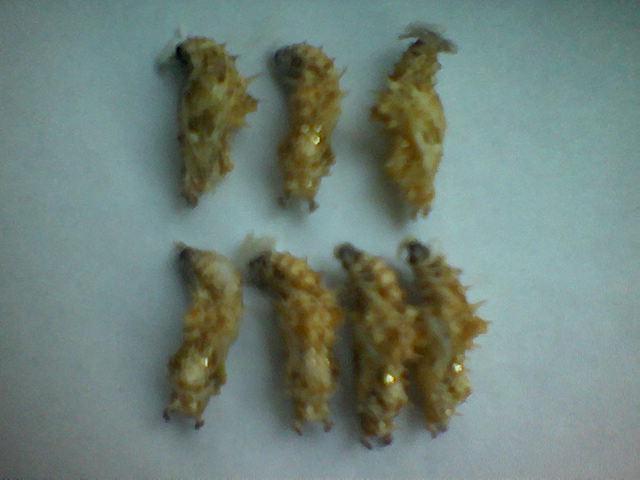
Cethosia biblis
There's something
magical about the way that ugly little caterpillars can transform themselves
into free-spirited butterflies. There are four stages in the butterfly
life cycle: egg, larva, chrysalis, and adult.
 |
Butterfly eggs are laid on the larval food plant and caterpillars emerge within a few days. |
|
|
The larva have enormous appetites and do nothing else but eat. When their skin is stretched as far as possible, they molt or shed the old skin. |
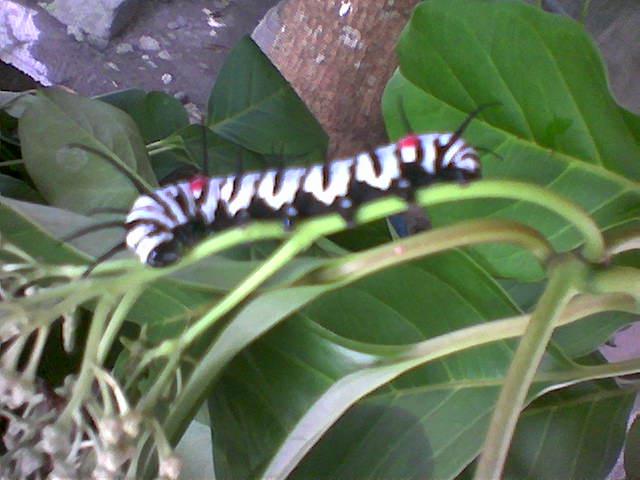
|
|
After a few molts, they seek a sheltered place. Some spin a safety belt that holds them upside down on a twig or similar object, while others hang on with special hooks on their abdomen. At this time, the final molt takes place and the larva skin is replaced with a stiff butterfly chrysalis (pupa). |
|
|
During this stage, the once worm-like caterpillar transforms into the familiar beautiful, flying adult butterfly. |
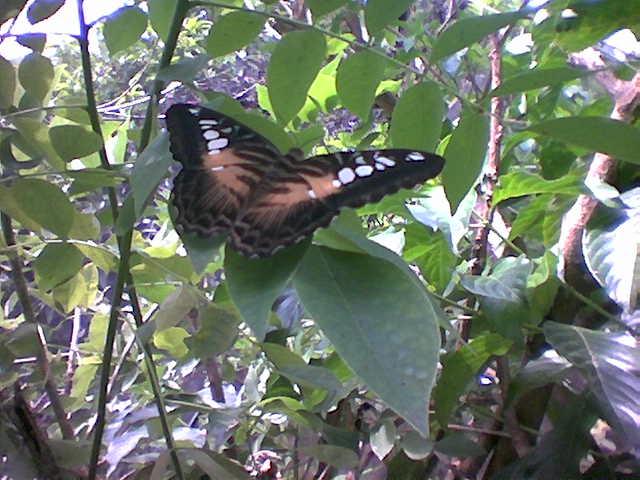
Pathenos sylvia

Butterfly gardens can
vary in size from a few plants in a window box to large areas containing a
complex variety of species. They can be designed to attract one or two
species of butterfly or more than a dozen.
You won't be able to attract butterfly species
that are not present naturally in your region, nor can you grow plants that
aren't adapted to the your particular soil and climate. The key to success
is an understanding of the life cycle and food preferences of these amazing
insects.
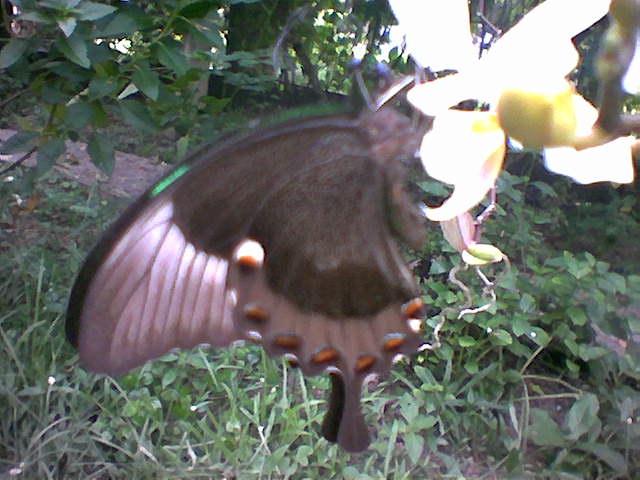
Papilio palinurus
Adult butterflies have very short life span, from only a few days to a
few weeks long in most cases. Most adults feed solely on nectar produced
by flowers. They sip the nectar through a long hollow tube called a
proboscis.
Adult butterflies will visit a variety of nectar sources.
They are generally attracted to brightly colored, simple flowers that are not to
deep and that are large enough to permit easy landings. Some universal
nectar plants include: zinnias, marigolds, bush lantana, salvia, daisies,
coneflower, blue porterweed, black-eyed Susan, Mexican sunflower, milkweeds,
pentas, thistles, verbena, butterfly bush, and shrimp plant. Try to
plant a variety of flowers that will bloom over a period of many months to
provide a stable nectar source. A number of weeds and wildflowers are also
attractive to butterflies.
Note: some adult butterflies are not attracted to flowers but feed on such things as rotting fruit, manure or mud.
Pachliopta kotzebuea
In
order to provide a total environment, it is important to provide larval foods as
well. Unlike adults, the larva or caterpillars are very selective in their
diet and will often eat only very specific plants. By planting the correct
larval food plants, you will be able to attract and keep butterflies in your
garden. Some examples of butterflies and preferred larval food plants
include: milkweeds - monarchs and queens, citrus - giant swallowtail, passion
vine - gulf fritillary, zebra, and Julia, dill and parsley - black swallowtail,
thistle - buckeye and painted lady, and purslane -
mimic.
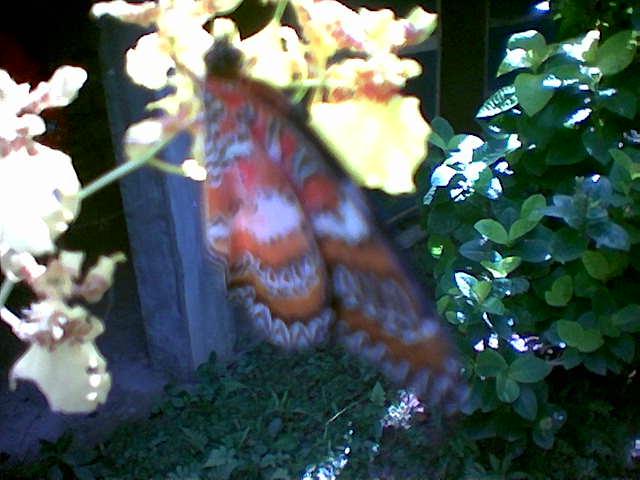
Cethosia biblis
Adults are also
attracted to the vicinity of larval food plants in order to lay their
eggs. Some plants are hosts to several different butterflies (e.g.passion
vine), but often each species requires its own plant. Unless you have a
lot of land at your disposal, you may have to be selective in your
plantings for specific butterflies. Remember that these plants will
be chewed on if you are successful, so mix larval food plants in with and behind
nectar sources so the damage will not be too noticeable and the garden will
remain attractive.
There are a few other
things to consider when planning a butterfly garden. Chose a sunny
sheltered location. Butterflies are solar powered and use the heat of the
sun to warm their bodies. Butterflies are very fragile and do not tolerate
a lot of wind.
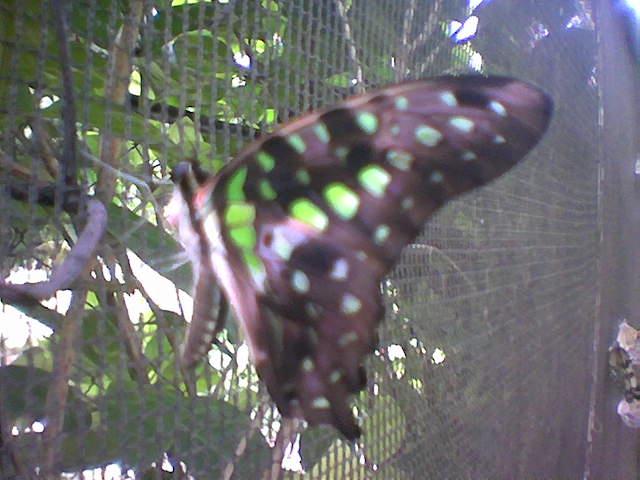
Graphium agamemnon
Remember not to use any insecticides in and around your
garden as butterflies are quite susceptible to these poisons.
After designing and planting your butterfly
garden be patient as it may take some time for these crown jewels of the insect
world to find your offering and delight you with their aerial displays and
kaleidoscope of colors and patterns.
| Sign my guestbook |
Nets Cafe Computer Dog Pets All About Your iPod Marinduque Host at Home
Please check back soon - more to come.

