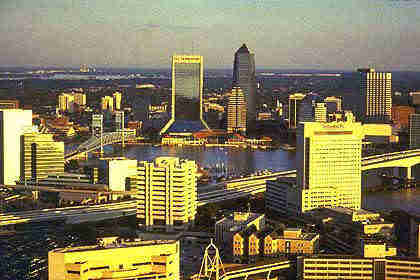
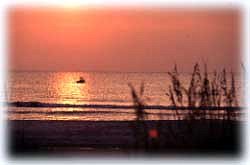
Enjoy the view of the St. Johns River and the magnificent sunrise.
 ��
��
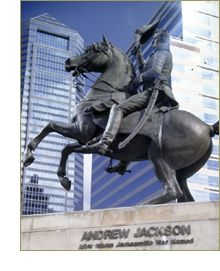
As we enter the city note the statue of
General Andrew Jackson, for whom this city is named. General Jackson was the territory's first military
governor.
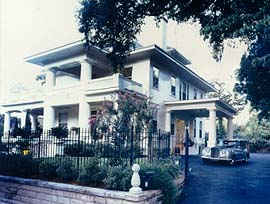
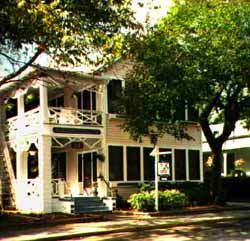
We are now in the historic district. Built as an old plantation house in 1905, this is now a famous inn.
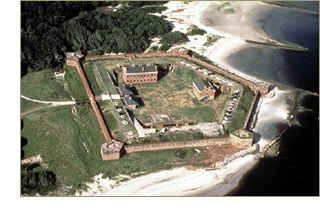
Continuing southeast we see Fort Clinch, a
must see while visiting the Fernandina/Amelia Island
area. This pre-Civil War structure sits inside a
1,121 acre state park. It was opened to the public
in 1938. Historical interpreters tell the story of
Fort Clinch, including its brief reactivation during
the Spanish American War.
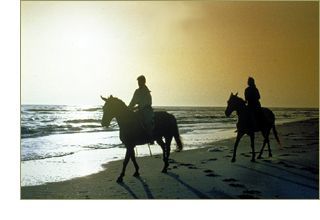
And here's Amelia Beach! It's one of the many barrier islands in the greater Jacksonville area. On a sunny day you will find bike riders, beach combers, nature trails and horse-back riders.
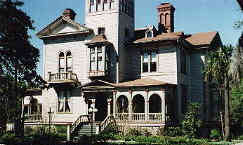
Fifty blocks of shady streets lined with
gracious 19th-century Victorian "cottages," recall
Amelia's golden era. Unique, even among Fernandina's historic Victorians, is The Fairbanks House, a
10-room, 8,000 square foot mansion.

THE OLDEST CITY IN THE U.S.A.
St. Augustine, the first permanent settlement by
Europeans in the U.S., dates back to 1565. Walk
through history in this ancient city. It was first
sighted by Ponce de Leon in 1513 & he named it La
Florida. In 1565, 600 Spanish soldiers & settlers
came ashore & named the area St. Augustine. St.
Augustine was founded 42 years before Jamestown, Va.
and 55 years before Plymouth Rock, Ma.
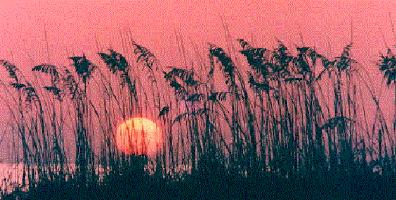
What a
beautiful sunrise with which to start our tour.
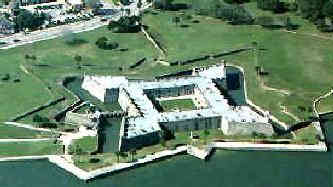
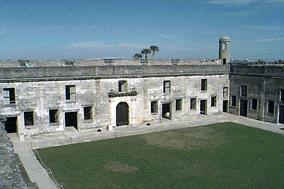
Built in 1695, Castillo de San Marcos is the
oldest masonry fortress in the United States & is
usually the first stop on a tour of St. Augustine.
 ��
��
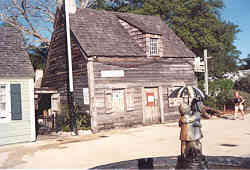
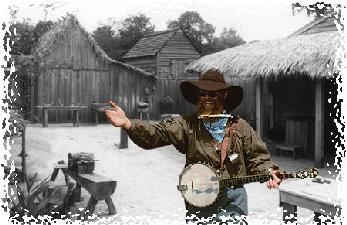
Now we're in the restored part of St.
Augustine, where we can see the oldest schoolhouse in the United States & shops where citizens still
produce pewter, silverware, glassware & other goods
which were necessary from the time the city was
founded. This area is about 8 square blocks.
 ��
��
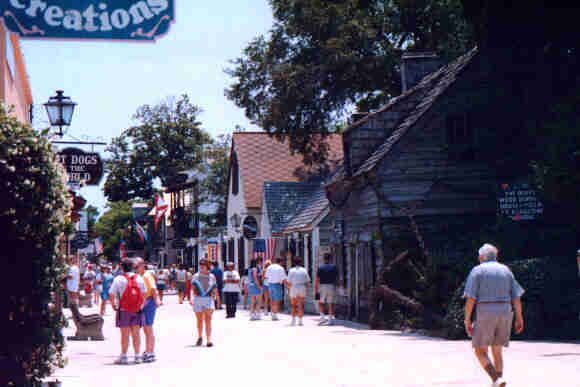
As we leave the restored area we see the
historic district of St. Augustine. Below we hope
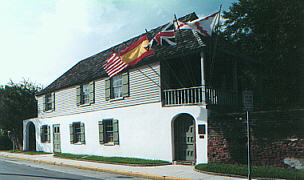
you enjoy the Old Powder House & the Gonzalez-Alvarez House. The Gonzalez-Alvarez House was built in the
early 1600's as a log structure. In 1702 fire
destroyed the home and it was re-built from native
stone, as we see it today.
 ��
��
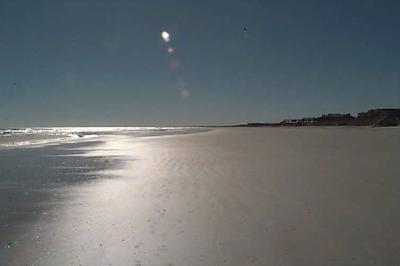
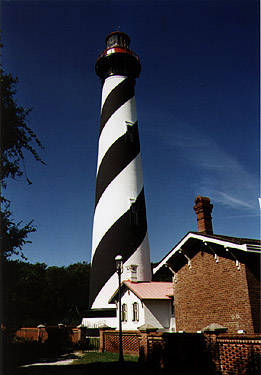
As we head south on A1A we see beautiful St.
Augustine Beach & its lighthouse.
 ��
��
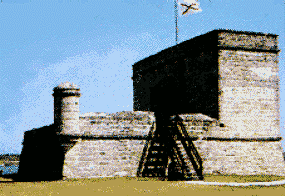
Fourteen miles south of St. Augustine, on
Rattlesnake Island, Fort Matanzas was built in 1742
to guard the city's southern approach at Matanzas
Inlet. It is now a National Monument, preserved and
supervised by the National Park Service. A free
ferry takes visitors to the island, where they can
explore the old fort.
Thank you, HELEN, for treating us to your
"neck of the woods." JOE is now going
to drive us to NASCAR country - Daytona Beach.