
|
Home Articles Reviews About Us Links Extras |
| Diablo II � review |
 By: Blizzard Entertainment
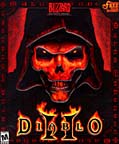
��� Diablo II is the sequel to the hugely popular RPG adventure game of the same name. Released by Blizzard Entertainment, Diablo II offers a hack-n-slash style gameplay in a medieval setting. Players make their way through hordes of increasingly fiendish enemies and bosses, in hopes of ridding the world of an ever-growing evil.
At the end of Diablo, the adventurer who defeated Diablo imprisoned the Lord of Terror in a soul stone. In order to complete the prison, the adventurer took it upon himself to drive the soul stone into his own forehead. The adventurer and the town of Tristram (where the original Diablo took place) believed Diablo was defeated. But like in all good sequels, they were gravely mistaken. Diablo took control of the adventurer and used the disguise to carry out his fiendish plans. So now Diablo's back and you have to stop him (cue the dramatic music). Diablo II takes place over four acts, each act composed of three to six quests.
In terms of the relationship between the story and the game, the story loosely holds the action together. If you're expecting an interesting story, you'll be disappointed. Except for perhaps the Act 3 boss and the big D himself, you won't relate any of the enemies to the quests or the events in the story. You won't really know (or care) why you're killing the enemies on the screen; except perhaps that they're in your way.
Can you click on a mouse? Then you can play Diablo II. The gameplay is pretty much this: walk around, find an enemy, kill it. Walk around, find an enemy�
In Diablo II, there are five character classes to choose from: paladin, barbarian, amazon, sorceress, and necromancer. Each class offers a completely different approach to playing the game. For example, while the barbarian is unmatched in melee combat, the sorceress possesses powerful magic skills. In order to exploit the differences in character classes, every class has its own set of 30 skills. Some spells cannot be accessed until a character reaches a certain level. Players use skill points (obtained from gaining enough experience points for killing monsters) to enhance their skills. Anyone who has played Diablo II quickly realizes that if you want to survive, there is a high degree of specialization involved. Therefore, it is almost certain that one high level Amazon will be different from another.
Along the way, you'll find items to equip yourself with, such as weapons, armor, rings amulets. 'Modifiers' on items enhance your character in certain ways. For example, a ring may contain a modifier that gives you additional strength or allows you to gain health with each successful blow dealt to an enemy.
Playing Diablo II is extremely addictive, partly because the gameplay is so simple, partly due to the possibility of finding items of incredible power. You may find some difficulty in prying yourself away from the game.
Diablo II is not a graphics powerhouse. In fact, it only runs at one resolution: 640 X 480. The characters and animation are all sprite-based, meaning there are set animations for each of the character's actions. In fact, some of the character models are pixelated, especially on larger monitors. However, all this is not to say that the graphics are poorly executed. The animation is smooth, clean, and most important, convincing. Furthermore, most would agree that scaling down the graphics allows the game to run in a wider range of computers. This is of course important for multiplay.
There are some exceptionally well done spell effects and lighting in Diablo II. Multicolored auras illuminate halls, and the various objects cast shadows around the rooms. The varied settings include wide-open deserts and forests, as well as enclosed caves and temples. Furthermore, the FMV cut scenes that introduce each Act are brilliantly done and are by far the best graphical elements of the game.
Diablo II's sound is both a hit and miss. On one hand, the sound effects depict the action well. Each clang of the sword, monster gurgle and unique chime of a spell is distinguishable and accurate. Even the sound of a weapon falling to the ground is different from the sound of a key or piece of armor. The voice acting is also well done. Every playable and non-playable character (NPC) sounds different and convincing.
The other component of the game's sound is the music. While the music complements the setting, it fails to create an atmosphere of darkness or urgency. Most of the time, the background music is unnoticeable during play.
With a game that offers hack-n-slash gameplay, it is only natural that Diablo II have multiplayer features. Up to 8 players can play over a LAN or directly over the Internet via IP. The addition of the latter feature is a very pleasant surprise; all that is required is the host's IP address. But the most interesting way to play Diablo II multiplayer is over Blizzard's free Battle.net service. Over Battle.net, players connect to games across any one of four Realms (USEast, USWest, Europe, Asia). You will undoubtedly be playing with people from around the world.
But enough about features. Does it play well with several players? YES. Forming parties and clearing hordes of enemies is incredibly fun. No one character class dominates over the others. In fact, the skills of one class complement the skills of the others. Players find and trade items, complete quests and chat, which makes playing Diablo II on a large scale fun. Diablo II was definitely developed with multiplayer in mind and it shows.
If there is one gripe about the multiplayer, it is that there are no new Acts or quests to complete. Basically, a group of players try to complete the single player game. New levels are sadly missing.
While some of the technical features of Diablo II are disappointing, at the end of the day, it is still a fun game to play. Diablo II shines in terms of gameplay and multiplayer options. The diversity of character classes and the number of possible combinations within those classes add a large amount to Diablo II's replay value. The powerful weapons and magic spells keep players searching and trading. And the multiplayer� well, you get the idea.
| ASY |  |
|
| Jack |
Be heard! Leave a message on the itoop bulletin board. |