|
|
 |
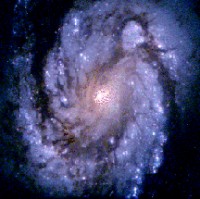
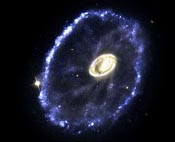
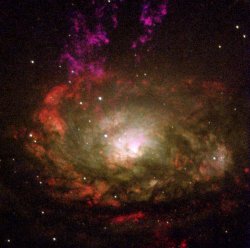
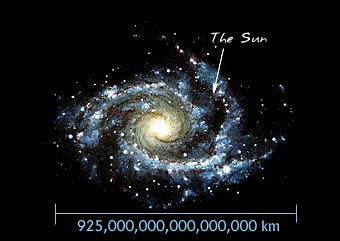
The universe contains billions of galaxies, and each galaxy contains billions of stars. The stars visible
to the unaided eye are all in our own galaxy, the Milky Way. Stars are not spread uniformly through a galaxy. They are frequently bunched together in star cluster of as many as 100,000 stars. Many stars that
appear as single points of light in even the most powerful telescopes are actually systems of two or more stars orbiting one another, bound together by their mutual gravitational attraction; the binary stars
are most common among these multiple star systems. |
|
|
|
|
|
To "The Milky Way" |
|