
SHOPPING
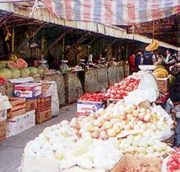
Shopping in Beijing is becoming more convenient by the
day. Every year
new shopping centers and plazas are sprouting up all over the capital.
Just a few years ago there was only a few department stores and small
bazaars, but now there are many super-stores, mega-malls and markets where
you can buy just about anything you need. Recently, the first IKEA just
opened in the north of the city. There is a huge PriceSmart which is a
discount wholesale foodstuffs market for cardholders only. The Silk Market
at Xiushui Jie and the free market at Sanlitun are also favorites among
tourists, expats and locals alike.
Native Productions-Antiques
A good place to find a wide selection of antiques is at Liulichang.
Liulichang is a street in Hepingmen, and many of the stores are quite old.
This area has everything from scrolls, to jade articles to decades-old
cigarette ad posters. There are definitely treasures to be found here, but
it is hard to tell genuine antiques from dirty fakes. Real antiques are
supposed to bear a red official seal that proves their authenticity, but
sometimes-real ones don't have it and fake ones do. The best attitude to
have is: if you like it and you can bargain down to a price you can
accept, just go for it. Small jade articles and silver trinkets make great
presents for people at home and they are easy to take on the plane.
Another large antiques market is the Antiques City at Panjiayuan. This is
a multi-story building which is full of antiques and general kitsch.
Beijing Curio City, gathering more than 250 curio shops under one roof, is
China's largest trade center for antiques and folk art works. Many of the
dealers are themselves connoisseurs and curio collectors. Antiques that
date before 1795 are forbidden for sale or export. Those dated between
1796 and 1949 should bear a small red seal and a Certificate for Relics
Export from the Beijing Cultural Relics Bureau (BCRB), to allow them to be
taken out of China. The seal also proves the genuineness of the items. A
word of caution: Keep receipts which should indicate the name and age of
the antiques if these items are bought in BCRB-designated stores.
Native Productions-Porcelain
Porcelain, the original China, is still a major industry, producing dinner
services, figurines and reproductions of antique vases, teapots and the like.
The finest porcelain in the world can be easily purchased in China.
Native Productions-Cloisonne
Cloisonne (enamel formed in patterns of copper wire) is an art form developed in
the 15th century, and now used to decorate vases, bowls, lamps, jewelry and
ornaments.
Native Productions-Lacquerware
Lacquerware consists of up to500 coats of lacquer applied to a copper base and
carved into designs. The colors are red, green, yellow and black, while favorite
patterns show flowers, birds, landscapes and figures. Lacquer is used for vases,
plates, bowls and screens. Some lacquerware is inlaid with gold, mother-of-pearl
or jade, to decorate folding screens and furniture which are genuine works of
art.
Native Productions-Jade
Jade is regarded by the Chinese as a stone descended from heaven. They value its
hard, cool texture and translucent colors. It is extremely difficult to carve
but China's craftsmen create incredibly intricate ornaments and jewelry from
jade.
Native Productions-
Carpets
Carpets, modern and antique, for use as tapestries or rugs, are plentiful and
available at bargain prices. Those made in Beijing are close-woven with fine
wool cut into sharp, elegant patterns, such as the dragon and phoenix design.
Beautiful silk carpets and rugs from other provinces in China are also available
in the capital.
top!
Native Productions-Silk
Silk, which has brought fame to China, can be readily found in a dazzling array
of colors, patterns and textures. While large State-owned stores like the
Beijing Yuanlong Silk Corporation, Ltd.can be trusted for quality and offer
ready-made clothesas well as a complete array of fabric, private markets like
Xiushui and Yabaolu sell all kinds of silk clothing from shirts, underwear and
trousers, to pajamas and bedspreads at negotiable prices. Most vendors at the
markets are self-employed and speak some English. AII the products are marked in
Western sizes, but sizes are often deceiving, try on for size. Chinese long
gowns are considered the most elegant garment most suitabte for women's figures.
Native Productions-Painting
& calligraphy
Painting and calligraphy works are found in hundreds of stores. They vary in age,
quality and price with the finest being true works of art. The brushes, ink
slabs, ink and paper that were the scholars traditional tools can be found in
most antique shops. One of the best sources is the China Book Store, off the
courtyard-parking in East Liulichang.
Native Productions-Handicraft
Clay figurines and animals can be traced back to 1840s, and are still one of the
most unique crafts in North China.
Dough modeling is another traditional folk art handed down from ancient times.
Kneaded in half-cooked glutinous rice flour, dough figures, flowers and birds
are popular small toys and exhibits in Beijing.
Papercutting is one of the most popular handicrafts in Beijing. There is a wider
variety of papercutting patterns than you can imagine available.
Kites can be used as ornaments and toys. One of China's favorite past times is
flying kites, especially in Beijing where there is usually plenty of wind around
to send them soaring into the sky. Available in many art and craft stores, Kites
are among the best Chinese presents to friends back home.
Native Productions-Handicraft
Snuff bottles, with paintings inside, represent a popular art from the Qing
Dynasty and make excellent small gifts. You and your friends will marvel for
years on how the artist paints such intricate drawings on the inside of these
very small bottles.
Embroidery & drawn work appear on table cloths, napkins, sheets and
handkerchiefs, all of which are excellent buys. The Beijing Yuanlong Silk
Corporation, Ltd. has a wide selection.
Native Productions-Medicine
Chinese pharmacies sell various kinds of nutritious pills and tonics made from
herbs. Tongrentang, as other traditional pharmacies, have a resident doctor in
charge of taking your pulse and making prescriptions.
Most large department stores and supermarkets have special drug counters.
top!
Native Productions-Others
Cotton shoes, Snow-Lotus cashmere sweaters, woolen bed sheets, cotton shirts,
and other practical clothing items are some of the best bargains in the world.
Shopping Areas-Wangfujing
There are various places to go for shopping, depending on what buyers expect
and the prices they are prepared to pay.
Wangfujing intersects with East Chang'an Avenue. It has a history of more
than 100 years. The street, which is less than one kilometer long, is lined with
shops. The best-known shop is the Beijing Department Store. To the north of the
department Store is the One World Department Store, hosting a collection of
Chinese and foreign name brands and fine quality products. La Fayette presents
French features, namely fashions and name brands. The newly-opened Sun Dong An
Market is the largest supermarket in Beijing. It covers a business floor space
of 100,000 square meters and sells more than 200,000 kinds of goods. The
Oriental Plaza, which is considered another miracle in Chinese architectural
history, stands just by the south entrance of Wangfujing.
Shopping Areas-Qianmen
Qianmen street was a commercial center of Beijing more than 500 years ago. Its
old shops and small stalls are preferred by Beijingers. Not far from Tian'anmen
Square is Xidan, which is regarded as the second Wangfujing. The street is lined
with shopping centers, food bazaars and garment markets.
Shopping Areas-Silver
Street
Silver street is in the Dongdan Beidajie. It is where all the franchised foreign
name-brand shops are concentrated. Jianguomenwai Dajie is famous for its
colorful metropolitan scenes. The street is lined with star-rated hotels, office
buildings, fancy restaurants, beauty salons and shopping centers. The well-known
shopping centers are Friendship Store, SCITECH Plaza, Guiyou Department Store
and the China World Shopping Mall.
Shopping Areas-Xidan commercial Area
Xidan commercial Area, north of west chang'an Avenue, gives a wide
range of shopping options. At one end is the Xidan Market, the largest shop in
this area. The old store has recently undergone major renovation, which gives it
a completely new and modern look. Its open shelves, spacious shopping area,
great variety of goods and the warm and understanding staff are a boon. Next to
the market is Xidan shopping Center.
Shopping Areas-Chaowai Dajie
Chaowai Dajie is rather new compared to the shopping areas above. Yet the modern
shopping centers along the street will soon make this street another hot spot of
Beijing. The well-known shopping centers are Full Link Plaza, Jian International
Center, Landao Building, Landao Xiqu (west district).
top!
BEIJING CLOISONNE
Cloisonne is a famous
traditional enamel ware, known as the "Blue of Jingtai" in China, with
a history of over 500 years. it was so called "blue" was the typical
colour used for enamelling and "Jingtai" was the reign title of the
7th Ming Emperor. Enamel ware became very popular during the Emperor's reign.
There is a great variety of products, such as vase,
jar, bowl, plate, box and ash-tray. They are brilliant in colours and splendid
in design. Cloisonne is one of the famous arts and crafts of Beijing.
The making of cloisonne requires rather elaborate and complicated processes;
base-hammering, copper-strip inlay, soldering, enamel-filling, enamel-firing,
polishing and gilding. The products are featured by excellent quality. The skill
and workmanship have been handed down from the Ming Dynasty. Quite a number of
new varieties have been created. it enjoys a high reputation both at home and
abroad. They are mostly for export.
CLOISONNE-MAKING
The first step is body making. The material used for making the body is copper,
because copper is easily hammered and stretched. This step requires a sound
judgement in shaping and uniformity of thickness and weight. It is in fact the
work of the copper smith. The only difference is that when an article is well
shaped, the copper smith's work is finished, whereas the cloisonne craftsman's
work is just on the the start.

top!