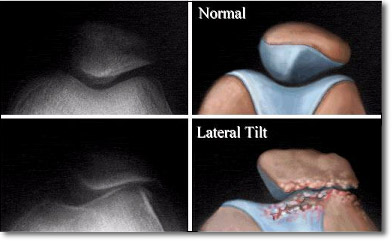
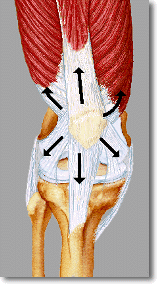
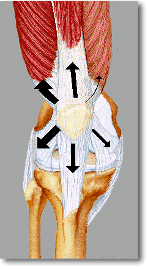
One of the more common problems is an abnormality in the way the patella moves as the knee is bent or straightened. This can happen through either a muscles or structural imbalance. The patella normally moves along a path that is controlled by the quadriceps muscle (above left) located on the front of the thigh. If the inside part of this muscle group is weak, a muscle imbalance (below left) occurs, and the patella will stray from its normal path. In time this faulty movement can cause wear and tear to the cartilage. In more severe cases, the patella will actually sublux, or slide partially out of the groove. In most severe cases of malalignment, the patella will actually completely dislocate.
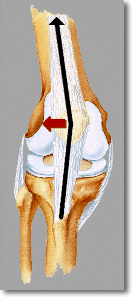
A structural imbalance exists due to anatomical variations in the leg bones. The angle at the knee joint made by the femur and the tibia, called the Q angle. Women tend to have a greater angle than men. The patella is at the center of this angle where it sits in the femoral groove. When the quadriceps muscle contracts, the force tries to straighten (right) this angle, pushing the patella to the outside of the knee. In cases where this angle is increased, the patella tends to shift outward with greater ease.
*Weakness of the quadriceps
*Weakness of the VMO muscles
*Weakness or tightness of hip muscles
*Tight iliotibial bands
*Tight hamstring muscles
*Tight calf muscles
*Extreme Q angle
*note these are all extreme cases, being very fit does not mean you're a candidate for "tight" muscles nor an unfit person a candidate for "weak" muscles. Diagnosis should be made by a certified Orthopedic Surgeon.
If your patella problems appear to be caused by a malalignment problem, a procedure called a lateral release may be suggested. A "lateral release" is a surgical procedure, which involves cutting the lateral retinaculum to reduce the amount of lateral pull. This procedure is done to allow the patella to shift back to a more normal position and relieve pressure on the articular catilage. In this operation, the tight ligaments on the outside (lateral side) of the patella are cut, or released, to allow the patella to slide more towards the center of the femoral groove. These ligaments eventually heal with scar tissue that fills in the gap created by surgery, but they no longer pull the patella to the outside as strong as before the surgery.