 |
|
|
|
|
|
|
|
|
|
|
|
|
|
|
|
|
|
|
|
|
|
|
|
|
|
|
|
|
|
|
Patella/Cartilage Damage |
|
|
|
Video of loose cartilage removal |
|
|
|
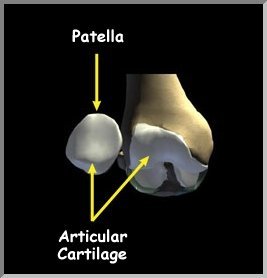
The patella is a relatively small bone in the front of the knee that is embedded in the quadriceps (thigh muscle) tendon and acts to increase the biomechanical leverage of the quadriceps. The patella slides in a groove on the femur as the knee flexes and extends. Because the patella 'floats' within the substance of the quadriceps, proper tracking of this bone in the femoral groove is dependent on proper muscle balance to maintain a central position. Because of the location of the patella, it is subject to higher stresses than other joint surfaces. So, despite having a thicker cartilage lining than any other bone, it often begins to wear out before other parts of the knee. |
|
|
|
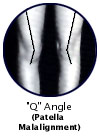
Proper tracking of the patella is influenced by many factors. Proper muscle balance is important and is one of the few factors that we can control. Usually the patella wants to sublux toward the outside of the knee (lateral). Strengthening the inside muscle (VMO) can act to counter this tendency. Tracking is also influenced by the anatomical shape of your patella, femoral groove, the angle your knee makes with your hip (knock knees) and even the position of your foot (pronation). The hip knee angle is important because the patella is embedded in the quadriceps tendon which, originates at the hip and attaches at the knee. |
|
|
 |
|
|
|
|
|
|
 |
|
|
 |
|
The more knock-kneed someone is, the more of an angular pull occurs on the patella every time the quadriceps contracts. This angle is called the "Q" angle. Increased pronation of the foot (flat feet) can influence the tracking of the patella. This occurs because the rotation of the rest of the leg is affected by the way the foot contacts the ground. |
|
|
|
|
|
|
|
|
|
In patients with increased pronation, use of shoe orthotics (arch support) may help patella tracking by modifying the rotation of the knee. |
|
|
|
|
|
Chondromalacia Patella
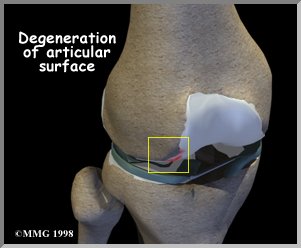
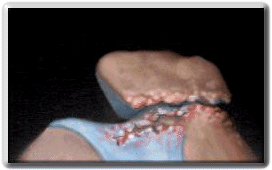
Chondromalaiacia of the patella is one of the most common problems to affect the knee, and is particularly common in running and jumping athletes. Chondromalica usually begins as softening of the otherwise very resilient cartilage and proceeds to cracking and eventually complete loss of the cartilage lining beneath the patella.
Symptoms usually include pain in the front of the knee, crunching under the knee cap, swelling in the knee, symptoms in crease with stair climbing, or prolonged sitting.
Early on, symptoms may simply be mild aching in the area of the patella due to the loss of integrity of the cartilage and a diminished ability for it to protect the underlying bone. Nerve fibers in the bone sense the increased stresses and pain occurs. In later stages of chondromalica, the cartilage surface of the patella becomes roughened as pieces of cartilage begin to break off. This roughened surface causes a crunching sound under the patella and can lead to swelling of the knee. Small fragments of cartilage continue to break off and irritate the joint.
Usual treatment for chondromalcia includes physical therapy for muscle strengthening to balance the patella tracking and more evenly distribute forces on the patella. Special tracking braces or taping may also help. In resistant cases arthroscopic surgery can be helpful in smoothing out the roughened surface of the patella, removing any loose fragments of cartilage, and realigning the patella. |
|
|
Signs of a Problematic Patella
*Don't recall an injury
*Knee makes crunching noises when bending
*Pain and/or crunching when going downhill
*Knee sometimes aches at rest
*Knee sometimes catches
*Has become slowly more problematic
*Pain located more in the front of the knee
*Knee sometimes "catches"
*Flat-footed on affected side
*Family members have same problem
*note these are all extreme cases, any onset of these symptoms or doubt in your physical condition should be evaluated by a certified Orthopedic Surgeon. |
|
|
|
|
|
 |
|
|
|
|
|
Chondromalacia (Erosion of the knee cap) |
|
|
|
|
|
|
Back to Knee Homepage |
|
|
|
*Information on this page is to be used for informational purposes only and not for medical advice. |
|
|
|
|
|