 |
|
|
|
|
|
|
|
|
|
|
|
|
|
|
|
|
|
|
|
|
|
|
|
The Garden of Forking Paths |
|
|
|
Jorge Luis Borges�s story, �The Garden of Forking paths� presents a unique view of the nature of the world. In the story, Dr. Yu Tsun by a simple twist of fate encounters sinologist Stephen Albert. Stephen Albert has dedicated himself to deciphering the writings of Yu Tsun�s ancestor Ts�ui Pen, who disgraced himself by swearing to produce an infinite novel and a tremendous labyrinth, and only producing an incoherent manuscript. Albert has translated this manuscript, and carefully pieced the work back together, and states that the novel itself is the labyrinth. What�s more, Albert states that Ts�ui Pen�s labyrinthine is in fact infinite, because within the novel an infinity of pasts, presents, and futures exist, all simultaneously. This is a proposition of the existence of causality: since it is admitted that at any given single point in time and space, let us say here and now, an infinite amount of events may have lead up to that point; considering one of those possible pasts leading into the present, another infinity of possibilities can then exist. |
|
|
 |
|
|
|
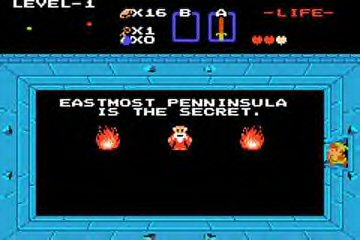
Fang, let us say, has a secret; a stranger calls at his door; Fang Resolves to kill him. |
|
|
|
|
|
|
This concept of multiple possible pasts, futures, and presents is highly moot, if not entirely contradictory. Let us say for the sake of argument that there are multiple possible pasts which lead to the same end. If such a path exists, then it can be demonstrated that the events of that past led to and *caused* that single present to exist. If the past can be shown to determine the present, then it must also be able to demonstrate a singular future; this would contradict the proposition of infinite futures. At the same time, if there are infinite futures, then the past is shown to be completely inconsequential, and free will is verified. On the whole, this states the entire universe is both Free and Determined. This is logically inconsistent.
What�s more, this proposition is presently impossible to prove. If we rely on our senses, the empirical evidence which we as humans can put together, to determine what is real, then we can verify the existence of a singular present reality. We rely on these same senses all throughout our lives; Consider an English class. The students all sit in the same class for the entire period, and at the end all their memories, the compilation of their empirical senses, will report the same experience. This demonstrates reality to be singularly consistent over the period of fifty minutes. Using inductive logic, we can then state that the history of reality is singularly consistent. When people�s empirical senses conflict, i.e. the Swift Boat controversy, then we must ask, �If our senses determine what is real, is that which we can not or do not sense considered to be real?� This is that old chestnut, of, �If a tree falls in the wood and no one is around to hear it does it really fall?� But this can be better expressed as, �If a tree falls in the wood and no one is around to hear it, can the tree and the woods be said to exist?�
All in all, the premise of the idea is fallacious. |
|
|
|
 |
|
|
|
Ts'ui Pen viewed the universe as Labyrinth. |
|
|
|
|
|
The train runs gently along, amid ash trees. It stops, almost in the middle of the fields. No one announces the name of the station.
"Ashgrove?" you ask a few of the lads on the platform. "The Twilight Zone," they reply. You get off the train. |
|
|
|
 |
|
|
|
This Link is a Test |
|