
Virtue ethics is one of the oldest ethical systems. While it was not created by Aristotle, he produced extensive works on the subject and presented perhaps the first cogent version of the system. The word Virtue comes from the Latin virtus (which was a term for strength or excellence). A close sister-term, if you will, was arete, a term that nominally referred to military excellence.
In general Virtue can be described in five different ways:
Alisdair Macintyre�s Virtue: Virtue is an acquired human quality the practice of which enables us to achieve goods internal to individuals. The practice mentioned can be either Professional or Human. For Macintyre, virtue is an action that allows humans to achieve something important to being good individuals.
Paul Woodruff�s Virtue: The capacity to have certain feelings and emotions, cultivated through training and experience, which inclines us to do the right thing. For Woodruff, virtuous behavior enbodies the correct emotions motivating us to perform actions. These emotions are gained through practice and training, and through the experiences of our lives.
Confucian Virtue: Confucian virtue can be called Ritual Virtue, or Li. Li is the wherewithal to perform virtuous actions. Without Li, respectfulness is tiresome, frankness is hurtful, et cetera. So, Confucian virtue is not a set of actions, but an inclination and stamina to perform them.
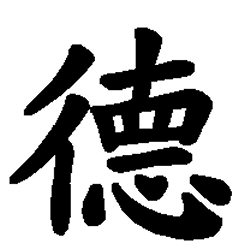
Taoist Virtue: Virtue in Taoism can be described from the Dao De Jing. Dao simply means way and Jing means book. De roughly means "the ability to exhibit the way of all things." Taoist virtue is a teleological concept then, assuring that all things have a way, a purpose or a meaning, humans included, and acting in the appropriate way or fulfilling the individual goal is what is virtuous.
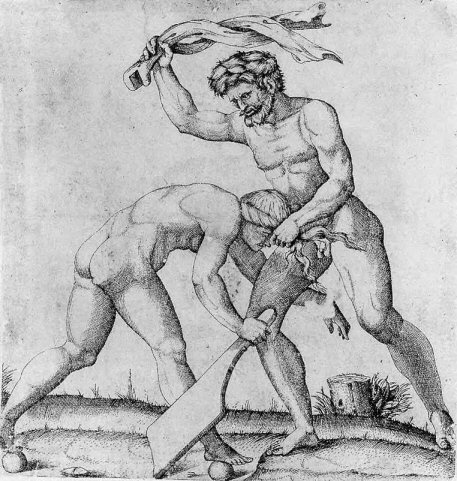
Marcantonio Raimondi, Italian engraver, 1480--1534, Bologna
One starts life without virtue; babies do not have or understand virtues, and neither do most young children. These people are what Macintyre calls �Ethical Beginners.� Ethical beginners must learn from other people around them, called �Ethical Experts� or in Aristotle�s words the �Practically Wise Men,� who serves as role models. Eventually, the beginner should come to possess virtue, and then they might be considered an �Ethical Expert.� However, while it is important for an ethical beginner to follow an ethical expert, the beginner must also be critical, and use his own reason to examine the goodness of the behaviors he is learning.
Presented here format is presented for how to measure individual virtues or behaviors. It compares the behaviors of a virtue taken to excess against the behaviors of a virtue which is in deficiency, as well as a balanced, average level of behavior. The average is going to be somewhat different for everyone; much of learning virtuous behavior involves determining one�s own proper average.
and Capacity for Acceptance