 |
|
|
|
|
|
|
|
|
|
|
|
|
|
|
|
|
|
|
|
|
|
|
|
|
|
|
|
Virtue and the American Dream |
|
|
|
What are American virtues, and which ones are idealized in the American dream? Or, if we were to think of a quintessential American, who embodied everything that we thought of as the American dream, what would this person�s virtues be? |
|
|
|
 |
|
|
|
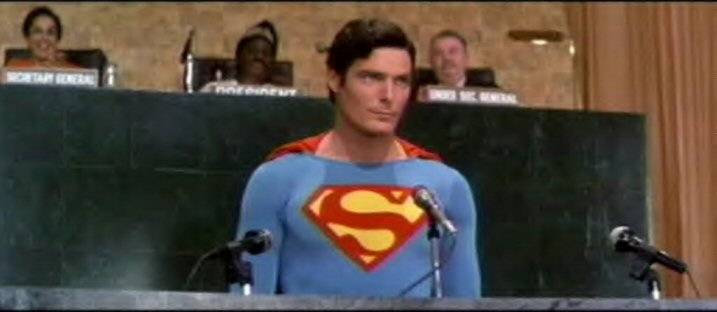
Strength. Few things come to mind more when thinking of America than the nation�s own inflated image of strong it is, and how strong it should be. This is seen on the larger scale when one examines America�s fascination with war movies, and particularly movies about world war two, where the audience can bask in the glow of American power and victory. On a personal level, much of American culture praises individual strength, as is seen in the obsession with professional wrestling, professional sports, kung-fu action movies, boxing movies, and the elections of Jesse Ventura and Arnold Schwarzenegger. Superman, Captain America, Wonder Woman, and also Spider-Man, who all wear the colors of the American Flag, are the epitome of this strength. The quintessential American is not a cringing, meek person, and must be strong.
Willy Loman certainly believes in this virtue. Though perhaps he himself is not a towering strongman, He certainly raised his children to be strong, bought them boxing equipment, encouraged Biff in football and praised them for being strong and (Norton Intro Lit 1555) �built like adonises.� |
|
|
|
Egoism: America is the land of number one. Nick Bellezzo tells us, �If the Wind carried a number, it would be number one.� America is the land of individualism, and as such it recognizes individuals far more than groups. (Except for the Undefeated Miami Dolphins) Even though the Presidency controls only one third of the government, the office is the most recognizable because it lauds an individual. Even though they eventually formed the �Justice League,� Superman and Wonder woman typically worked alone. Now, it must be admitted that team-behavior is basic part of human activity; possessing this virtue represents an inclination towards an individualized approach to life.
Willy is certainly an egoist. One need only cite one line to show this: �[In an uncontrolled outburst] I am not a dime a dozen! I am Willy Loman, and you are Biff Loman!� Willy has always believed that he is a singularly great achiever, and that his sons will be, as well. That they do not succeed is a different matter. |
|
|
 |
|
|
|
|
|
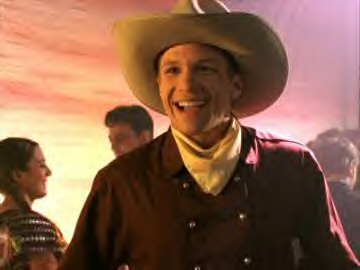
"I'm lookin for a man... a Sales Man." Special Agent Riley Finn |
|
|
|
|
|
|
 |
|
|
 |
|
|
|
|
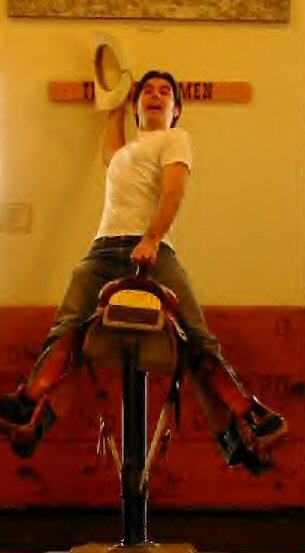
Independence: Tied in with egoism, independence is very important to the quintessential American. The quintessential American probably doesn�t work nine to five hours, five days a week, unless he explicitly states that�s what he wants to do. Though he is not unlawful or chaotic, the quintessential American is no stranger to bold and non-conformist action. This is typified in that American hero, the cowboy. The cowboy rides where he wants when he wants, he lives in the wide open west where there are no fences to cage him, and a paucity of authority to command him. The quintessential American should live like the cowboy.
Willy Loman does not live like the cowboy. He lives in the boxed-in houses of Brooklyn, and he does not control his own fate. He believes he should, and he states that he has chosen his path, but late in his age, it is clear that he is not in complete control of his life. |
|
|
|
|
|
|
|
|
|
 |
|
|
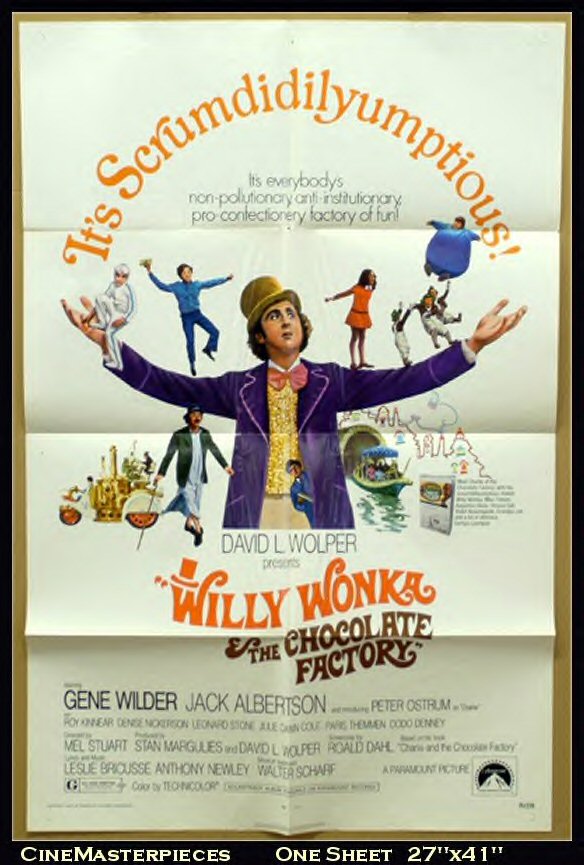
All these virtues try to describe American behavior, but they skirt the truth around the American dream. What is the American dream? I believe the American dream is not special; the founding fathers of this nation, and the colonists before them, were dreaming of new and unheard of things. What our ancestors wanted is the same as what their ancestors wanted, and their ancestors before them, and it is the same as what people today want: Success. Success in our endeavors, success in being the people who we want to be, success in controlling our lives. Willy Wonka tells us that the man who got everything he ever wanted lived happily ever after.
This is not a virtue, but a trait- one either is successful or he is not. Willy Loman lives the way he wants to; he succeeds in living the life of a salesman for thirty-four years, but he does not succeed in dying the death of a salesmen. His death is low, and cowardly, and foolish. Willy tried to lives in accordance with American Behavior, but he does not achieve the success which defines the American Dream. |
|
|
|
|
|
|
Back to Virtues |
|