


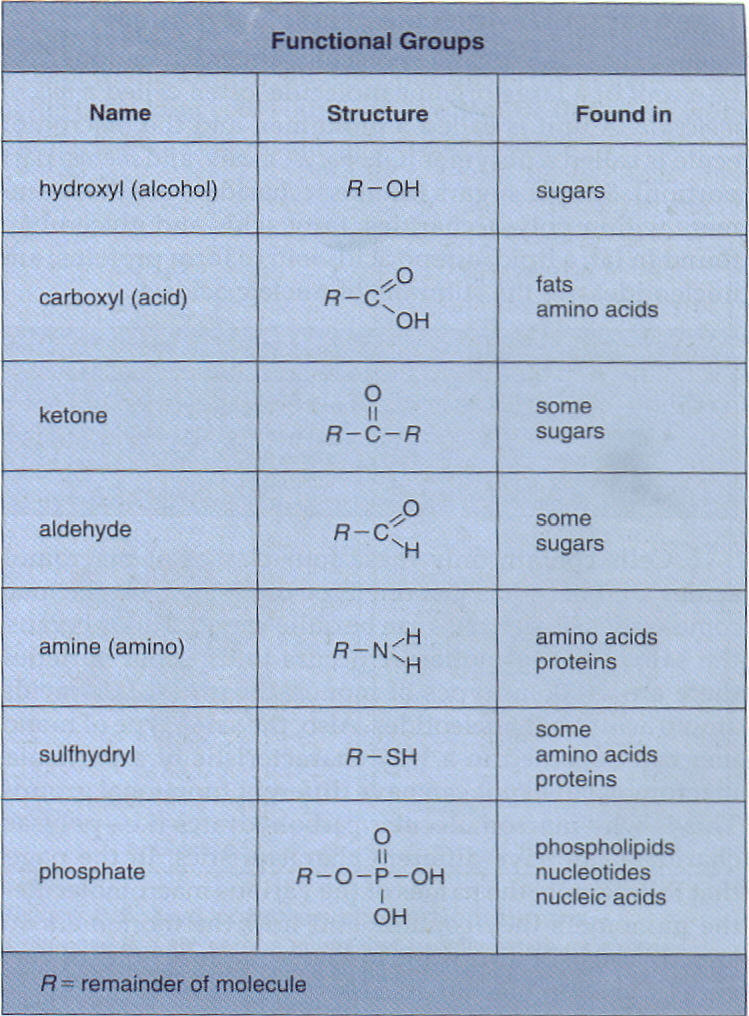
They are only add-ons to molecules, but functional groups almost completely change how a molecule is used.
Many of them even polarize the molecule they are part of, causing it to dissolve in water.

Fats and oils are triglycerides (one glycerol bonded with three fatty acids). They are used as long-term energy-storage compounds in plants and animals.
The use of phospholipids is to aid the formation of cells by forming a bilayer or cellular membrane.
steroids vary in function greatly depending on their attachments. For instance, aldosterone regulates the sodium content of the blood but testosterone, the male gender hormone that maintains male characteristics, is just one or two functional groups away. For more on lipid structure click here!
Cells use carbohydrates, esecially glucose, as an immediate energy source. Glucose is stored as starch in plants and as glycogen in animals.
In addition to energy, carbohydrates are also used in the form of chitin for cell walls.
Another function of carbohydrates is as chitin in the exoskeleton (shell) of many animals.
Some of these animals are crabs, crawfish, and most insects. This chitin, usually taken straight from these shells, is used for a number of things such as artificial skin, waterproof paint, and even some contact lenses! For more on chitin click here! All types of macromolecule use functional groups.
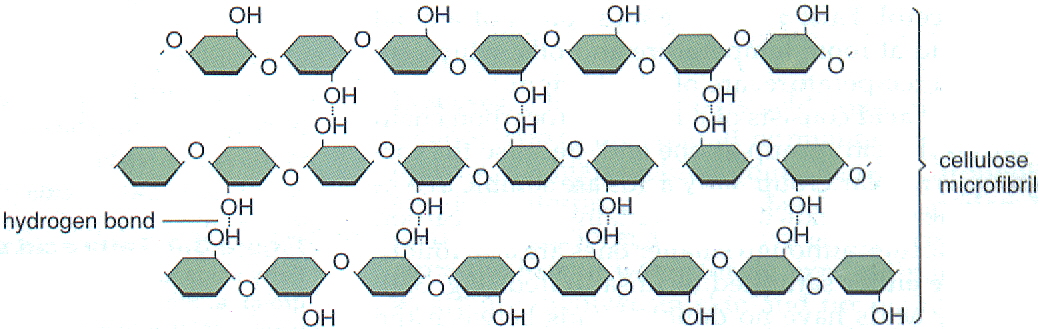
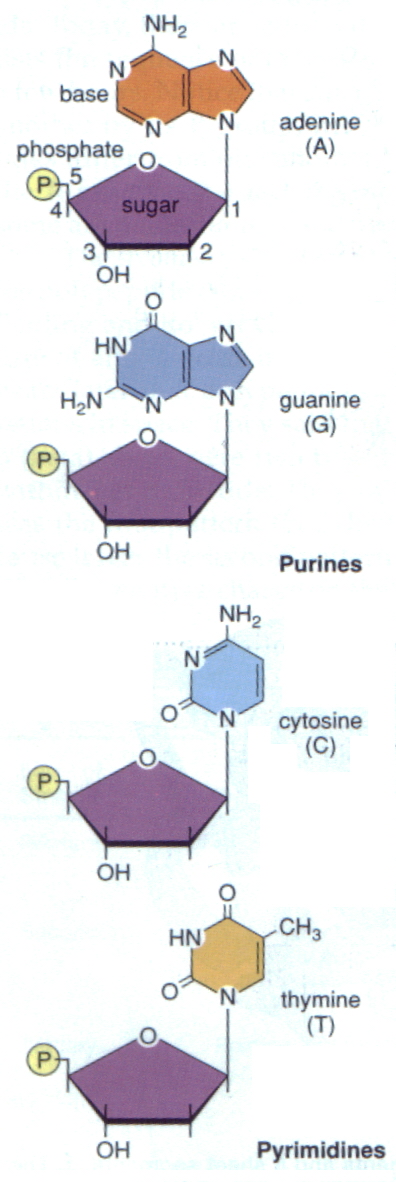
These hydrogen bonds also keep the DNA together until they are separated by the right enzyme (a substance that speeds ub a reaction by splitting or bonding two molecules). For more on nucleic acid structure click here!
Nucleic acids are used mainly in cells for synthesizing protins in the cell, but DNA is also used for cellular replication because it stores the genes needed for the cell to split.
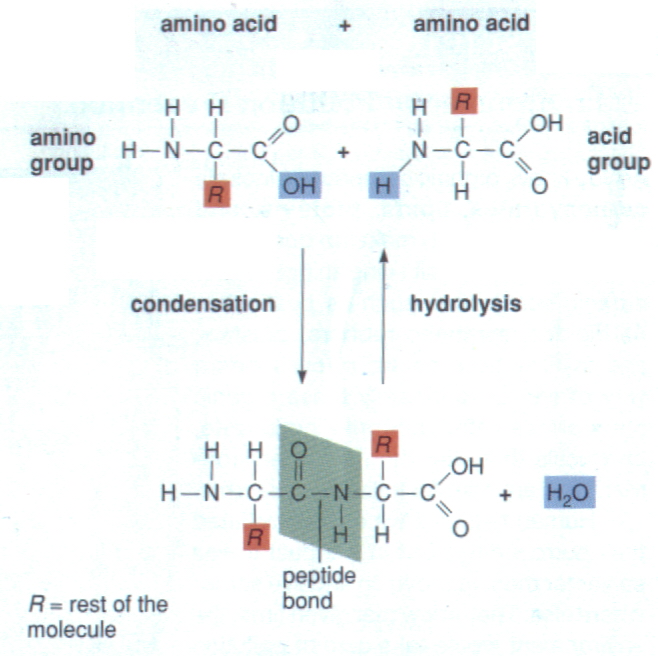
The only reason for this is that all twenty of the types of amino acids have the same exact two functional groups, a carboxyl group and an amino group. These two groups are the only way of knowing whether or not a molecule is an amino acid.
The sequence of amino acids determines the shape of the protein and the shape of a protein can greatly affect and determine it's function. See amino acids bond here!
Many proteins are ensymes that speed up chemical reactions. The enzyme, insulin, for instance, is a hormone that regulates the glucose (a sugar) in the blood. Hemoglobin, however, transports oxygen through the blood.
2) another chart of some of the functional groups
3) a description of some of the functional groups