 |
 |
 |
 |
 |
 |
 |
 |
 |
 |
 |
 |
 |
 |
 |
 |
 |
 |
 |
 |
 |
 |
 |
 |
 |
 |
 |
 |
 |
 |
 |
 |
 |
 |
 |
 |
 |
 |
 |
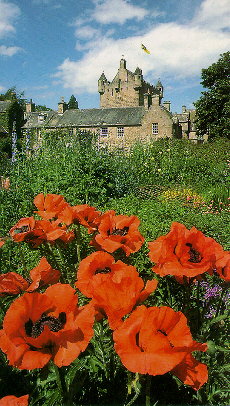
| These are a listing of certain castles from the Macbeth period. While "Macbeth" wasn't a true story, the places that it took place in are very real. here are three clastles and then pictures of a lot more. |
| Glamis Castle | ||
 |
 |
|
|
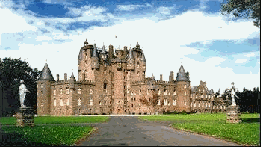
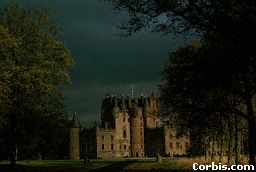
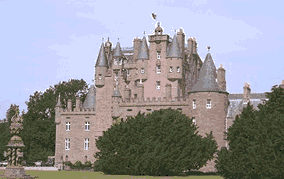
History of Glamis Castle The family home of the Earls of Strathmore since 1372, when Robert II of Scotland gave the castle to Sir John Lyon. It is the setting for Shakespeare's Macbeth and is refereed to specifically :- "Glamis thou art" "and yet woulds't wrongly win: thou'dst have great Glamis" It is popularly believed that Duncan was murdered here by Macbeth. Legends and myths have grown around the castle. King Malcolm II was said to have been murdered here in the 11th century. Lady Janet Douglas, widow of the Earl of Glamis, was burned at the stake as a witch in 1540 by James V. There is said to be a secret room where a nobleman played cards with the devil himself. Glamis today looks more like a French Chateau than a medieval fortress, because it was extensively restored in the 17th and 18th centuries. The original tower house remains at the centre of the castle today. It has, of course, close connections with the present Royal Family, being the childhood home of Queen Elizabeth the Queen Mother ( she being the youngest daughter of the 14th Earl), and Princess Margaret was born here in 1930. |
||
| Blackness Castle | |
 |
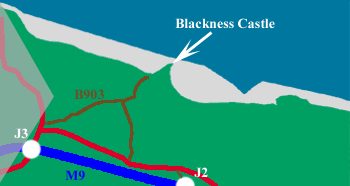 |
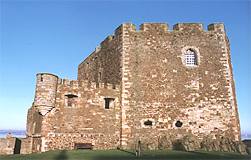
| The castle is in the
care of Historic Scotland and there is an admission charge to the
castle although you can walk around the outside for free. However
it's worth paying the modest entry charge to look over the inside
of the castle, walk the battlements and scale the towers from which
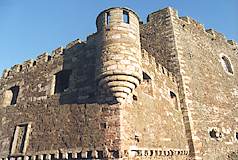
there are excellent views of the River Forth. It was built shortly after 1440 by Sir George Crichton who was the Earl of Caithness and Sheriff of nearby Linlithgow. In 1453 King James II seized the lands of Sir George Crichton and Blackness Castle became Crown property and was used for over 250 years as state prison. Between 1537 and 1543 major building work took place at the castle when the south and east walls were remodelled to withstand artillery. The castle was besieged by Oliver Cromwell's army in 1660, suffered land and sea bombardment, and was left in ruins following it's surrender by the defending garrison. The Castle was restored in the late 1660's and continued to be manned by a garrison of around 20 soldiers. The Castle again became a prison during the wars with France between 1759 and 1815. In 1870 it became the central ammunition depot for Scotland until 1912 when it was scheduled as an ancient monument. The castle is now in good condition following a major rebuilding program between 1926 and 1935. Blackness Castle is open all year round but is closed on Thursday afternoons and all day Friday during in the winter months. Opening times are listed on the Historic Scotland site below. |
|
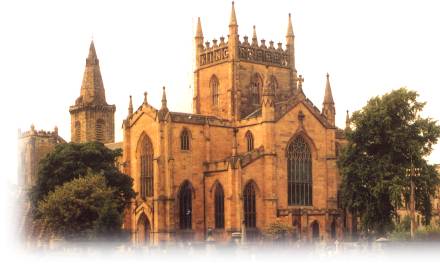
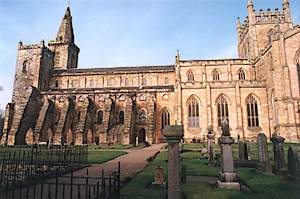
| Dunfermline Abbey | |
 |
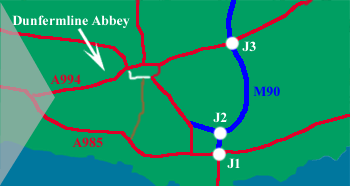 |
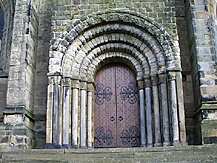
| The western
nave of the Abbey at Dunfermline was built by David I (son of Malcolm
Canmore and St Margaret) in the 12th century, and the eastern part,
the church, was added in the 19th century. King Robert the Bruce is
buried here, as Dunfermline was the burial site of the Scottish monarchs
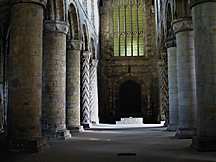
before the adoption of the island of Iona. The tower of the church bears the words 'King Robert the Bruce' and inside, beneath the pulpit is The Bruce's tomb, with it's fine brass cover. |
|
| Other Castles | ||||
 |
 |
 |
 |
 |
 |
 |
 |
 |
 |
 |
 |
 |
 |
 |
 |
||||