







Recent discoveries indicate
that homo sapiens (modern man) evolved in East Africa
between two and half a million years ago, and stone age
implements are found in all parts of the country. Domesticated
cattle appeared c.8000 B.C. 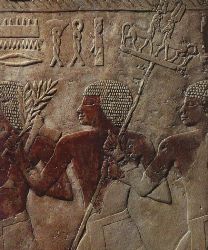 and agricultural settlements, with
pottery, c.5000 B.C. Sudan's early history linked with Egypt and
there are numerous Egyptian trading and raiding parties into Punt
as they called Sudan .Between c.1800-1200 B.C. the Nile valley as
far south as Abu Hamad was part of Egypt. Then in the
eighth century B.C. the position was reversed with the rise of
the kingdom of Kush and, c.750 B.C., Piankhi conquered Egypt. His successors were defeated by
the Assyrians on the Palestine border, 660 B.C. and soon after
driven out of Egypt. Kush, with its capital at Napata, extended from the third cataract as far south as Sennar, and possibly to Er Roseires and Malakal. In 590 B.C. Napta was destroyed and the capital moved to Meroe, where the art of iron working was
and agricultural settlements, with
pottery, c.5000 B.C. Sudan's early history linked with Egypt and
there are numerous Egyptian trading and raiding parties into Punt
as they called Sudan .Between c.1800-1200 B.C. the Nile valley as
far south as Abu Hamad was part of Egypt. Then in the
eighth century B.C. the position was reversed with the rise of
the kingdom of Kush and, c.750 B.C., Piankhi conquered Egypt. His successors were defeated by
the Assyrians on the Palestine border, 660 B.C. and soon after
driven out of Egypt. Kush, with its capital at Napata, extended from the third cataract as far south as Sennar, and possibly to Er Roseires and Malakal. In 590 B.C. Napta was destroyed and the capital moved to Meroe, where the art of iron working was 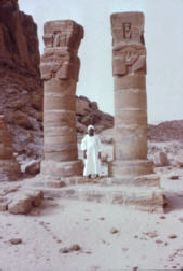 developed, and Kush became an important link in the trade between the
Africa and the Mediterranean. The Egyptian influences are seen in
Kushite pottery , in the script with its
cursive everyday form and ceremonial hieroglyphs , and in the
custom of pyramid burial. The funerary rites of the period
included immolation of wives and servants and the remains of as
many as 300 individuals have been found at some sites. Kush broke up into a number of
tribal states such Nobatia
, Muqurrah and Alwash. They were followed by the kingdoms
of Dongola and Soba after
the country officially became Christian in 548 A.D. Dongola was invaded by Arabs in 652 A.D. and finally fell
in 1340 and embraced Islam . Meanwhile the Nigerian Bornu Empire
had extended its influence as far as Darfur and
from there came the Fung dynasty which replaced the Kingdom
of Soba with that of Sennar in 1500 . At its height the Fung Kingdom covered the greater part of modern Sudan .
It lasted until 1821 when Mohamed Ali , Viceroy of Egypt conquered the
Sudan in the name of the Ottoman Caliphate. Sixty years later ,
in 1881 , Ahmed al-Mahdi led a jihad , holy war,
against the Egyptians and expelled then in 1885. The British
General Gordon, who had been sent to advise the Egyptians , was
killed at the seige of Khartoum. In 1898 British forces defeated
the Mahdi at the Battle of Omdurman and the following year the Anglo-Egyptian Condo
minion was established , placing the
developed, and Kush became an important link in the trade between the
Africa and the Mediterranean. The Egyptian influences are seen in
Kushite pottery , in the script with its
cursive everyday form and ceremonial hieroglyphs , and in the
custom of pyramid burial. The funerary rites of the period
included immolation of wives and servants and the remains of as
many as 300 individuals have been found at some sites. Kush broke up into a number of
tribal states such Nobatia
, Muqurrah and Alwash. They were followed by the kingdoms
of Dongola and Soba after
the country officially became Christian in 548 A.D. Dongola was invaded by Arabs in 652 A.D. and finally fell
in 1340 and embraced Islam . Meanwhile the Nigerian Bornu Empire
had extended its influence as far as Darfur and
from there came the Fung dynasty which replaced the Kingdom
of Soba with that of Sennar in 1500 . At its height the Fung Kingdom covered the greater part of modern Sudan .
It lasted until 1821 when Mohamed Ali , Viceroy of Egypt conquered the
Sudan in the name of the Ottoman Caliphate. Sixty years later ,
in 1881 , Ahmed al-Mahdi led a jihad , holy war,
against the Egyptians and expelled then in 1885. The British
General Gordon, who had been sent to advise the Egyptians , was
killed at the seige of Khartoum. In 1898 British forces defeated
the Mahdi at the Battle of Omdurman and the following year the Anglo-Egyptian Condo
minion was established , placing the 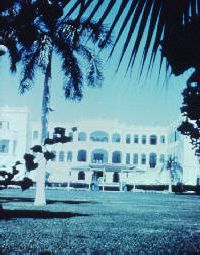 administration in British hands who
proceeded to lay the foundations of the present judicial ,
financial , educational and medical services. Gradually the
riverain people of the south were brought into the framework of
government; railways were built; irrigation works began and
domestic slavery was finally rooted out. By 1936 the demand for
independence was gaining popularity and in 1948 a Legislative
Assembly was granted . In 1952 Egypt became a Republic and
negotiations on Sudanese independence were opened between Egypt,
Britain and Sudan. A three year transition period was agreed and
Sudan became independent on 1 January 1956.
administration in British hands who
proceeded to lay the foundations of the present judicial ,
financial , educational and medical services. Gradually the
riverain people of the south were brought into the framework of
government; railways were built; irrigation works began and
domestic slavery was finally rooted out. By 1936 the demand for
independence was gaining popularity and in 1948 a Legislative
Assembly was granted . In 1952 Egypt became a Republic and
negotiations on Sudanese independence were opened between Egypt,
Britain and Sudan. A three year transition period was agreed and
Sudan became independent on 1 January 1956.