Welcome to Sans Peur Clothing by Lynn
The Clothing Division of Wrights Mercantile
The Regency Period 1790 to 1820
The Empire style of Women's Clothing took shape.
There was an interesting change in clothing . Women had less cloth, the styles of the 1750's to 1790's with 15 to 20 yards in an outfit were gone. For more information on 1750 to 1790 Styles.
The textile guild had been outlawed and styles reverted back to a medieval style of dress, an empire form, like that of Grecian Statues.The style of the regency period was high wasted, opening in the back, the dresses were airy, lightly colored, with the skirt having 2/3 of the cloth across the back and 1/3 across the front. Even the weight of the cloth was lightweight and flowing.
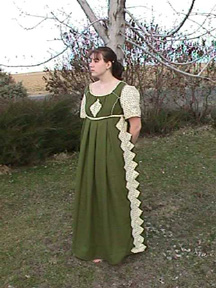
 The Regency Gown, The Empire Dress, The Influenza Gown, all of these names are for the gowns that had a very high waist line that came right under the breast and had a very full skirt, mostly in the back. It wasn't uncommon for the gowns to be so low cut in front that the woman's nipples would show. Here we have a simple young ladies dress with an apron.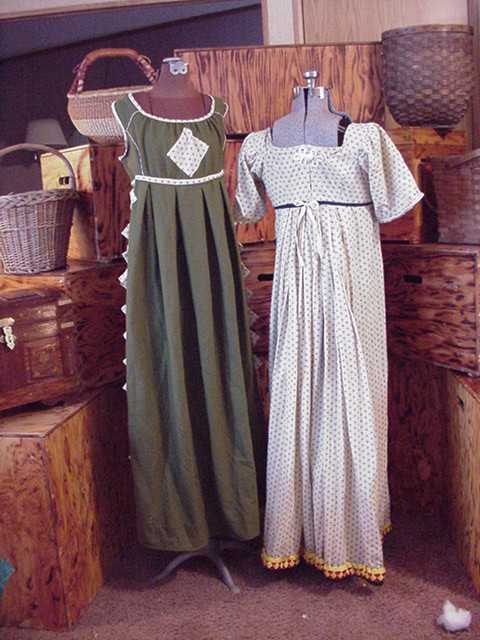
Back View of Dress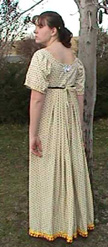
The Christina Regency Gown is a more fitted version. The apron on the left has piping to accentuate the multiple pieces that it took to put this together. One of the nice changes is that these gowns had drawstrings around the neck and the high waist. This gave the wearer the ability to utilize this style for years and various sizes.
As you can see from the photo of the back of the gown the skirt is double the fullness of the front, therefore, giving the allusion of a high bustle.
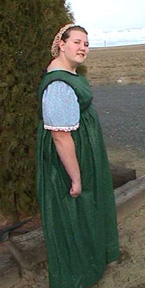
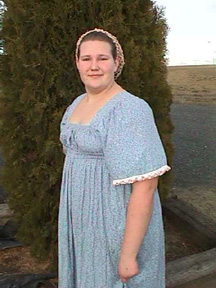
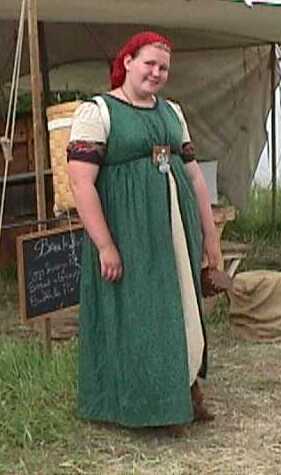
The Jenifer Regency Gown
A simple young woman's style of dress, also worn by the working class because of the openness of the arm hole and sleeve opening. The drawstring in the neck and the high waist give added comfort and ease of movement. This apron is simple and made of dark cloth to hide the stains that would have happened in everyday life.
The Corset
The only way to get a correct figure for the Regency gowns was to wear a long line corset. This style was repeated around the time of the Titanic. These were worn under the gowns, never over the top; they had a tendency to rub on a ladies skin so she always wore a Chamise underneath. The Regency style included a "busk", which is a strip of wood that was inserted down the front and back of the corset to keep your posture straight.
The Chamise.
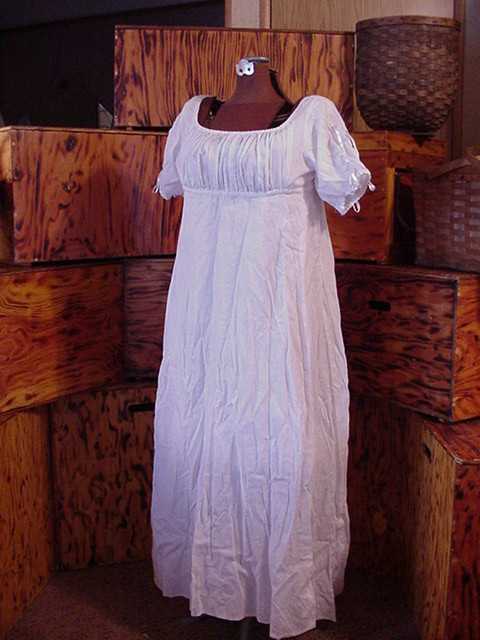
This Chamise is different from the full sleeved version worn before and after the Regency Period; it is altered to be worn with the more narrow skirts and for use with the Empire or Influenza Gowns.
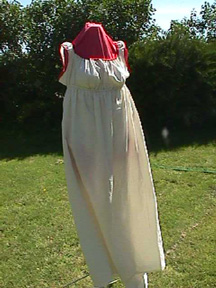
Underdress style 1, this under dress is made from the same pattern as the Day dress except that the sleeves were omitted. This gave the outfit a "liner" of such. Since the "Fashion" of the day was to ask your friend or sister to sprinkle water on your gown to make it stick to your body the liner was a parents way to keep you from looking naked.
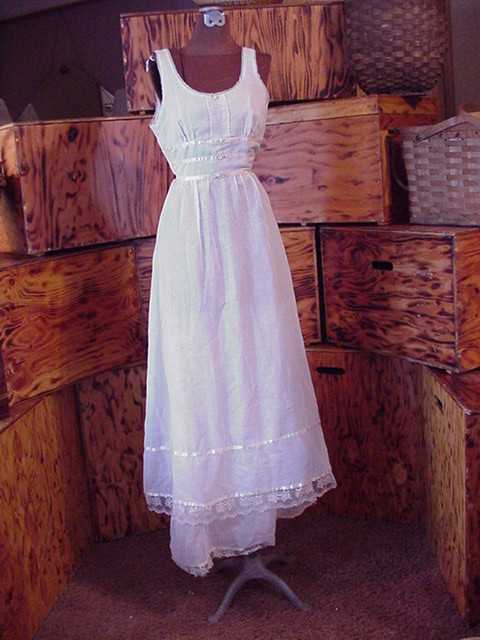
Underdress style 2, is the form fitting under dress of the working woman. She would want to keep all her attributes firmly conceiled and an under garment like this was sure to keep the necessities in place.
The Pantaloons
This is a pair of pants, made of muslin or osnaburg without a crotch, occasionally gathered at the calf or knee. When the weather turned cold or wet the women would put the pantaloons over the top of their chamises to hold in the heat or keep their Chamise out of the mud.

Small slippers, almost ballet slippers were worn on their feet over silk stockings, not nylon silk stockings but fine sewn cloth socks. Later in the era the art of knitting was used to make their long stockings.
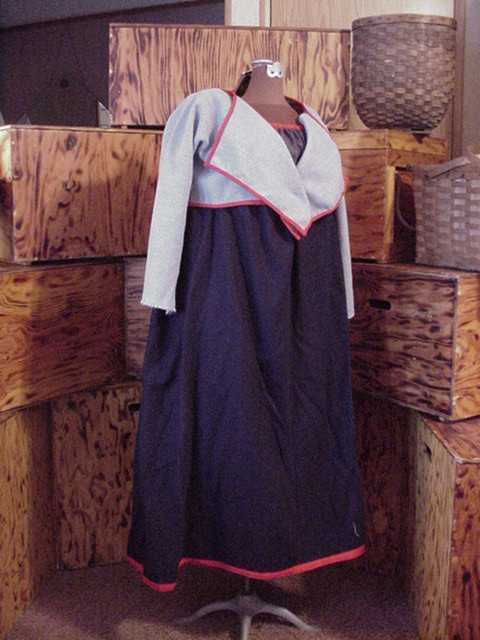
The Metis dress
An excerpt from: Feminine Fur Trade Fashions, Page12
Canadian Dress
The Canadians under the direction of the Hudson's Bay Company's noted leader Peter Skane Ogden, invaded American trapper's domain several times, once trapping as far south as Mexico. One reason for the Canadian's success was that the HBC men took their wives with them. The trappers were more responsible to their commitments to the Company and to the brigade, and the women made camp life and travel more pleasant.
This dress was a popular style among Indians and mized bloods on the Canadian frontier. The neckline, wrists, bodice back and hemline are bound with contrasting bias fabric or braid.
These dresses were always of wool, and favorite colors were dark blue, light blue, and scarlet. A scarf of contrasting fabric covers the the bosom at the neckline.

To leave messages and information for me about my web site, prices, or order that great set of clothes to make your character in Rendezvous or Reinacting a believable success. We do accept Visa, Master Charge, Checks and we have a Lay a Way Program, just ask.
© September 2000 By Lynn