The Problem |
|
The Problem |
|
|
|
|
|
|
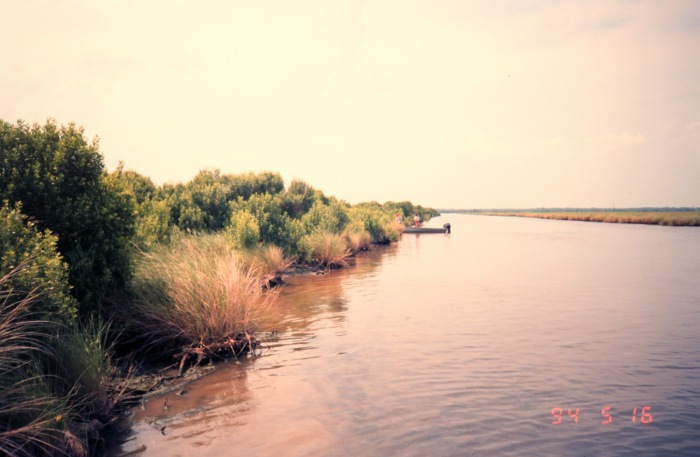
This coastal area loss poses a huge problem not only to the species inhabiting this area, but also to the many people who rely on Louisiana's coast for their livelihood. Although much has been done to stop coastal erosion, new problems are being discovered -- namely the Brown Marsh Phenomenon. The problems that Louisiana's coastal areas face have many causes--both natural and man-made.
|
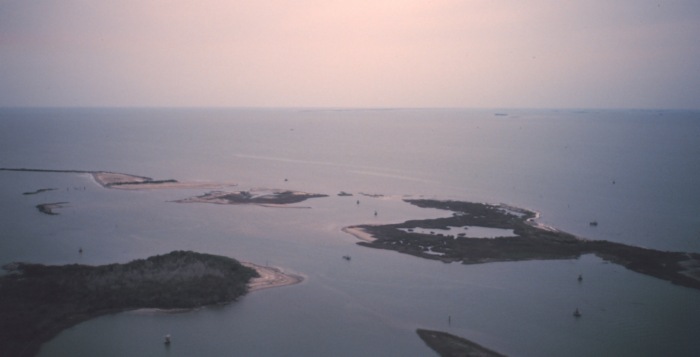
Islands near East Timbalier Island.
|
|
|
|
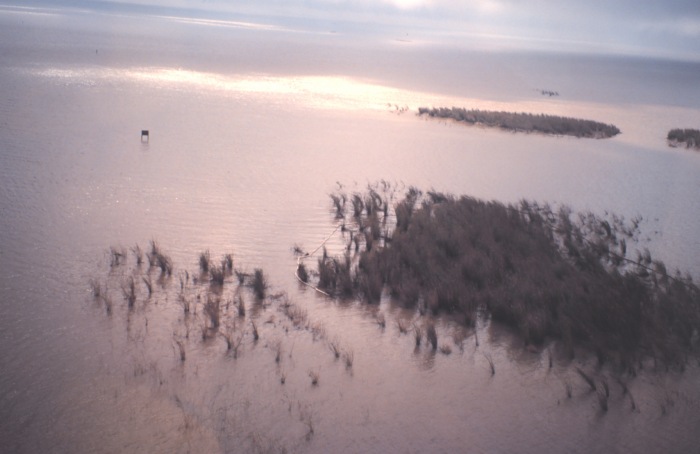
Dixon Bay following an oil spill-- this growth is beginning to recede.
|
What is the Brown Marsh Phenomenon? Recently, researchers began noticing that healthy salt marsh was experiencing an alarmingly high rate of dieback creating huge patches of dead, brown marsh. Marsh is continually dying in small patches, but the magnitude of this loss is cause for concern. The exact cause of this profound loss is not yet known, however, scientists believe that it may be due to various environmental stressers such as drought that have caused the plants to be more susceptible to pathogens. Whatever the cause, the outcome will be the same if brown marsh continues to spread. The loss of salt marshes represents a loss in habitat for many species. Coastal loss will also effectively remove any barrier between coastal communities and hurricane winds and tidal surges. Check out the Links page to find
out what you can do to help preserve America's wetlands!
|
|
|
|