BCU - Earth
Garden Entrance
Contact B.Howe
Composting
This has to be one of the easiest ways to reduce kitchen and yard waste. You'll notice a significant drop in the amount of garbage that goes out for collection, just by beginning and maintaining a compost heap. There is also the benefit to your garden of the nice nutrient rich soil additive or the mulch that can come from the pile. If you have a spot to put a pile in, I strongly urge you to go for it.The Commercial Compost Bin:
I cannot help you here. I had one for 5 years (it can be seen tucked out of the way on the left side of the photo below) and could not get the thing to fire properly. I tried adding accelerants, measuring the green vs. brown materials, adding water, letting it dry out, aerating, sunny locations, partly sunny locations, shady locations, etc........ Finally, I gave up, started a pile (which fired right away and has never given me grief) and gave the bin to my neighbour.
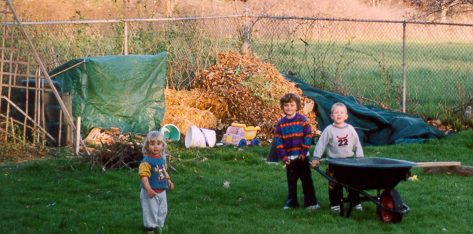
Spring compost pile. The big pile of leaves is the winter mulch from the beds waiting to be put in the compost pile. The green tarp covers the compost pile which had reached the top of the fence when it was begun the previous fall. The kids and I will end up taking about 18 wheelbarrow loads of compost out of there before re-building the pile with the winter mulch the following day.
The Compost Pile:
This is my preferred method, in truth, the only method I got to work. It is a big pile of leaves, weeds, kitchen scraps, garden cuttings, anything that will eventually break down but won't attract rodents (ie. no meat or fatty stuff). It sits quietly under an old green pool-cover in the farthest corner of the yard, and composts away all year long.
In Spring: I'll take out a little of the broken down material, there usually isn't much at this time of the year. Then I add everything I can lay my hands on - winter mulch from the beds, weeds, grass from the first cutting, kitchen scraps, the bagged leaves which were left over from the previous fall, a few buckets of water, give it a good turning with an aerator or pitchfork. I also re-install the pool-cover, it allows for free air/water movement but is a nice dark green to raise the heat a little, and keeps the dry leaves from blowing around.
Summer: the pile is pretty much left to it's own. I keep adding the kitchen stuff. Usually I'll dig a small hole into the pile for dumping the scraps into, when it fills I cover it and start a new one. Any weeds that I find still get thrown on there. And, only if I think about it, I'll aerate the pile every so often (maybe 2-4 times over the summer). I do not add grass clippings as I use a reel-style push mower, and try to cut often. The clippings that come from that are best left on the lawn, in my opinion.
Fall: Busy compost time. The pile is usually well broken down now, except for a layer of new stuff on top. I'll scrape that new layer to one side and dig out the good stuff. This will become mulch/additive for any of the beds that need it. It is nice stuff, lots of worms. When I've spread the good compost around, I'll begin shredding leaves onto the pile, and adding any material which comes out of closing down the beds. In previous years, I have built piles of shredded leaves 5-6' high, which compress down over the first couple weeks to only 2-3'. I keep the cover on so that I don't have to rake the leaves again.
Finally, Winter: As you can imagine this is the slowest time of the year for the compost pile. Just before the snow sets (after a good stretch of rain has wet the pile down) I will remove and store the pool-cover. Once the snow falls and the ground freezes it can be a real pain getting the cover open. I'll dig a small trough along the top of the pile, just deep enough to drop a few buckets of food into, but not so deep as to cut into the core of the pile (that is where the heat stays). All winter long I will just empty the kitchen bucket on top of the pile. If we get a warm snap during January/February I may cover it with a left-over bag of leaves. But that is it until spring comes again.
Books: Many books discuss composting - some are scientific, some are not. I really liked Pat Lanza's 'Lasagna Gardening'. It's also a wonderfully easy, and rewarding gardening technique.
I've tried to post my normal composting routine, it does get tweaked depending on available materials, weather, etc. If you have specific questions which I may be able to answer please don't hesitate to contact me. I'll try to respond to your question directly and by posting here in case it may help another.
Thanks for stopping by,
Brett