

This was originally a four part blog on my 360 page. it is now presented here because of the value of the information contained within...
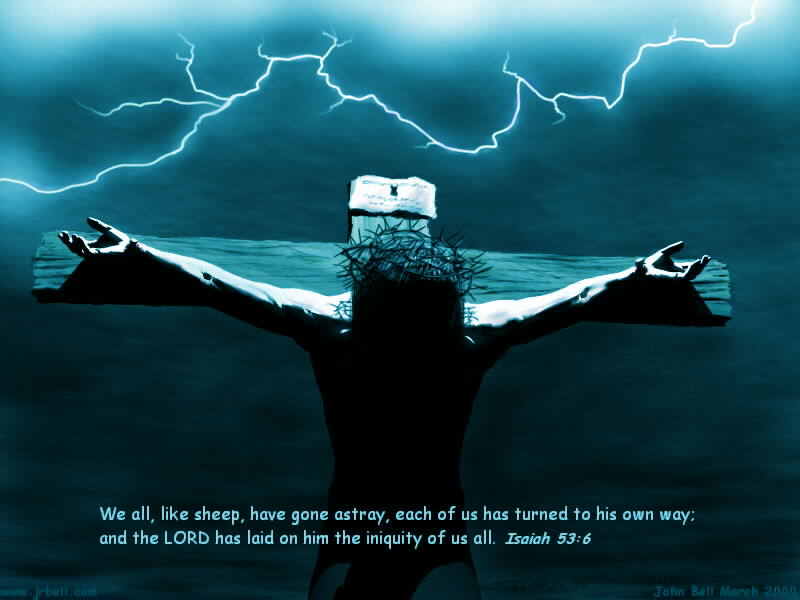
There is a great controversy among those religious groups that demand water baptism as part of salvation as to how the thief on the cross with Jesus got into heaven without being first baptized in water, as they believe is required for salvation. Some Answer this controversy by stating that the thief had a special dispensation directly from Christ, similar to His many declarations about forgiving the sins of persons whom the Sanhedrin figured were beyond salvation in their eyes.
What this does is (they think) that this creates a loophole in which they can claim that certain people were forgiven without having first needing to be baptized in water in order to be saved. This also answers their silence as to whether the soldier in the foxhole, the person in the hospital, or at the accident site can be saved if they ask for mercy and forgiveness and repent before their death, yet without access to water baptism prior to said death.
They therefore don't actually believe that people can be saved by grace through faith (Eph 2:8-10) unless they are first baptized in water. This controversy comes from a skewed and misunderstood view of the Bible, mostly skewed on purpose by whatever questionable religious denomination they attend. Biblical fact adresses this skew. What this blog will attempt to do in the next few days is address these problems....
Firstly, many people don't truly understand what salvation is, what grace is, what remission of sins are, how they are enabled, and how they work to allow the lost to step out of that lost world into salvation as a new creature in Christ. So ignorance of the truth is partial to the cause of this skewing and/or misunderstanding. But also some facts in the Bible are purposely skewed or exploited by these groups in order to be used as spoon-fed pablum directly to their congregation.
In many of these churches, dissent is immediately and firmly put down by the pastor, priest, or minister, and also in many cases by the congregation. Further disagreement or dissention from what they believe due to their spoon feedings results in repulsion from the inside of the group and the labeling of backslider or worse. Hence, many of these questionable churches rule by fear, and that fear is the direct result of them also spoon feeding the pablum that salvation can only be found in their church and/or denomination.
What this blog will attempt to do is to quickly summarize the flaws of the skewed beliefs of these questionable churches, and then to at more length state what salvation, remission of sins, and grace truly are, how they are effected and enabled, and how they work in the life of a christian.
The Flaws
The "water-baptism-is-required-to-be-saved" crowd use five basic prooftexts in order to try to foist their skewed beliefs on those of their congregations and anyone else they can control, either inside or outside the church. The first of these is Acts 2:38, the end all and be all of the "water baptism is required for salvation" crowd....
Act 2:37 Now when these words came to their ears their hearts were troubled, and they said to Peter and the other Apostles, Brothers, what are we to do? Act 2:38 And Peter said, Let your hearts be changed, every one of you, and have baptism in the name of Jesus Christ, for the forgiveness of your sins; and you will have the Holy Spirit given to you. Act 2:39 For the word of God is for you and for your children and for all those who are far off, even all those who may be marked out by the Lord our God.
The problem with this verse as read in english is that Peter is talking about a progression. It is this progression that becomes skewed to be a progression of repentance, which leads one to have a water baptism in the name of the Lord, which somehow grants remission of sins through the act of that baptism, and then the gift, or baptism of the Holy Spirit is given.
The second "water baptism" scripture used might be John 3:5...
Joh 3:5 Jesus said in answer, Truly, I say to you, If a man's birth is not from water and from the Spirit, it is not possible for him to go into the kingdom of God.
Again, on the surface, in english, this might lead some to formulate a belief that unless one is born of water (baptism) and the Spirit, one cannot go into the Kingdom of God, hence he or she is not saved. A third "water baptism" prooftext that might be used is Mark 16:16...
Mar 16:16 He who has faith and is given baptism will get salvation; but he who has not faith will be judged.
Again, it certainly seems from a surface reading in english that unless one has belief and is baptized they will be judged, and found not saved. Our fourth prooftext that is most mangled and skewed might be 1 Peter 3:21....
1Pe 3:21 And baptism, of which this is an image, now gives you salvation, not by washing clean the flesh, but by making you free from the sense of sin before God, through the coming again of Jesus Christ from the dead;
The last prooftext used will be Acts 22:11...
Act 22:16 And now, why are you waiting? get up, and have baptism, for the washing away of your sins, giving worship to his name.
In rebuttal, let's look more indepth at these verses....
The true progression being spoken of here is repentance, which leads one to become saved by grace through faith, which gains them remittance of sin, and then at some point after that, in no certain order, they undergo a baptism as a response to that salvation gained by grace through faith and/or obtain the baptism of the Holy Spirit, which some churches call a point reached at in the christian walk known as Sanctification or Entire Sanctification. While this second baptism by the Spirit instead of water might come simultaneously with initial salvation by grace through faith, that is not always the case.
Sice this second baptism is based on surrender, when a person becomes willing to surrender their entire life to God seems to determine when this second baptism occurs. However, one proof that Acts 2:38 as skewed is false is found in the progression of Events in Acts 10. Peter eventually goes to the household of Cornelius and preaches to them, whereupon they suddenly gain the second baptism and begin speaking in tongues, just as those in the upper room did on Pentecost.
Unfortunately for the "water baptism" folks, this all occurs before water baptism can be thought of, let alone undertaken, which proves that since the "gift" of the Spirit can be given before water baptism, so too can salvation be obtained without water baptism, since the "gift" is dependent on the remission of sins to occur first, via obtaining initial salvation by grace through faith, BEFORE water baptism. Therefore, Acts 10 is biblical proof that the "for" in Acts 2:38, or "eis" in the greek, can move both forward and backward in time.
Peter's response in Acts 2:38 to the peoples clamour is therefore, "Repent, obtain initial salvation by grace through faith, and then (in no certain order) be baptized in water as both a public, outward confession of the inward changes wrought as a new creature in Christ before the water baptism, as well as an identification with Christ's burial, death, and resurrection, in much the same way as our Communion is undertaken, a symbolic thing to remind us of the actual events.
And now for the second proof-text...John 3:5....
John 3:3-8
In John 3:1,2 a man of the Sanhedrin, by the name of Nicodemus comes to Jesus at night (skulking in private so as not to be seen by the other persons in the Sanhedrin). He recognizes that Jesus comes from God, but misses the biblical fact that Jesus is indeed also God. Thus, Jesus then begins to teach Nicodemus.
In John 3:3, Jesus says the following...
Joh 3:3 Jesus said to him, Truly, I say to you, Without a new birth no man is able to see the kingdom of God.
Right away, this triggers something in Nicodemus...Jesus mentions a new birth, which means that our physical birth is the old birth. Not knowing what the new rebirth is, Nicodemus answers Jesus via the old birth...
Joh 3:4 Nicodemus said to him, How is it possible for a man to be given birth when he is old? Is he able to go into his mother's body a second time and come to birth again?
Jesus answer by saying that one must be born of water and of the Spirit. "Water baptism" folks mistake and/or skew this into that the new rebirth must be of water (baptism) and of the Spirit. This is not the case. Since the New birth has been established, the old birth is also established. You cannot have the new without the old.
Therefore Jesus, who is speaking this to Nicodemus when the only baptism that existed at the time was John's baptism; is inferring that there has already been an old birth (by water) and so the new rebirth comes via the Spirit. In ancient times, people did not know that amniotic fluid was not water.
It is clear, flows like water when it bursts, and for all other intents and puposes was considered as water in ancient times. Ironically, even though we know better today, when a dilating woman talks to the doctor, she will tell him that her "water" broke at such and such time...
Therefore, Jesus is inferring that the water birth is our old and first, or physical birth. We then obtain the second, new rebirth via the Spirit alone. How do I know? I know because of the next three verses....
Joh 3:6 That which has birth from the flesh is flesh, and that which has birth from the Spirit is spirit. Joh 3:7 Do not be surprised that I say to you, It is necessary for you to have a second birth. Joh 3:8 The wind goes where its pleasure takes it, and the sound of it comes to your ears, but you are unable to say where it comes from and where it goes: so it is with everyone whose birth is from the Spirit.
If the "water baptism" folks are right, then verse 6 should state, "That which has birth from the flesh is flesh, and that which has birth FROM WATER and from the Spirit is spirit. Verse 8 then should end, "...so it is with everyone whose birth is from WATER AND of the Spirit. But there is no mention of water in either verses. Indeed, when one delves into the whole context, one realizes that Jesus' inference is that the new birth is accomplished by the Holy Spirit, and the Holy Spirit alone! Can this be proven? Yes!
Gen 2:7 And the Lord God made man from the dust of the earth, breathing into him the breath of life: and man became a living soul.
In the King James Version, the terminology is, " And the LORD God formed man of the dust of the ground, and breathed into his nostrils the breath of life; and man became a living soul." There is nothing in the Bible that states that God does this for animals. Only man. This sugggests that life can be created by God from nothing. But it also suggests that Adam was created with something else.
The original hebrew word for the breath from God is "neshâmâh." This word means "to puff," and suggests that Adam was endowed with a physical creation (from the dust of the ground), a spiritual creation (the breath of life), and an eternal creation (living soul). Therefore, Adam was created to have life such as the animals enjoy it, but also was created to be a spiritual creature, in tune directly with God, as well as to live eternally, unlike animals.
When Adam fell, he lost this legacy and plunged his legacy into sin. Ironically and wonderfully, this spiritual creation is restored by Christ....
Joh 20:22 And when he had said this, breathing on them, he said to them, Let the Holy Spirit come on you:
The meaning of the greek word of "emphusaō" also ironically means, "to puff." Wonderfully, it means that Jesus restored the apostles to the spiritual creation of Adam, just as He restores us when we obtain initial salvation by grace, through faith. There is only one other place in the Bible where this meaning is used....
2Ti 3:16 Every holy Writing which comes from God is of profit for teaching, for training, for guiding, for education in righteousness: 2Ti 3:17 So that the man of God may be complete, trained and made ready for every good work.
In the next section, I will answer the truth about the other three verses, as well as lay the groundwork for true salvation, remittance of sin, and grace.
Mar 16:16 He that believeth and is baptized shall be saved; but he that disbelieveth shall be condemned.
There are several problems with this verse, indeed the whole passage from what you usually see as Mark 16:9-20. One of these problems surfaces when we realize that the oldest and most reliable copies of Mark end at verse 8 in chapter 16. If the writer of Mark intended an ending to what appears as Mark 16:8, then it did not survive.
What you then see are three separate and different endings that occur much later than the earlist copies. The first of these is what you usually see as Mark 16:9-20. The second of these is totally different, and the third is a combination of the first two. Apparently, at a later date, a redactor(s) added the endings onto the copies of the originals, since they felt that an ending was needed.
What this means is that what you see as Mark 169-20, and specifically Mark 16:16, is no way provable to be inspired by God. There is indeed no way to attributes the words to Jesus. Lastly, one should not base one's eternal life on one skewed verse. In addition, in the passage of John 3:14-18, in John 3:18, the exact same thing is stated with the baptism conspicuously missing.... To be honest, Mark 16:16 is really only talking about belief, not baptism. The proof is that the baptism is missing from the other side of the verse.
Joh 3:18 He that believeth on him is not judged: he that believeth not hath been judged already, because he hath not believed on the name of the only begotten Son of God.
The next of our three remaining "water baptism" verses is 1 Peter 3:21....
1Pe 3:21 Baptism, which is symbolized by that water, now saves you also, not by removing dirt from the body, but by asking God for a clear conscience based on the resurrection of Jesus Christ,
Well, the problems surrounding this verse torn out of context, is revealed in the context of the passage itself....
1Pe 3:18 For Christ also suffered for sins once for all, an innocent person for the guilty, so that he could bring you to God. He was put to death in the sphere of the flesh but was made alive in the sphere of the spirit,
1Pe 3:19 in which he went and made a proclamation to those imprisoned spirits
1Pe 3:20 who disobeyed long ago in the days of Noah, when God waited patiently while the ark was being built. In it a few, that is, eight persons, were saved by water.
1Pe 3:21 Baptism, which is symbolized by that water, now saves you also, not by removing dirt from the body, but by asking God for a clear conscience based on the resurrection of Jesus Christ,
1Pe 3:22 who has gone to heaven and is at the right hand of God, where angels, authorities, and powers have been made subject to him.
The key to the truth of verse 21 is that the baptism is symbolized by "that" water. "That" water is the water of the flood, which saved Noah and his family. Did the flood water save Noah and his family spiritually? No. Were they baptized into the flood water? No. So the key becomes what saved Noah, and how that applies to verse 21.
The early chapters of the book of Genesis reveal that what "saved" Noah was that Noah found favor in the eyes of God, which God imputed unto righteousness. Hebrews 11:7 reveals the vehicle through which Noah found favor in God's eyes, unto righteousness....
Heb 11:7 By faith Noah, when warned about things not yet seen, reverently prepared an ark to save his family, and by it he condemned the world and became an heir of the righteousness that comes by faith.
So righteousness, both in the Old Testament and the New, comes by faith. Are there other truths in the Bible that prove this faith?
Eph 2:8 for by grace have ye been saved through faith; and that not of yourselves, it is the gift of God; Eph 2:9 not of works, that no man should glory. Eph 2:10 For we are his workmanship, created in Christ Jesus for good works, which God afore prepared that we should walk in them.
Rom 10:8 But what saith it? The word is nigh thee, in thy mouth, and in thy heart: that is, the word of faith, which we preach:
Rom 10:9 because if thou shalt confess with thy mouth Jesus as Lord, and shalt believe in thy heart that God raised him from the dead, thou shalt be saved:
Rom 10:10 for with the heart man believeth unto righteousness; and with the mouth confession is made unto salvation.
So the truth is, especially for the New Testament, that with the heart man believes unto righteousness (by believing that God the Father raised Jesus from the dead), and with the mouth confession is made unto salvation. Is it just me, or do you also see that there is no mention whatsoever in obtaining righteousness and salvation by water baptism. Indeed, the above two verses show that water baptism is not needed in order to obtain initial salvation.
So, in verse 21, when Peter adds, "...not by removing dirt from the body," this is a revelation that nothing that resembles taking a bath gives you righteousness or salvation. The answer is found right there at the end of the verse. "...but by asking God for a clear conscience based on the resurrection of Jesus Christ," This is the pathway to obtaining initial salvation...Ask God for a clear conscience based on the resurrection of Jesus Christ. Believe wholeheartedly that the Father raised Jesus from the dead, and God imputes righteousness unto you. Confess Jesus as Lord of your life with the mouth, and God grants salvation.
So, in summary, Grace and belief or faith is how someone becomes saved, not by water baptism. The last of the five proof-texted verses is Acts 22:16...
Act 22:16 And now why tarriest thou? arise, and be baptized, and wash away thy sins, calling on his name.
To fully deal with this verse, I'm going to need to wait till the next section. The reason why is because we need to fully understand what Grace is and what remission of sins is. We need to understand what enables Grace, and what enables remission of sin. We also need to know how we access Grace, and how we access remission of sins. When we know that, we will then know why being baptized in water can never wash away your sins.
What is Grace? How is it enabled? How do we access it? What is remission of sin? What enables remission of sin? How do we access remission of sin? When we learn the answers to these questions, we will not only understand why water baptism will never save you or give you Grace or remit your sins; but we will also be able to understand what salvation truly is, and how we may obtain initial salvation without water baptism. There are five "water baptism" proof-texts that the folks who erroneously believe that water baptism is necessary to obtain initial salvation, and we have dealt with four. One remains....
Act 22:16 And now why tarriest thou? arise, and be baptized, and wash away thy sins, calling on his name.
T
he key to debunking this verse that the "water baptism" folks skew is to prove that being baptized in water does not and cannot wash away your sins, cannot grant remission of sins, and cannot obtain for you initial salvation. We know from previous posts in this series that we are saved by grace through faith (Eph 2:8-10). The greek word for grace in Ephesians 2:8 is "charis", and gives the meaning graciousness. It is an act (abstract or concrete; literal, figurative or spiritual; especially the divine influence upon the heart, and its reflection in the life; including gratitude). It's benefit is to bestow favor on one, to make them acceptable.
God's Grace is a free gift that God gives to all who make a heart change to serve Him, as well as making one acceptable to Him. Grace is unmerited. We cannot earn it. We cannot work our way to get it. It is a free gift from God that we don't deserve. Romans 3:23 reveals that all have sinned and fallen short of the glory of God. Romans 6:23 reveals that the wages, or payment for sin is death. Therefore, we ALL deserve to go to hell, and then the Lake of Fire for eternity because of the multitude of our sins.
But, as John 3:16 so poignantly points out, God the Father so loves the people of the world, sinners, lost and on the way to a certain hell so much; that He took the ultimate step of offering His only begotten Son Jesus as an acceptable substitute for the penalty of our sins. In other words, God loved us so much, us guilty sinners; that He allowed His Innocent Son Jesus to take our place in our sentence of death so that we may live eternally with Him and not perish eternally apart from God in hell and the Lake of Fire.
It does not place conditions, either. If one person is as bad as Charles Manson, and another is only guilty of stealing to feed their family, God's substitution of Jesus to take the penalty for their sins is available to all who come to God. And that is the catch. Only those who come to God, make a heart change to serve Him, repent, and let God rule their life and use their skills and gifts; allows a lost and dying sinner to be enabled to become a new creature in Christ Jesus.
Grace then is enabled by that selfless act of Jesus, who bled and died for our sins. God the Father did not force Jesus to the cross. God the Father did not sentence Jesus to the cross. Jesus willingly took the whip and the cross for us. I have a coin that I carry which has a cross on one side, and the words, "He thought of you as He died" on the other. It obviously means a great deal to me. So Jesus' selfless act enabled God the Father to give grace freely to all who partake of it.
As Ephesians 2:8 states, we access Grace unto salvation through faith. Wholeheart faith in Jesus is the key to accessing the Grace that Jesus enabled by His shed blood and death on the cross. Therefore, water baptism cannot enable grace, nor can it access grace.
Remission of sin is just like remission of cancer. It is more the absence of the effect and penalty of sin, just as remission of cancer is the absense of the effect and penalty from sin. It is not an eradication, since people who are in remission of cancer for years can still develop more cancer later. So neither is remission of sin an abcense of sin. It is an ongoing removal of the effects and penalty of sin, which in effect removes the effects of sin from us.
Sin still has consequences, even though God forgives our sin.
Sin may have civil consequences, such as prison time or forced payments of monies, or it may have a more physical consequence, such as a sexually transmitted disease. But sin can also create a heavy toll of consequences in the relationships we have with others, causing lack of trust, hurt feelings, and even the breakup of relationships. Continuing in sin also has consequences. God chastises those whom He loves, so He will allow sickness or loss in order to wake you up and bring you around. Sin can eventually allow the consequence of a stronghold being built up in your life, which He would like to see broken.
So remission of sin does not magically wave an eraser at our sin. It does take the penalty of sin away, but not the consequences..
1Jo 1:9 If we make it our habit to confess our sins, he is faithful and righteous to forgive us those sins and cleanse us from all unrighteousness.
1Jo 1:10 If we say that we have never sinned, we make him a liar and his word is not in us.
So, if we repent of our sins, God is faithful and quick to forgive us those sins and cleanse (wash) us from all unrighteousness. In other words, this is how sins are "washed away" as in Acts 22:16. But God does not stop here.....
Psa 103:12 As far as the east is from the west, so far hath he removed our transgressions from us.
God removes our sins and transgressions from us that far. God not only forgives our sin, He remembers it no more! Why, then, do we continue to bring up sin that God has forgotten and beat ourselves over the head with it and feel guilty about it? I suspect the answer to that question either has something to do with the work of the Adversary, or our own propensity to remember the slights of others, or that some believe that feeling guilty all the time about our sin is what God wants. Clearly the Bible shows that is not the case.
So, we know what the remission of sin is. But what enables remission of sins, and how do we access them? Hebrews 9:22 will give the clue to the answer of the first question.....
Heb 9:20 Saying, This is the blood of the testament which God hath enjoined unto you. Heb 9:21 Moreover he sprinkled with blood both the tabernacle, and all the vessels of the ministry. Heb 9:22 And almost all things are by the law purged with blood; and without shedding of blood is no remission.
Specifically, it is the blood of Jesus shed in the torment of the scourging and the thorns in His head, as well as the nails that held Him to the cross.....
1Jo 1:7 But if we walk in the light, as he is in the light, we have fellowship one with another, and the blood of Jesus Christ his Son cleanseth us from all sin.
It simply cannot be said any better than that. The blood of Jesus enables remission of sins which cleanses us (or washes us) from all sin. So the blood of Jesus is what enables remission of sin. But how do we access remisson of sin? The "water baptism" folks would tell you that that occurs through something called "baptismal regeneration." I prefer the words of Peter in the Bible, because they are far closer to the truth....
Act 10:43 To him give all the prophets witness, that through his name whosoever believeth in him shall receive remission of sins.
In other words, all the prophets witness that whoever wholeheartedly believes (there is that word again) in Jesus shall receive remissoin of sins. So the truth is that wholehearted belief in Jesus is how we access remission of sins, not water baptism. These words of Peter, as recorded in the 10th chapter of Acts, are the last thing the household of Cornelius hears before they obtain the baptism of the Holy Ghost. It's as if they waited for this moment to find out how to access remission of sins unto righteousness and to access Grace through faith and the wholehearted belief in Jesus unto salvation, which was immediately followed by the baptism of the Holy Ghost. Indeed, Peter himself told those jews with him that the household of Cornelius obtained the same baptism of the Holy Ghost as they themselves did on Pentecost!
Act 10:47 Can any man forbid water, that these should not be baptized, which have received the Holy Ghost as well as we?
This tells us two things. Not only did the household of Cornelius obtain initial salvation by grace through faith, but the same baptism of the Holy Ghost as those in the upper room did on the day of Pentecost, but also no water baptism was even thought of, let along carried out, till after the fact of the salvation by grace through faith and baptism of the Holy Ghost by the household of Cornelius! Indeed, this is full proof that water baptism is not necessary to obtain initial salvation, since it comes after the fact of the household of Cornelius obtaining initial salvation and the same baptism of the Holy Ghost that Peter did.
So, if we are honest, I think we can safely say two things, backed by the truth of the Bible. The first is that water baptism has no property to enable grace nor remission of sins unto salvation, nor does water baptism have the property to allow us to access grace nor remission of sins unto salvation. The second thing we can say is also a direct contradiction of what the "water baptism" folks believe; and that is that initial salvation is obtained how the Bible states it is; by grace through faith, not water. By remission of sins through wholehearted belief in Jesus, not water baptism.
In the last section, we will discuss what salvation truly is, and how it works.
In short, we've learned that water baptism cannot save you, nor is it required in order to be saved. So that has answered the first part of this series, which is, "What happens to the soldier in the foxhole, the woman at the hospital, or the young adult girl at the accident site?"
And of course the answer is that they too, with honest repentance and contrition and desire, can receive the same salvation without need or recourse to water baptism that we can. We deserve salvation no more than they do, in fact. The only difference is that heavenly rewards await us, and perhaps fewer await those who wait till they are close to death before they come to the Lord, but they do inheirit salvation the same as we do.
So that brings up the next two final questions, which are, "What is salvation, and how does it work?" and "What do you mean by 'Are you in Jesus' Will?' "
Well, the simple answer to the first question is to apply all we've learned so far. There are two operations of salvation, just as there are two operations of the Holy Spirit. The first operation of salvation answers the question, "What must I do to be saved?"
The water-baptism folks will tell you that you need to be baptized in the name of Jesus unto the remission of sins and obey all of Jesus' commandments to be saved. But I prefer Paul, because with Paul comes truth straight from the Bible....
Act 16:30 And took them out and said, Sirs, what have I to do to get salvation? Act 16:31 And they said, Have faith in the Lord Jesus, and you and your family will have salvation. Act 16:32 And they gave the word of the Lord to him and to all who were in his house. Act 16:33 And that same hour of the night, he took them, and when he had given attention to their wounds, he and all his family had baptism straight away.
Notice the progression here: The jailor asks the question, and Paul answers that if the jailor has faith/belief in the Lord JEsus, then both he and his family would have salvation. There is nothing mentioned about having to have a water baptism in the first birth. It's only after they gave the word of the Lord to the jailor and all in his house that they were baptized, after the fact of their obtaining salvation by grace through faith (Eph 2:8-10).
Obviously, then, in the Bible, baptism in water follows at some later point salvation by grace through faith. Therefore, the Bible proves that water baptism is not required in order to be saved. So, what must you do to become saved? Repent of your past life in rebellion to God, and be contritely sorry for what you've done. Believe whole-heartedly in Jesus for whom He is, and receive Him as Lord of your life through confessing His Lordship over you. That's it!
According to the Bible, if you do the above, you have obtained initial salvation, the first operation of salvation. At that moment, you step from being a lost sinner into becoming a new creature in Christ as a new christian. God breathes on you (John 20:22), and you are restored to being a spiritual being, the Holy Spirit Indwells you, and you have obtained initial salvation.
So don't let the water baptism folks tell you any different. The obedience to Christ's commandments comes AFTER you obtain initial salvation, not before. I have often been told this nonsense by the water baptism folks. What they are really saying is that by being baptized in water, you not only supposedly get saved by baptismal regeneration, but you have also obeyed Christ in the start of obedience.
When you disagree with them after that, they will turn things around on you. They will tell you you can't see with spiritual eyes if you don't see things they way they do. They will even go so far as to call you a backslidden sinner if you persist in questioning what they believe after you become one of them. That is how the "water baptism" cults gain control over people, and they will exert that control anyway they can to keep you in line.
So, when I'm debating these folks on the various christian boards on the internet, I'm often told this little "gem" of theirs about having to obey Christ's commandments to obtain salvation. My answer to them is always, "How can you obey your marriage vows before you are married?" So, if you cannot obey your marriage vows before you are married, how then can you obey Christ when you are still in bondage to the Enemy?
So, the obvious answer is that there are two operations of salvation. The fisrt operation, initial salvation, comes from repentance, and obtaining this intial salvation by grace alone, through faith alone, in Christ alone. You need nothing else to obtain initial salvation, get Indwelt by the Holy Spirit, and to become a new creature in Christ.
The second operation of salvation, then, is answer by the question, "What must I do now that I am saved?" And the answer is that this is where the works and the obedience come in.
Again, the "water baptism" folks will tell you that either the thief on the cross with Jesus received a special dispensation to be saved without baptism; or they will tell you that the thief died under the Old Testament rules and law; or you may here some other excuse. The simple fact is, this is utter nonsense. The thief on the cross died under Grace. In other words, the New Testament dispensation of Grace was already in effect when the thief died.
These are the reasons why I know this to be true.....
Heb 9:15 And for this cause it is through him that a new agreement has come into being, so that after the errors under the first agreement had been taken away by his death, the word of God might have effect for those who were marked out for an eternal heritage. Heb 9:16 Because where there is a testament, there has to be the death of the man who made it. Heb 9:17 For a testament has effect after death; for what power has it while the man who made it is living? Heb 9:18 So that even the first agreement was not made without blood.
When Jesus forgave sins, specifically the sins of the thief on the cross with Him, He was in effect saying, "You're in my Last Will and Testament." He was saying that they had an inheiritance in Him. Paul states the same case below, just as the writer of Hebrews does above....
Rom 8:14 And all those who are guided by the Spirit of God are sons of God. Rom 8:15 For you did not get the spirit of servants again to put you in fear, but the spirit of sons was given to you, by which we say, Abba, Father.
Therefore, when Jesus forgave, He did so as a promise that that person would be included in His will. When Jesus as the testator of His last will and New Testament died, then the will immediately came into force. In other words, the thief, while still alive on the cross next to Jesus after He died could now collect his inheiritance in the will of Christ, which was Grace. And that is how the thief ended up in Paradise, because the promise of Grace in the New Testament became valid with Jesus' last breath and utterance of "It is finished...."
Consider the following...
Mat 27:51 And the curtain of the Temple was parted in two from end to end; and there was an earth-shock; and the rocks were broken;
The important thing to notice about this is precisely when it occured, and what this means.... Here is the verse just before the above....
Mat 27:50 And Jesus gave another loud cry, and gave up his spirit.
Jesus gives up His spirit (dies) and immediately, the veil in the temple is torn in two. This has deep meaning. In the OT days, God dwelt with His people from the mercy seat. The mercy seat was the top of the Ark of the Covenant, which sat in the Holy of Holies in the tabernacle and later in the temple. Only the High Priest could approach this area, and only at the possible peril of his life if he was not pure.
The fact of the veil being torn in two and revealing the mercy seat to all is deep because no more will God dwell with the nation from a spot that only one person can see, but from the hearts of all true believers. That is why our bodies become the temple Paul is speaking about .....
1Co 6:19 Or are you not conscious that your body is a house for the Holy Spirit which is in you, and which has been given to you by God? and you are not the owners of yourselves;
So with the death of Christ, Grace comes down with the New Testament (literally), and even the thief on the cross can have Grace before He dies. Fursthermore, God will no longer dwell in hidden places, but rather in the heart of all true believers. So that is why I asked the question, "Are you in Jesus' Will?"
Perhaps you've seen the movie "Brewsters's Millions." It's about a very minor league pitcher who ends up inheiriting billions, but only on the condition that he can spend a certain amount by the specified time. The idea is to make him so sick of wasting money that he will cherish the rest.
While this isn't the best movie in the world to watch for a christian audience, it does have a remarkable relation to this point. You see, all of us are potential inheiritors of Jesus' will, the same will that allowed the thief on the cross to die under Grace. John 3:16 tells me that everyone is in Jesus' will, if they show up to claim their inheiritance by the specified time limit. That time limit is one's life span.
For those of us who do step up and claim our christian inheiritance from Jesus, they enjoy the fruits of their inheirtance from Jesus. Those who don't step up are not going to inheirit anything from Jesus' will of Grace. Their "grace" period will literally be up, and they collect nothing. Nothing positive, that is.
So your name, my name, everyone is named as a beneficiary in Jesus' will. Not all will step up within the specified time limit, tho. So the question for this series isn't really, "Are you in Jesus Will?" Instead, the real question should be, "Are you a beneficiary of Jesus' Will?"
Thanks for reading. I invite comments and questions...peace.