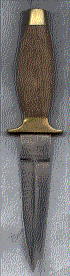
| Accessories Gloves Gloves were worn for warmth, protection while riding, and for show during the Renaissance. Mostly they were the domain of the nobility, so peasants and most of the middle-class should avoid them. Appropriate women�s gloves can frequently be found cheaply at thrift shops: the best are tight-fitting around the hand with a long cuff, though if you wear long evening gloves you�ll need to hide the arm portion underneath your sleeves. Men�s gloves were effectively of the riding gauntlet type, frequently found in modern fencing gauntlets: again, tight around the hand and with a wider, long cuff that protects the wrist. Work gloves, snow gloves, or modern dress gloves don�t work, though there are some forms of kid leather welding gloves that are just about perfect if you can find them (check out a welding supply or hardware store). Like most things Elizabethan, both men�s and women�s gloves can either be plain or elaborately decorated. Tankards and mugs Everyone needs something to drink out of, and tankards make great belt hangers for both men and women, though noble women should avoid them (don�t skip some form of cup just because you�re noble, though � all that fabric and weight means you have to drink more than everyone else!). BE CAREFUL!!! DO NOT simply grab the nearest decorative vessel and assume it is safe to drink from! Many woods are finished with toxic oils, metals may be imported and unsafe with certain liquids, and pottery glazes frequently have lead in them. Also avoid glass mugs: they look great, but are dangerous since your waist is one of the worst possible places for broken glass! If you are unsure, DON�T USE IT! A handy way around the problem of buying a tankard (which can usually be found at the local thrift shop) is to put an intact styrofoam or plastic cup inside a vessel so that it doesn�t show, allowing you to drink safely while still using a period cup. Whenever possible, DRINK WATER!!! Dehydration is NOT a pleasant way to spend an afternoon. Fans One of the few practical elements of garb in the late 16th century was the fan. Most ladies and some male dandies carried these devices, which ranged from simple straw weavings for peasants all the way up to elaborately decorated feather settings for more noble persons. The basic shape of the Renaissance fan mirrors a modern ping-pong paddle. Avoid oriental folding fans including sandalwood � they were virtually unknown at this time. Baskets Ladies, you don�t have a purse in this era, so the best substitute is the hard-working basket. Baskets can be used by all classes, with appropriate attention being paid to what type of basket (i.e. a noble lady is not going to carry the same huge vessel a peasant would). Wicker is the best material out there, both easy to find and relatively cheap. Throw a cloth over whatever your carrying � it hides it and makes the whole bundle look more period, too. Swords, daggers, and knives Every man�s favorite part of middle ages and Renaissance attire is, of course, that shiny, pokey thing you are entitled to wear at your hip. Yes, the �Queen of Weapons�, as Richard Burton calls it, is definitely the most glamorous piece of male paraphernalia from times gone by. There are a few rules to stick to, though. First, know your period! Broadswords, greatswords, and thick daggers work well with tunics and similarly early stuff, while Renaissance gentlemen wore rapiers and thin-bladed daggers. Second, know your class. Good swords were expensive in period just like today, so only the rich would possess them (contrary to Hollywood, most people carried spears or long knives for protection when they had to). This is especially prominent during the Renaissance: only gentlemen who owned 100 or more acres of land could wear swords, so a peasant with a rapier not only looks bad but would probably have been arrested for theft. Finally, and most importantly, BE CAREFUL!!!! Remember that a sword is primarily a WEAPON and is therefore still dangerous. It�s a terrible temptation, but DO NOT draw your blade unless specifically asked. If you absolutely must take the weapon from its sheath, always follow these steps: 1) Find a quiet, lightly trafficked area away from crowds and especially children. 2) Look to the left and right, making sure no one is within 5 feet who is not aware that you are drawing a weapon. 3) Grip the hilt firmly and call �Clear!� before drawing, then slowly and smoothly draw the weapon, maintaining control of the blade at all times. 4) When sheathing the weapon, again check around to make sure the area is clear and safe, and call �Clear!� as you sheath. NEVER point or swing the sword at anyone or anything. To pass the weapon, turn the point to the ground and hand the sword to whoever is receiving it, making sure they have a firm grasp on the grip before you let go. NEVER demonstrate fighting moves or stances with live steel (that is, a real sword) � find an appropriate stick or pretend. As long as you respect the sword or dagger it will greatly enhance your medieval look. Knives were period for everyone (including women, though not nobles) as small eating utensils. Treat them with the same respect you would show a sword, though: just because it�s small doesn�t mean it can�t hurt someone. As far as what works and what doesn�t, double-edged knives with wooden handles are best, but any wooden-handled knife will usually work. Ladies wishing to wear any steel besides a simple eating knife have only one real option: cross-dressing. There is definite historical evidence for women warriors among the Vikings and early Irish, but most of the garb here and especially the Renaissance era precluded armed women. If your heart is set on that jewel-encrusted rapier, make yourself a set of men�s garb or it will just look bad. Jewelry If you�re a noble, or any other class with pretensions, the more shiny stuff the better! Remember that this is the era of ostentation and jewelry shows off how wealthy you are (or how wealthy you want everyone to think you are). The best place to look for all this jewelry at a reasonable price is the local department store � you can usually find something suitable for under twenty bucks. Thrift stores can have great finds as well, but they are less consistent; peasants will probably have the best luck here. Remember your nationality when choosing jewelry! Celtic jewelry would not be worn by non-Celts, Norse jewelry is only worn by Vikings, etc., etc., etc. Rings Rings were worn in profusion by those who could afford them, meaning the middle and upper classes almost exclusively: thumb rings, pinky rings, and multiple rings on each finger were frequently seen among the wealthy, and can frequently look quite striking when worn over gloves (if going for this options, remember to get rings that will fit over the gloves). If you�re wearing gloves it is sometimes a better idea to skip rings altogether. The Elizabethans loved huge stones on their rings, so what you�ll want are thick rings set with big semi-precious or fake stones, usually available quite cheap at the local thrift store. Peasants couldn�t afford rings, so wearing one not only looks bad in peasant garb, but was dangerous in period: a peasant with such finery most likely stole it and would be apprehended as such whether guilty or not. Necklaces � Men�s Like rings, the men of the Renaissance liked their necklaces thick, with a single large pendant hanging down on the chest. The bands were usually a wide ribbon, and the central pendant was either round or an ornate cross, both measuring about the size of a modern pocket-watch. Though men also did wear chains with large links, you�re probably better off to go with the ribbon-and-pendant or skip the necklace entirely. Again, peasants should avoid these markers of wealth. Necklaces � Women�s Women could wear the ribbon-and-pendant type necklaces described above, though pendants could also be suspended from a string of pearls. Also popular were very long strings (usually near, but not reaching, the waistline) of pearls with no pendant, usually worn in multiple strands. Another popular fashion for these pearl necklaces was to loop the center front around a central brooch just below the top edge of the bodice, creating two U-shapes on the chest of the wearer. Pins Large pins were worn mostly by women. Like the central pendants on necklaces these were usually round, pocket-watch-sized devices displaying a large central stone. Such pins frequently had �drippings� (thin, hanging additions, often of pearls) on the sides and bottom. These pins were chiefly worn on the front of the bodice, centered just below the top edge. If a suitable pin cannot be found, a large, fancy button can be sewn in place. Earrings Both sexes wore earrings, though men usually wore only one in the left ear. The most popular type were teardrop-shaped pendants, usually of pearl. Women also wore �dripping� earrings, though common sense is called for (if it hangs below the neck, you�ve gone too far!). Studs are not period for pierced ears, nor are cuffs or any earring that requires more than just the lobe. Peasants Peasant jewelry is very limited, as one would expect. Most metal of any kind is out, and what little other jewelry existed amongst this class is generally restricted to women�s necklaces. These items are usually simple twine or leather with a shell or drilled rock as a pendant. A single copper, iron, or similar �cheap� metal ring might be appropriate for a man, but on the whole peasant men should avoid any jewelry. WEBPAGE CONTENTS NEXT PAGE: GARB FOR MEN, PART I: NO TIGHTS REQUIRED! QUICK-AND-EASY, CELTIC WEAR, AND SUGGESTED PATTERNS |
 |
|