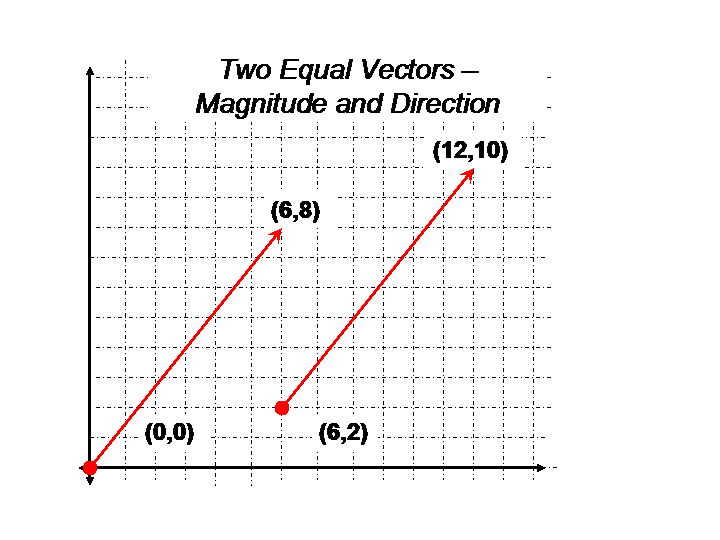
The vectors shown above are equal - they have the same magnitude and direction. If we moved one on top of the other they would exactly match up.
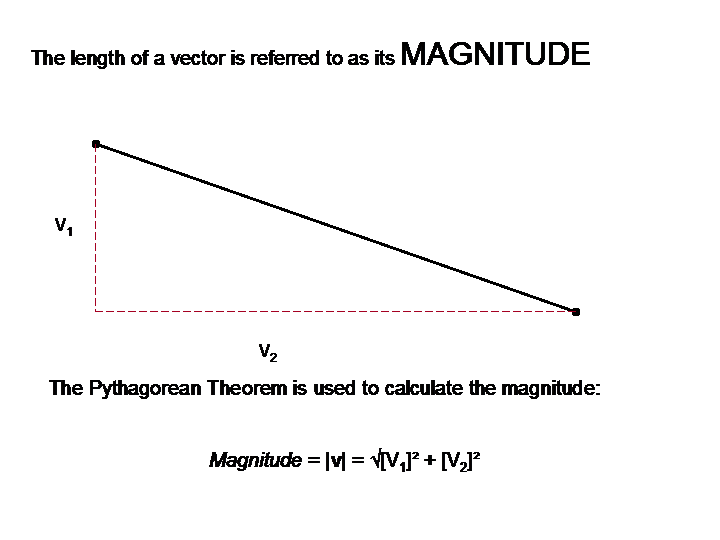
Sometimes a vector's direction is referred to by slope. One way we can see the above vectors are directionally equal is that they have the same slope.
PROPERTIES OF VECTORS
A vector is usually represented by a boldface letter such as u, v or w. Non-vector quantities are referred to as scalars.

COMBINING VECTORS
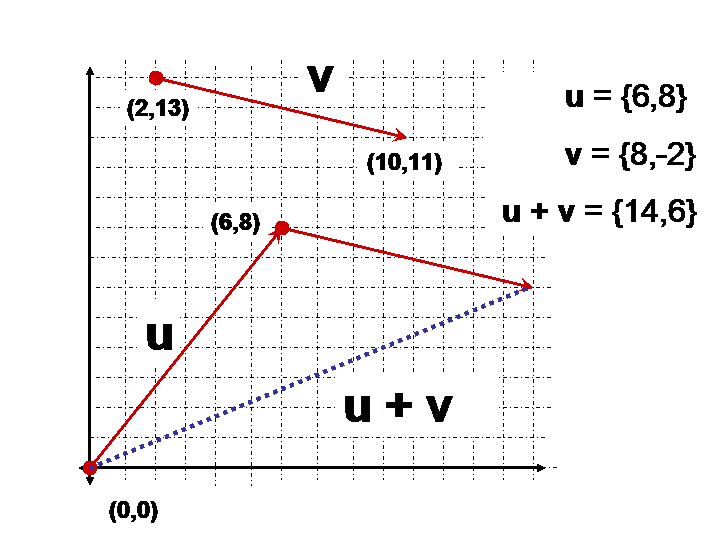
In order to combine two vectors, they are placed tip to tail.
QUESTIONS TO CONSIDER
- In the above example, why was v = {2,-1}?
- What would the vector placement be for u - v?
- What would the vector placement be for v - u?
THE ANGLE BETWEEN TWO VECTORS
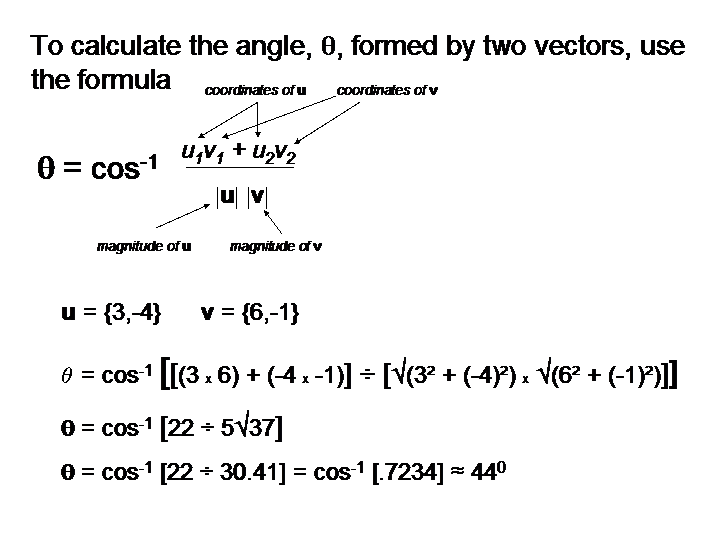
By lining up the initial points of two vectors, an angle is formed between them.

APPLYING VECTORS TO PHYSICS
Vectors represent an important concept in Physics. Any time two forces combine or oppose one another, vectors can be used to represent and model those forces. Any time a force is applied to an object, vectors help to explain its motion.
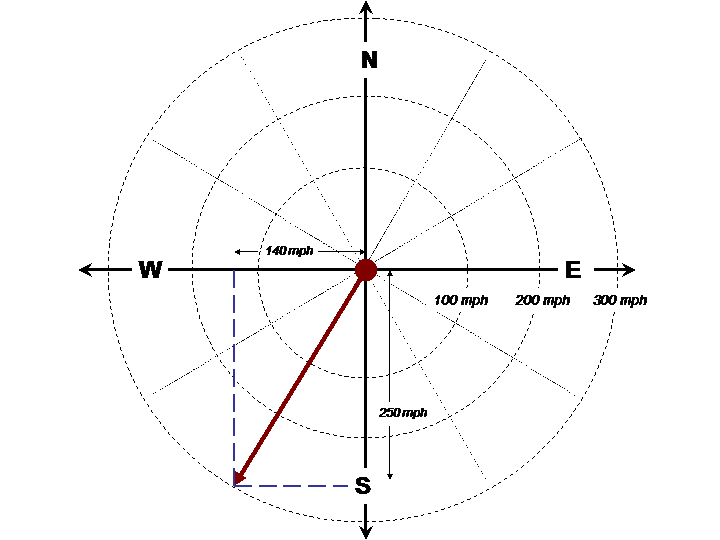
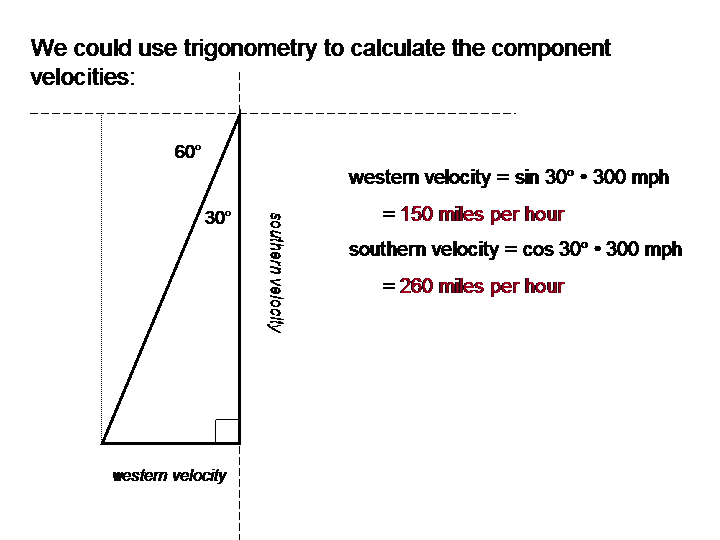
Suppose an airplane flies 60 degrees west of south at 300 miles per hour. The velocity of the plane can be broken down into its component velocities - the southern velocity and the western velocity.
QUESTIONS TO CONSIDER
- If a plane were flying 50 degrees east of north at 450 miles per hour, what would the component velocities be?
- If a planes' component velocities were 175 miles per hour north and 375 miles per hour west, how fast would the plane be traveling? In which direction?
let's go on to Hyperbolic Functions
go back to the main page
COMBINING VECTORS
In order to combine two vectors, they are placed tip to tail.
QUESTIONS TO CONSIDER
- In the above example, why was v = {2,-1}?
- What would the vector placement be for u - v?
- What would the vector placement be for v - u?
THE ANGLE BETWEEN TWO VECTORS
By lining up the initial points of two vectors, an angle is formed between them.
APPLYING VECTORS TO PHYSICS
Vectors represent an important concept in Physics. Any time two forces combine or oppose one another, vectors can be used to represent and model those forces. Any time a force is applied to an object, vectors help to explain its motion.
Suppose an airplane flies 60 degrees west of south at 300 miles per hour. The velocity of the plane can be broken down into its component velocities - the southern velocity and the western velocity.
QUESTIONS TO CONSIDER
- If a plane were flying 50 degrees east of north at 450 miles per hour, what would the component velocities be?
- If a planes' component velocities were 175 miles per hour north and 375 miles per hour west, how fast would the plane be traveling? In which direction?
let's go on to Hyperbolic Functions
go back to the main page
Suppose an airplane flies 60 degrees west of south at 300 miles per hour. The velocity of the plane can be broken down into its component velocities - the southern velocity and the western velocity.
- If a plane were flying 50 degrees east of north at 450 miles per hour, what would the component velocities be?
- If a planes' component velocities were 175 miles per hour north and 375 miles per hour west, how fast would the plane be traveling? In which direction?
let's go on to Hyperbolic Functions
go back to the main page