SOLIDS OF REVOLUTION: WASHERS AND DISKS
click here to enjoy the Solids Of Revolution word search
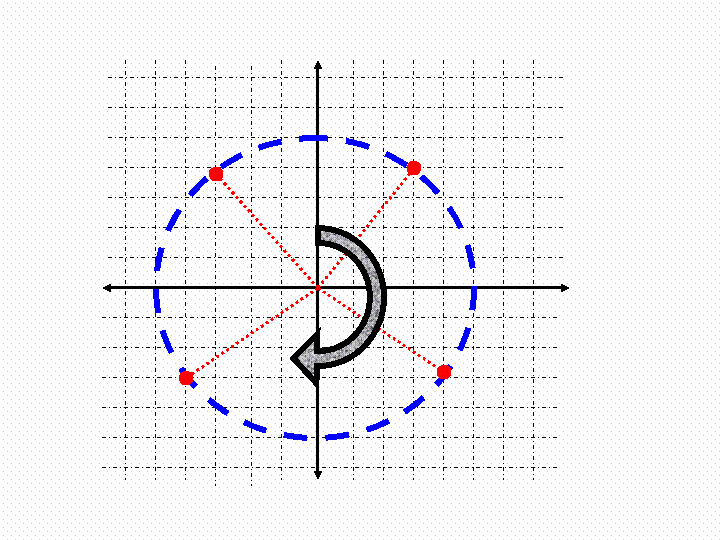
On the coordinate axis below, the point (3,4) is plotted and then connected to the origin. Using the radius of 5 units, we take this point and rotate it with the radius acting as a rope holding the point a constant 5 units from the center.
The path traced by the rotation would be a circle, centered at the origin, with a radius of 5.
Now let's look at rotating a line segment rather than a point. We'll take this line and rotate it around the x-axis:
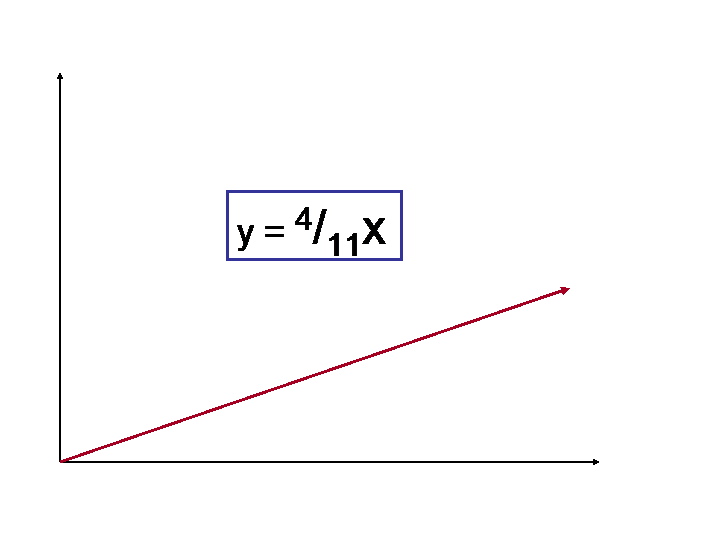
The path traced out by the rotation is a cone. Each point on the line segment traces out a circular path - with each point creating a different radius. No matter where you make a vertical slice of the cone the slice itself would be a circle with its radius equal to the function value of the line.
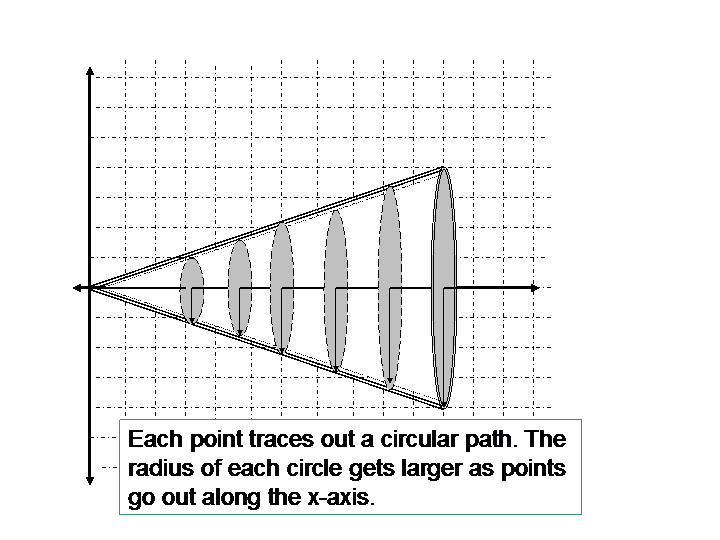
We can determine the volume of the cone by adding up the volume of each of the circular "disks". Each disk is a cylinder with its radius equal to the value of the function at that point. What was true about rectangles and Riemann Sums is true about discs:
As we divide our solids into more and more disks,
**the number of disks gets closer and closer to infinity
**the width(or height) of each disk gets closer and closer to zero
**the approximation of the volume gets closer and closer to the actual volume
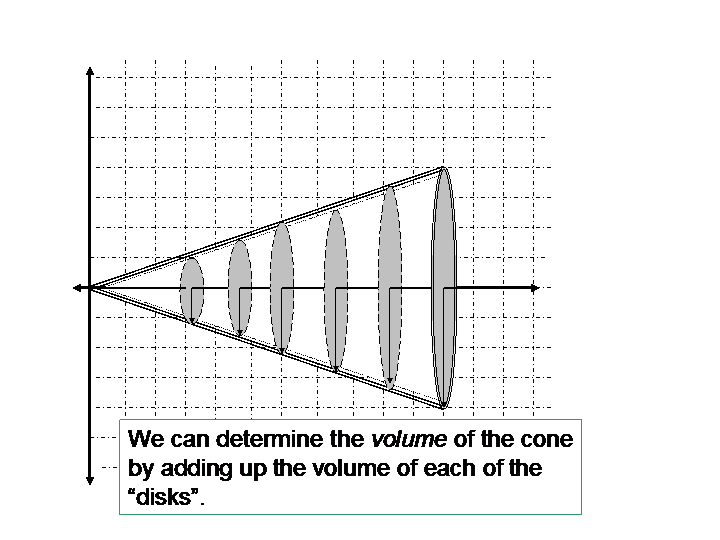
Let's divide the cone into 11 cylindrical disks, each with a width or height of 1 unit. We'll evaluate the radius at the right endpoint, making our volume approximation greater than the actual volume.
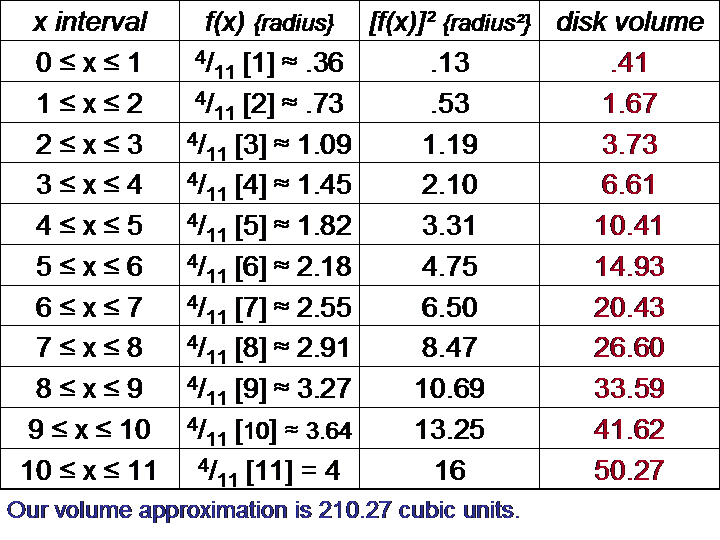
By using the volume of a cone formula, the actual volume is 184.30 cubic units.
QUESTIONS TO CONSIDER
- What would our volume approximation be if we used the left endpoint as our radius?
- What would our volume approximation be if we used the midpoint as our radius?
- Is the actual volume equal to the average of the three approximations?
- A truncated cone is called a frustum. Could this solid be divided into frustums to approximate its volume? Would that approximation be more or less accurate than by using disks?
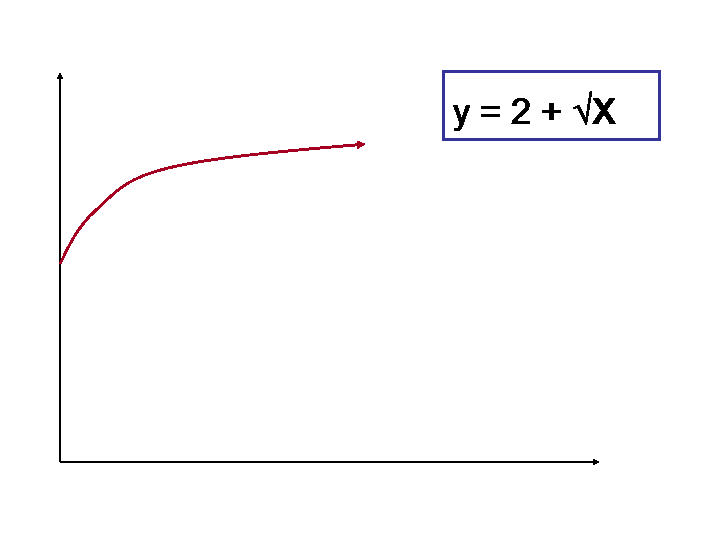
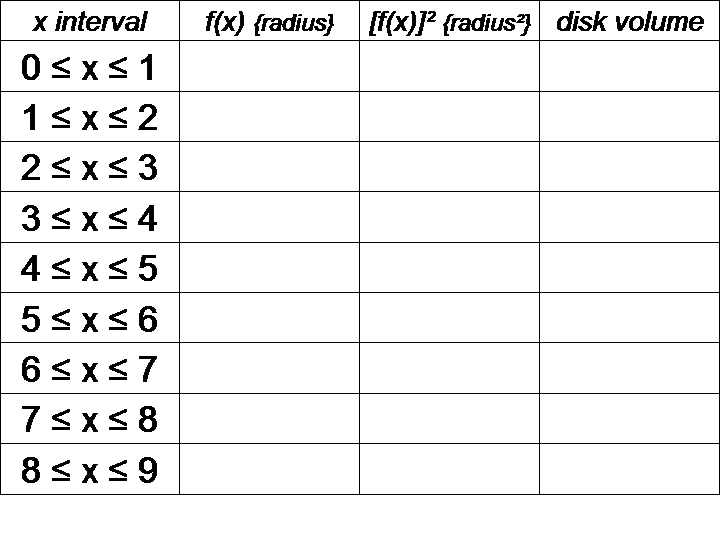
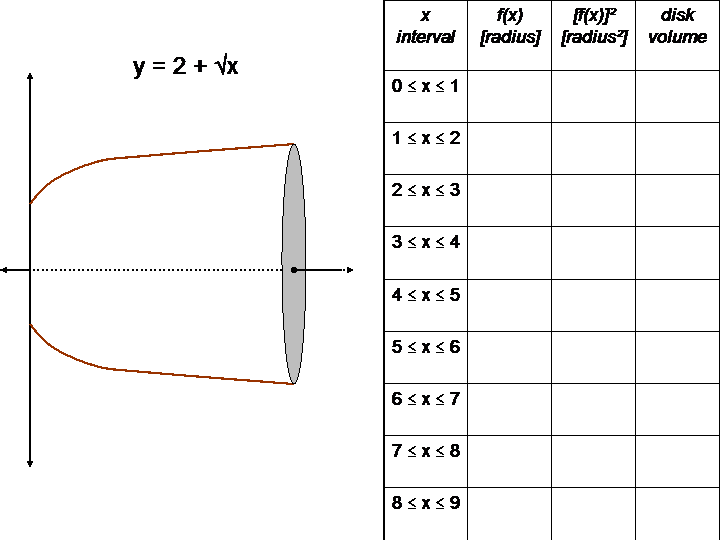
Rotate the function f(x) = 2 + [x]^.5 around the x-axis. Use the chart to approximate the volume of the solid.
WRITING VOLUME EXPRESSIONS USING SUMMATION NOTATION
ROTATING THE AREA BETWEEN CURVES: THE WASHER METHOD
Two intersecting functions are shown below:
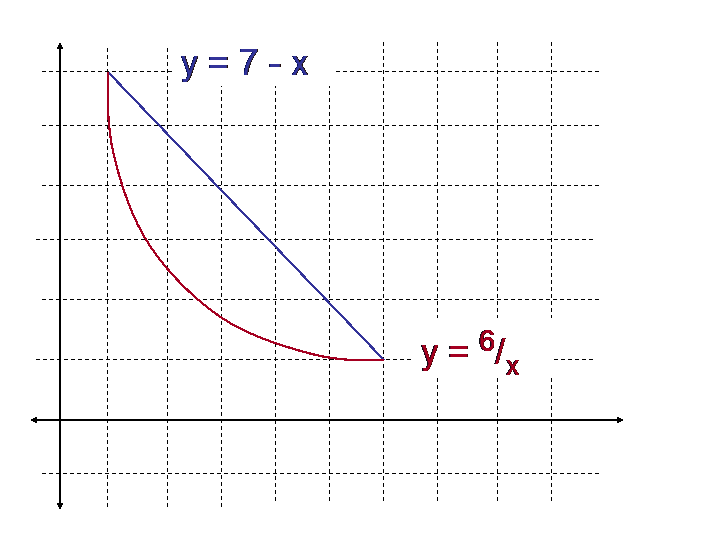
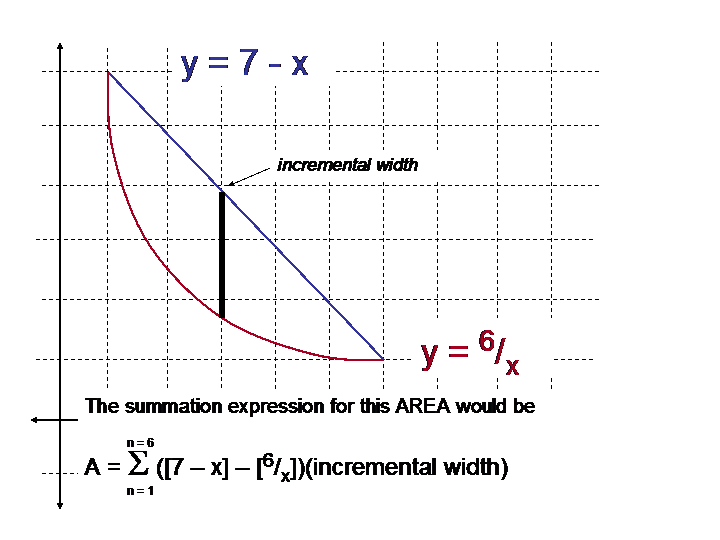
How would you write the summation expression for the area bounded by these functions?
What would the solid look like if it were rotated around the x-axis? Each point would trace out a circular path but because we have a difference of functions, an OUTER radius [7 - x] would outline the surface of the solid and an inner radius [6/x] would outline the "hole" or the inner surface of the solid.
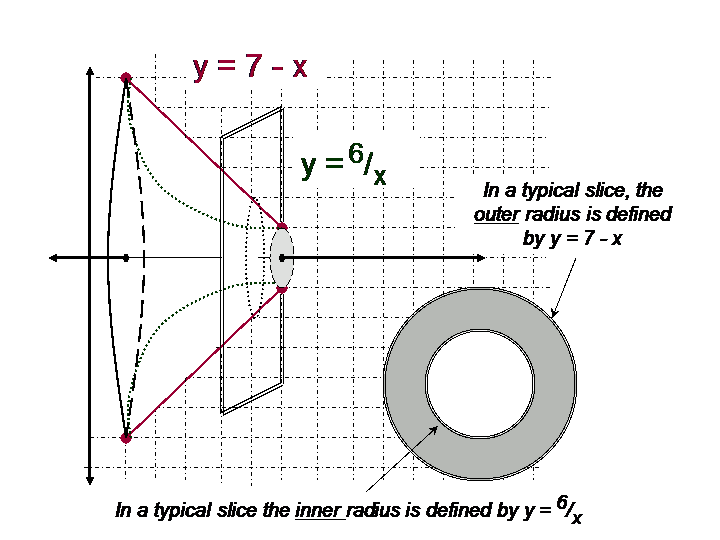
Each slice is referred to as a "washer" - so we change the area of a circle formula so that it takes the OUTER radius squared minus the INNER readius squared. R represents the OUTER radius and r represents the INNER radius.
The summation expression to determine the volume of this solid would be:
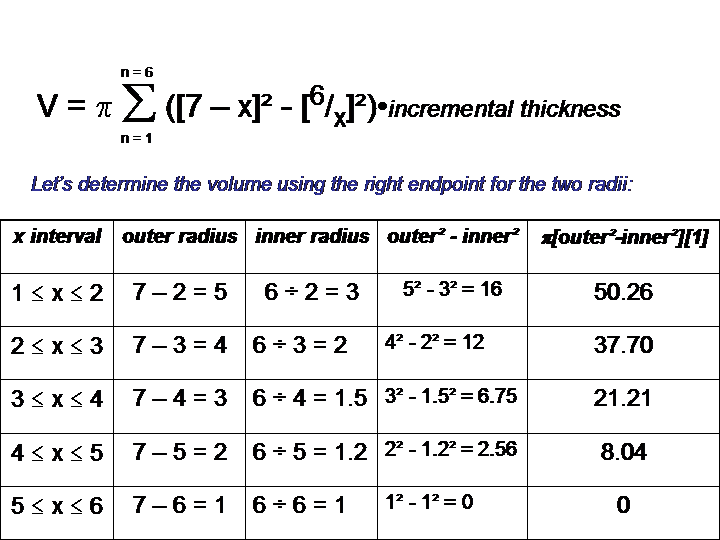
Our approximation of the volume is 117.21 units.
QUESTIONS TO CONSIDER
- Is our approximation of 117.21 too high or too low? Why?
- If we used the left endpoint to evaluate our radius, would our approximation be more accurate? Why or why not?
- If we used the midpoint to evaluate our radius would our approximation be more accurate?
- Would the midpoint approximation be the arithmetic average of the left and right approximations? Why or why not?
On the graph below, plot the line y = [5/9]x. Determine the intersection point(s) and rotate the region around the x-axis. Determine the volume.
let's go on to Advanced Topics!!
go back to the main page