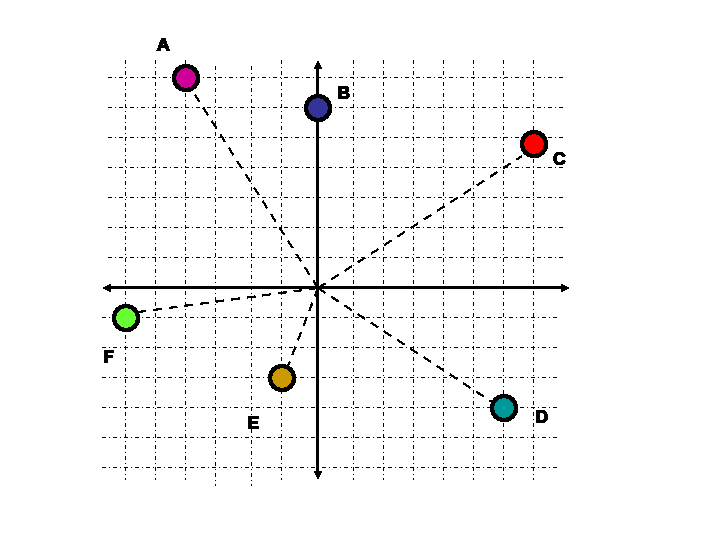
A = _____ B = ______ C = ______ D = _______ E = _______ F = _______
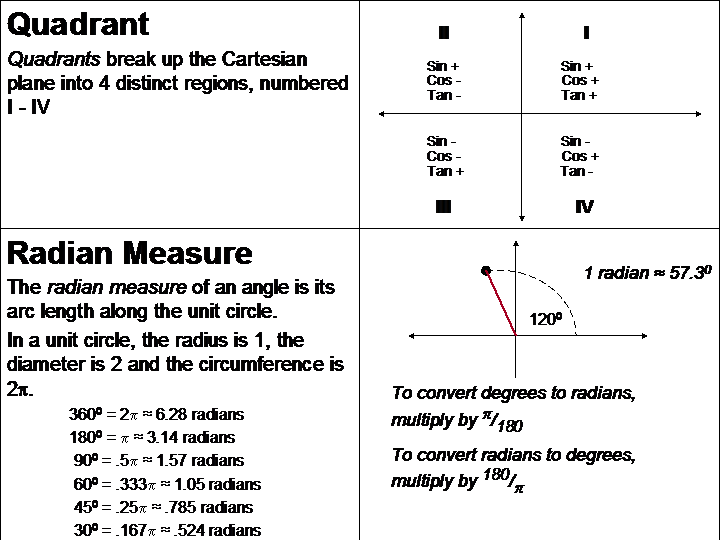
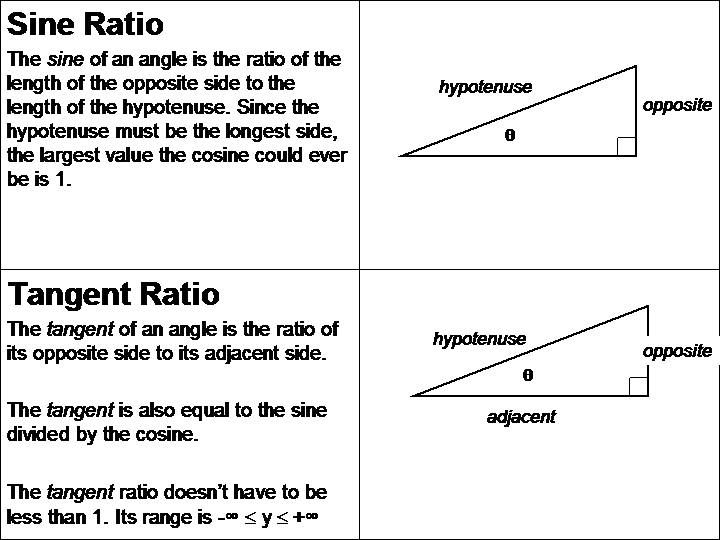
Let's review some concepts from trigonometry since we'll be using them frequently:

CONVERTING CARTESIAN COORDINATES INTO POLAR
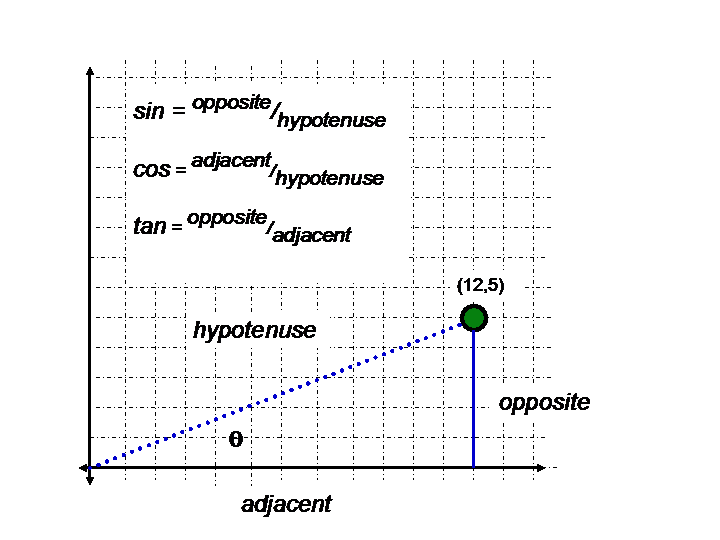
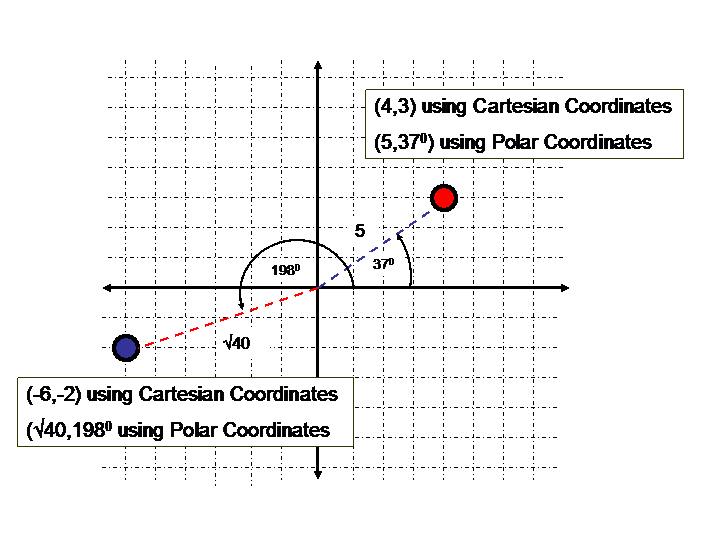
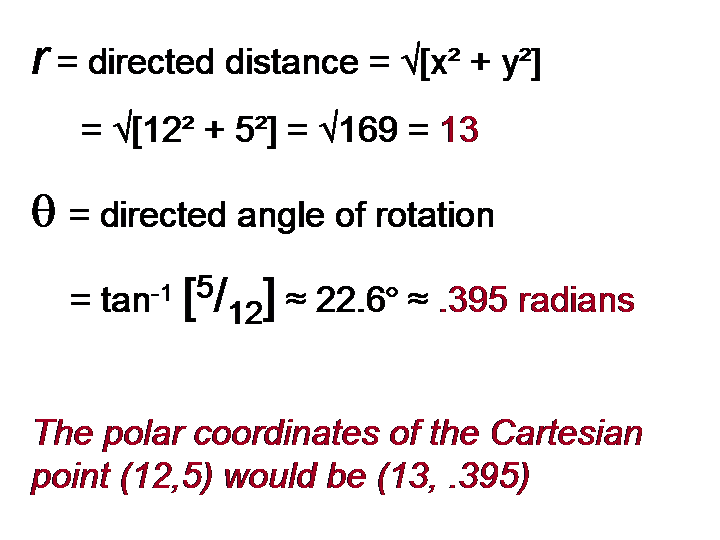
Shown above is the point (12,5) using Cartesian coordinates. To convert to polar, we must calculate the directed distance from the origin. Another name for the directed distance is the hypotenuse.
We must also determine the directed angle of rotation. We can do this by using any one of the three trigonometric ratios of sine, cosine or tangent.
QUESTIONS TO CONSIDER
- Use a graph AND the formulas above to determine the polar coordinates for the following Cartesian coordinates:
(6,8) (3,11) (9,9) (0,7)
- What would the Cartesian coordinates be for the polar point (8,1)?
(6,8) (3,11) (9,9) (0,7)
CONVERTING POLAR COORDINATES INTO CARTESIAN
Polar coordinates give us the hypotenuse (directed distance) and the included angle of a right triangle.
The Cartesian coordinates are simply the lengths of the legs of that right triangle.
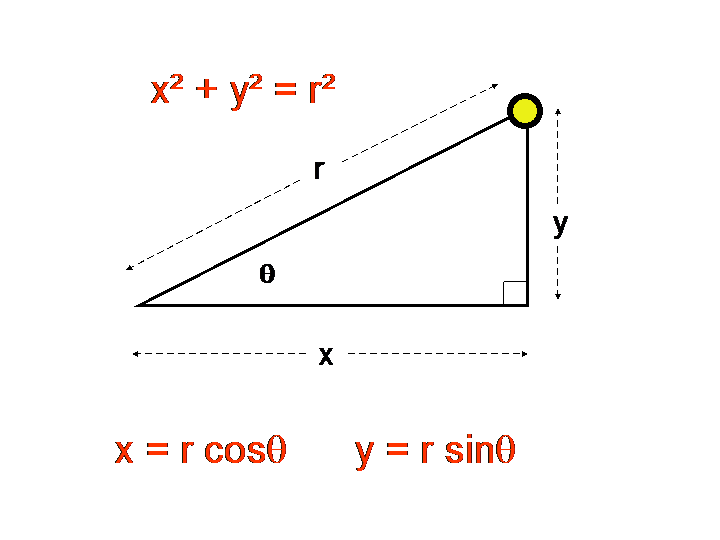
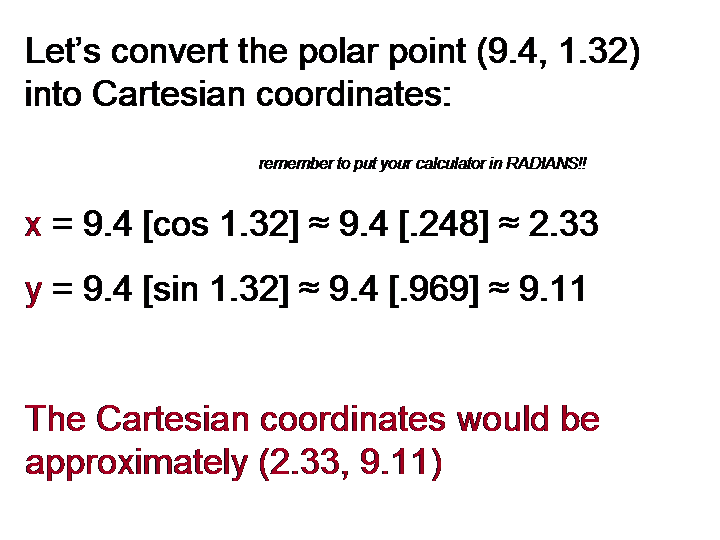
In this triangle the x distance represents the adjacent side - the y distance represents the opposite side. Since r is a known value, we can calculate the x and y distances by multiplying by either cosine or sine.
QUESTIONS TO CONSIDER
- Convert the following polar coordinates to Cartesian:
(17.5, 4.1) (3, 2.35) (57.3, 57.3) (12,0)
- How can you determine, just by looking, the quadrant in which a polar point exists?
let's go on to Arc Length
go back to the main page
(17.5, 4.1) (3, 2.35) (57.3, 57.3) (12,0)