SERIES
click here to enjoy the Series word search
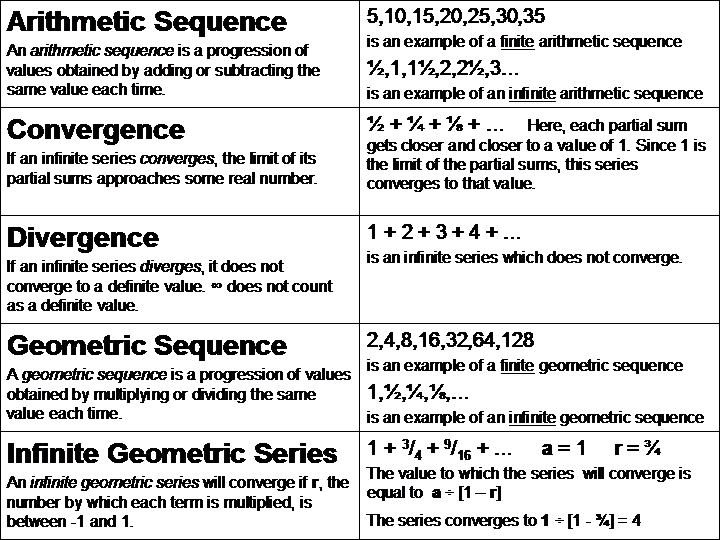
Before our study of series, let's review concepts of numerical sequences and patterns:

USING GEOMETRY TO APPROXIMATE PI
In this section we'll use the ideas of infinite series, circles, triangles and trigonometry to approximate the value of pi. While doing this we'll derive an infinite series whose value is exactly equal to pi - and we'll show why it's true.
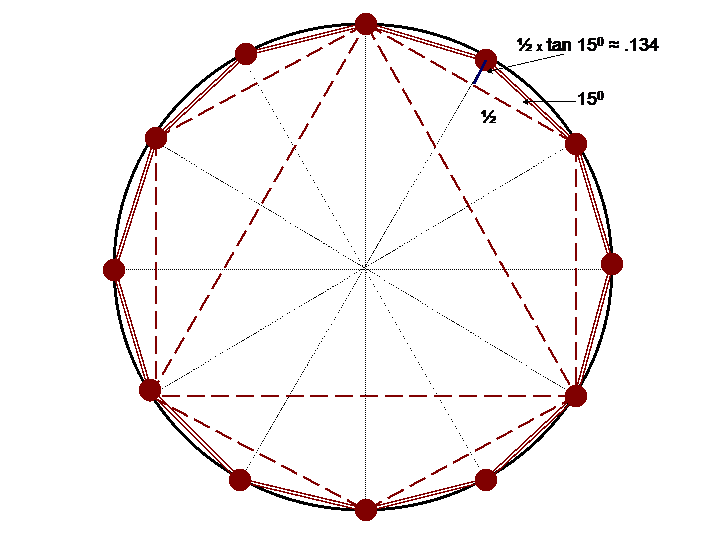
Begin by tracing a circle and, using a protractor, mark off every 30 degrees. It doesn't matter whether you mark off clockwise or counterclockwise. The radius of your circle will be exactly one UNIT, making the area of the circle equal to pi. One UNIT could be an inch, a decimeter or any length.
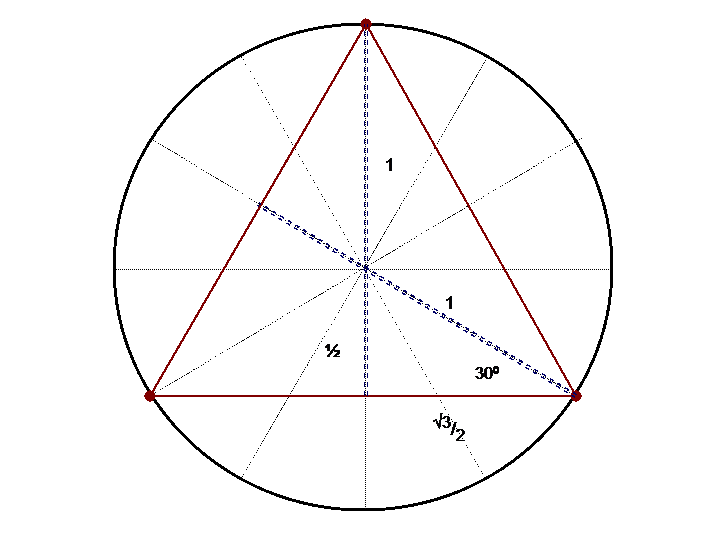
By connecting the marks at 0, 120 and 240 degrees we construct an equilateral triangle. The properties of 30-60-90 degree triangles tell us the base is equal to the square root of 3 units and the height is 1.5 units. The AREA of this triangle then, using .5 x base x height would approximately equal 1.299 square units.
DEFINING OUR APPROXIMATION OF PI
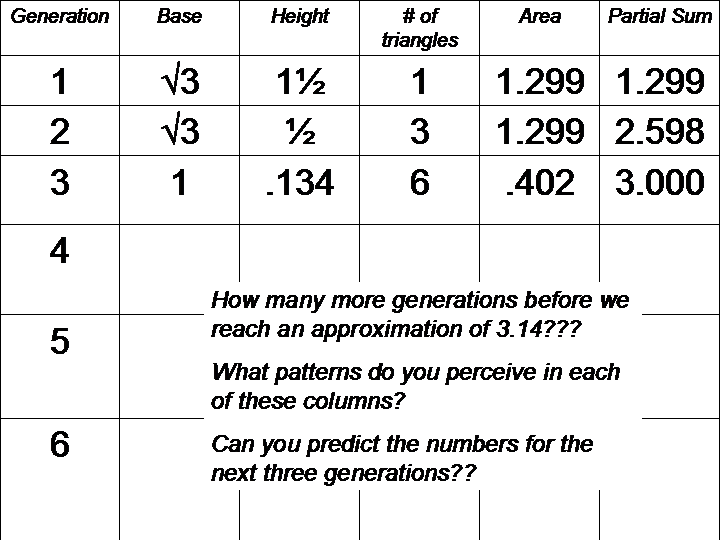
The idea here is to construct triangles that push us closer and closer to the edge of the circle, so that the sum of the areas gets closer and closer to the number pi.
The next generation of triangles will use the sides of the equilateral triangle as bases - this next generation of triangles will construct an inscribed regular hexagon.
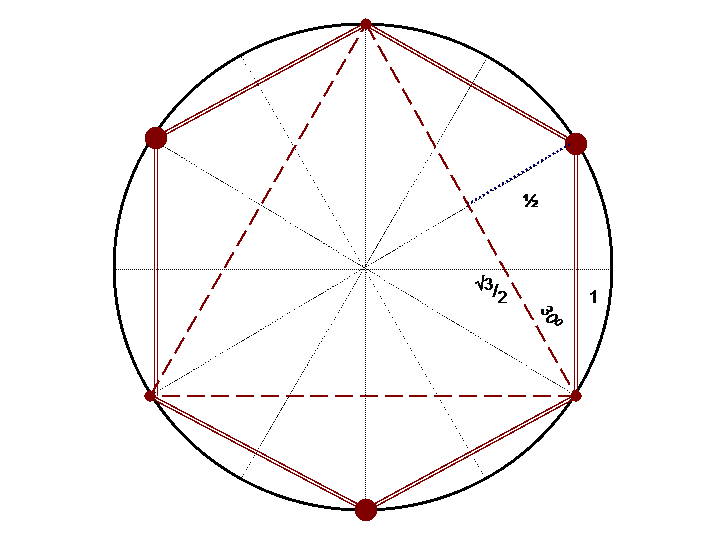
The third generation will inscribe for us a regular dodecagon [12 sides].
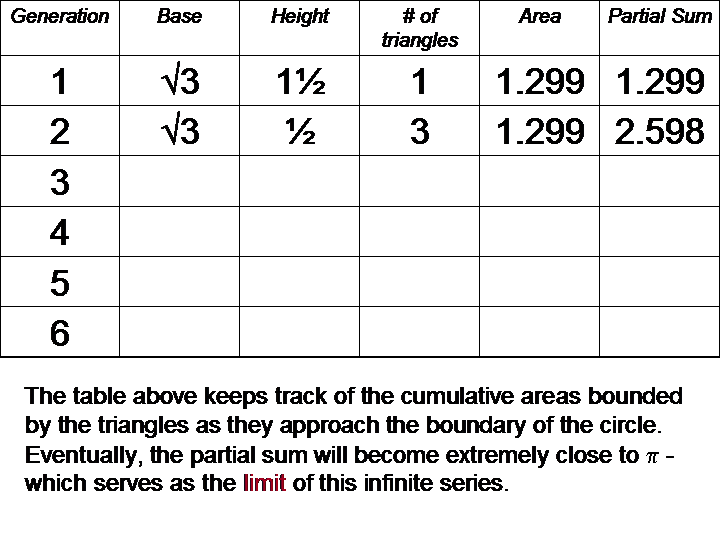
A another look at our table shows us we reach a partial sum of 3.000.
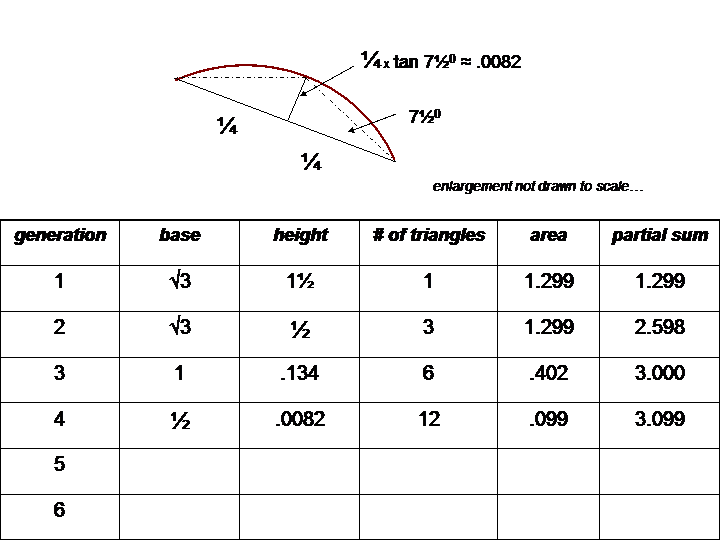
Using trigonometry again, the fourth generation inscribes a regular 24-gon inside the circle. Here we'll enlarge the triangles added and fill in the next row on our chart:
QUESTIONS TO CONSIDER
- What is the pattern used to determine each subsequent base?
- What is the pattern used to determine each subsequent height?
- What is happening to the number of triangles in each generation?
- How close would our partial sum be after six generations of triangles?
CREATING AN INFINITE GEOMETRIC SERIES
In the last example, we created an infinite series that converged to a value of pi. However, that series was not a geometric series.
For an infinite geometric series to converge, each subsequent term must be multiplied by a factor [r] between -1 and 1. The value to which the series converges is equal to [a/[1-r] where a is the initial term in the series.
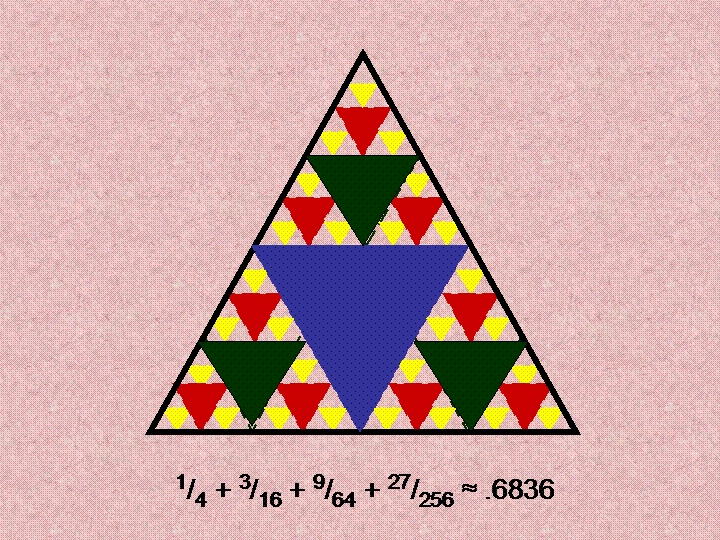
Constructed below is an equilateral triangle. The midpoints of each side are connected to form a pattern of equilateral triangles - called Sierpinski's Triangle.
The terms in the series represent the areas outlined by each generation of equilateral triangles.
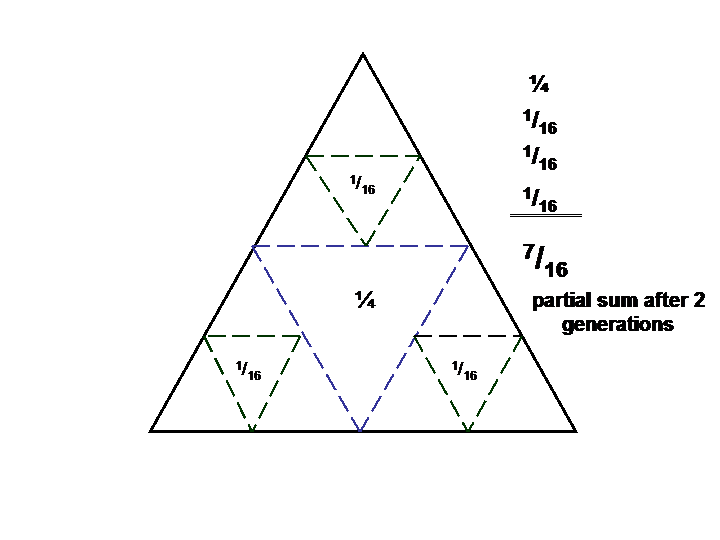
After four generations [and using pretty colors for the diagram] we have:
QUESTIONS TO CONSIDER
- For the series above, what is the value of r?
- For the series above, what is the value of a?
- What would be the next three partial sums?
- At which partial sum does the series reach .9?
- Write the expression for the series using summation notation.
let's go on to Vectors
go back to the main page