CONCAVITY: THE SLOPE OF SLOPES
click here to enjoy the Concavity word search
Using the graph below, let's create a table of values:

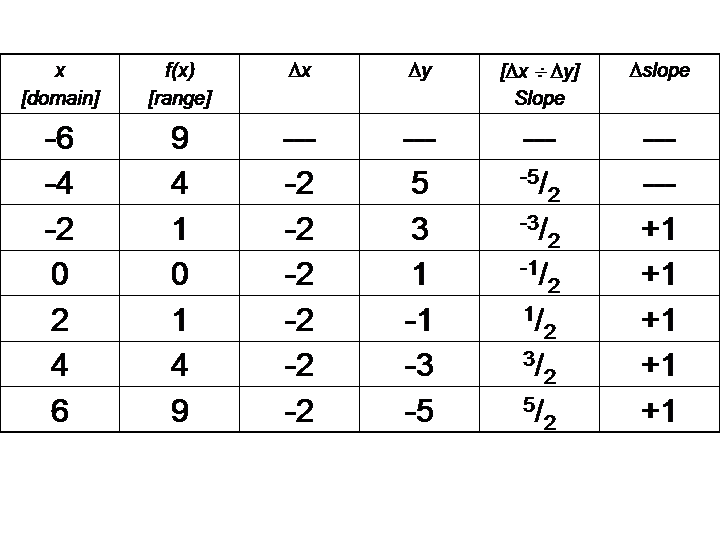
did you see where I goofed? It should be y divided by x!! Sorry...
The slopes at each point are indicated in the table and are visible on the graph.
**What is the pattern exhibited by the slopes?
**How is that pattern shown on the table?
**How is that pattern illustrated on the graph?
CONCAVITY BY DEFINITION
Concavity is the rate at which the subsequent slopes of a graph are changing. Concavity is classified in three different ways:

APPLYING CONCAVITY TO PARTICLE MOTION
Let's take another look at the position versus time graph from the previous section - only this time let's identify the concavity of each interval:

By looking at the graph, we can determine:
**when the slope is positive, the object is MOVING FORWARD
**when the slope is negative, the object is BACKING UP
**when the graph is concave up, the object is ACCELERATING
**when the graph is concave down, the object is DECELERATING
QUESTIONS TO CONSIDER
- At which point did the graph change its concavity? What does this point mean in terms of the object's acceleration?
- At 10 seconds was the object accelerating? From 10-15 seconds what was true about the object?
CREATING GRAPHICAL REPRESENTATIONS OF MOTION
The motion of an object is described by the following:
| Time Interval | Velocity | Acceleration |
| 0 - 4 sec. | Positive | Negative |
| 5 - 6 sec. | Positive | Positive |
| 6 - 10 sec. | Positive | Zero |
| 10 - 16 sec. | Zero | Zero |
| 16 - 18 sec. | Negative | Positive |
| 18 - 20 sec. | Negative | Zero |
What would a graphical picture of the object's motion look like?
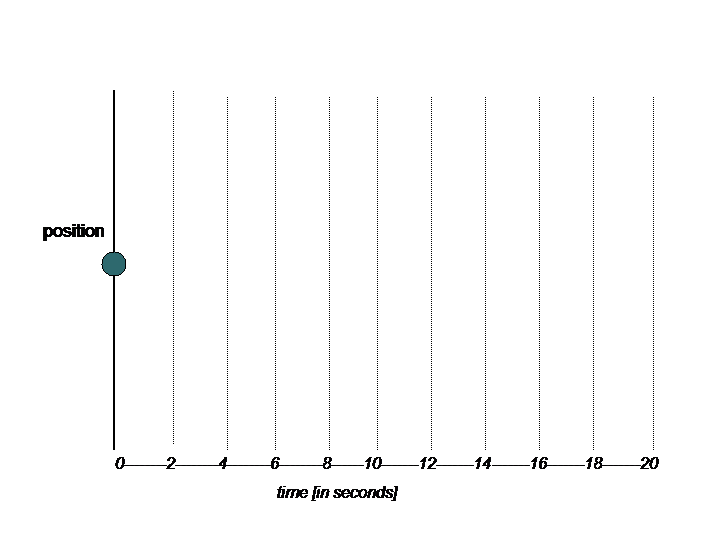
Would the table below help???
| PARTICLE MOTION | WHAT TO GRAPH |
| Positive Velocity | Positive Slope |
| Negative Velocity | Negative Slope |
| Zero Velocity | Horizontal Line |
| Positive Acceleration | Concave Up |
| Negative Acceleration | Concave Down |
| Zero Acceleration | Constant Slope |
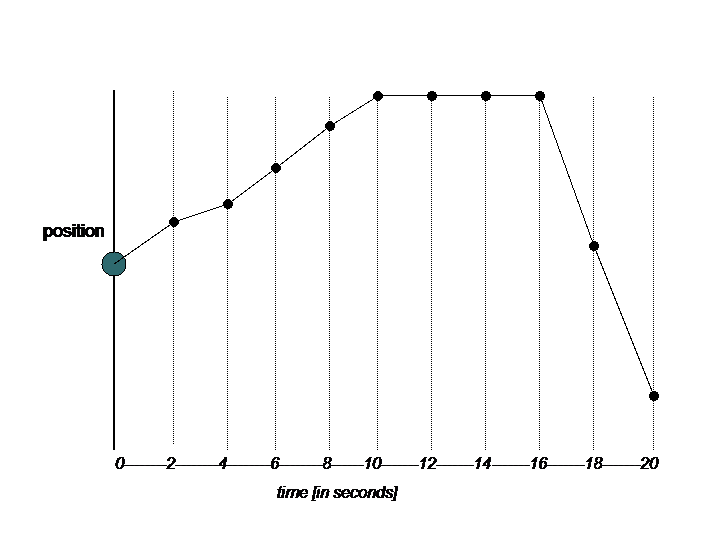
What WOULD a graphical picture of the object's motion look like?
The graph below represents one possibility...
let's go on to Optimization Of Functions
go back to the main page