|
The Books
A Calculus textbook as thick as an L.A.
phone book should be included here!
I also had an electronics for physicists
that was so boring I don't care to recall the text!
Can't recall the Astrophysics text we
used. It was an outdated piece of junk!
Advanced E&M was the
most work of any course!
When you finish the geometry of physics
in 2 or more courses and, know Lie groups and Differential
Topology you are ready to be a real theoretical physicist.
 |
|
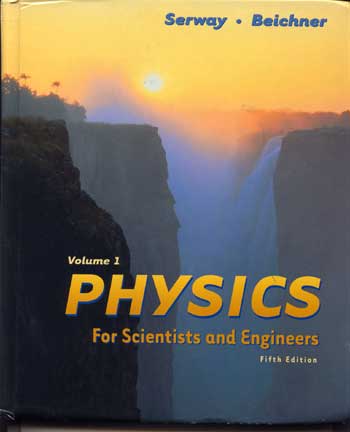
For a year and half this was my
textbook in 3 volumes. A year and a half of Calculus which has a
textbook as thick as a phone book is also required! The worst
thing about this whole series is the labs that are way too much
work. In the first volume you learn about basic mechanics and
thermodynamics, the second volume you learn basic
electromagnetism (Gauss's Law mainly) and, in the third you
learn about basic quantum physics and relativity.
This is the textbook I had for my for
my modern physics class. The whole course was an expansion of
what we learned in the third volume of our basic text. It should
be noted that this book contains material that was well beyond
the scope of the course! I also took thermodynamics that was
fairly easy!
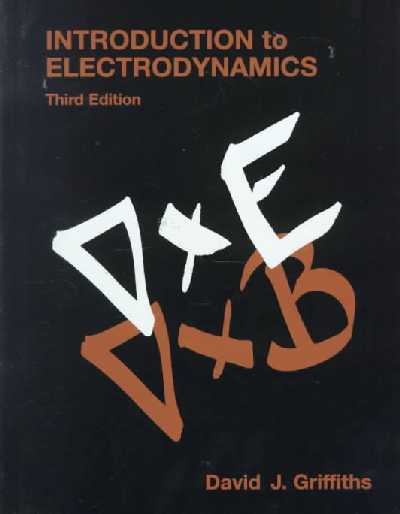
In the same year 2 courses of
electrodynamics is also required, you get to learn how to use
Maxwell's equation in differential and integral form. Also 2
courses in classical mechanics is also offered where you get to
learn about Lagrangian mechanics, the calculus of variations
and, Hamiltonian dynamics.
This was one hell of a serious course
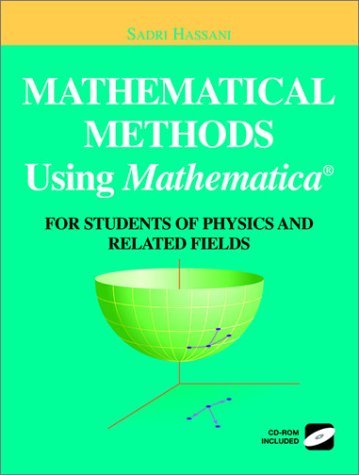
that covered many areas of mathematics that apply to physics, it
would take me a page to do this course justice in describing
what I did in 2 courses! Anyone who can do well in this class
has my respect!
The computers in physics used a book
used by the same author but, it was not as bad as the
Mathematical Methods class, then again nothing really is!
2 courses of this required a few
other quantum text books. This book was written by the same guy
who wrote the Electrodynamics book. I think he did a better job
with the Electrodynamics book or maybe because it was a harder
course I needed more help.
I learned a-lot about lattice
structure of solids, amorphous solids, semi-conductors, atomic
clusters, band theory of solids and, super conductors. Sometimes
it's great not to get lost in too much mathematics and learn
some very important physics concepts. Ok the instructor was a
little easy but, the course was fascinating and I liked it.
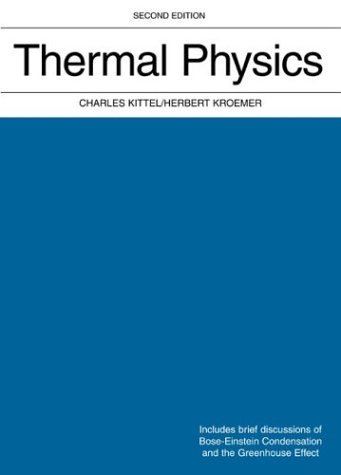
Now this is where we are getting
serious about thermodynamics and starting to learn statistical
mechanics. You know it may of been a good idea to take this
before quantum mechanics.
In my last astrophysics class the
instructor had a talent for making the most interesting aspects
of the universe so dam boring.
Apart from this I also had 3 Advanced
Physics labs and, a research project.
Graduate work!
NOW
WE HAVE COME TO SOME REAL PHYSICS!
In 2 courses we covered tensor
calculus that I had in mathematical methods, special and general
relativity and, an introduction to cosmology. Of course there
were numerous handouts in the class.
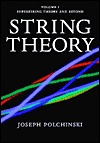
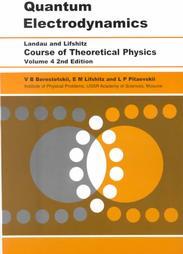
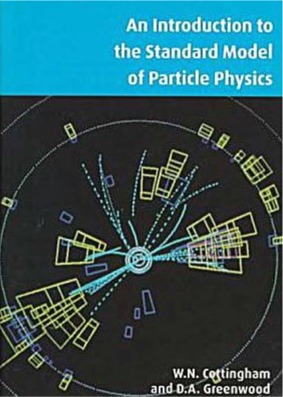
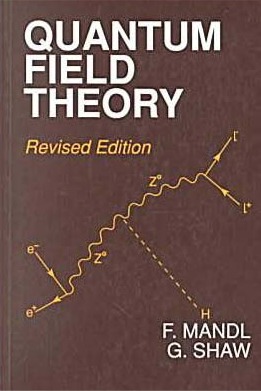
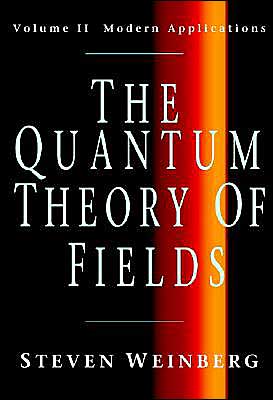
What you see now are the books for my
elective courses, after years of work I have learned some
interesting things but, my one time goal of a fully
renormalizable theory of quantum gravity may very likely be one
that escapes me. |
|
At the same time I had to take a bunch of
Chemistry classes that were a hell of a-lot of work.
Not mentioned here were all of the bull
shit core requirement courses that just add at least a years
time to your degree!
Before I tried mathematical methods for
theoretical physics I also completed separate math courses in
Linear Algebra, Differential equations, Complex Analysis and,
Partial Differential equations.
Apart from being an
interesting course, knowing nuclear physics helps settle many
arguments over nuclear power and weapons! Note that many of our
policy makers in this area have barely had an introductory
science course in college, much less then nuclear physics. A
notable exception being former President Jimmy Carter who was a
nuclear engineer.
2
more courses of classical mechanics is required.
|


