 |
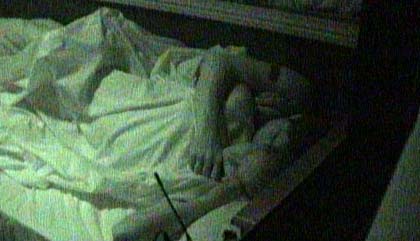
| Clever Girl... >> Writing >> Survivor, Series 7... Are you gonna turn off your TV?: Survivor, Series 7, and the politics of viewing 'It's up to you, the people out there ... the lives of us are all in your hands. Here's how it is. When I've finished talking, if everybody watching switches off their TV, I swear me and Scout will walk out here with our hands up ... but if you keep watching, I will kill every last mutha in this room, including myself and Scout. Not a bad show, huh? Exciting, right? And to see it, all you have to do is stay tuned for another few seconds. Well, you're responsible. Are you gonna turn off your TV?' - Popcorn, Ben Elton, 1996 Reality television is widely derided as the most base form of television, appealing only to the proverbial 'lowest common denominator'. Popular opinion surrounding the genre positions it as television created by those who can't be bothered creating television - reality TV is cheap to make and requires little creativity on the part of the producers. At the same time, it can't be denied that it lures in the viewers - the first series of Survivor was the highest rating series in the US ever, and Australia's Big Brother topped the ratings two consecutive weeks in a row. In the age old tradition of fear and aversion towards new media forms, a significant portion of both critics and the more highbrow public claim that reality television is not only poor television in itself, but a contributing factor to the decline of values in society. Money-hungry television producers are happy to put distasteful and even potentially dangerous images on our screen so long as people tune in to watch them. Which, of course, they inevitably do. And what seems to be a natural human attraction towards the depraved has resulted in fears as to just how far reality television might push the boundaries of taste and reason; pressured by ratings lust on the behalf of the producers and the ever-increasing desire for fifteen minutes of fame on the behalf of the audience. American director Daniel Minahan's film Series 7, written years before the phenomenal popularity of Who Wants To Be A Millionaire and Survivor, is almost prophetic in its exaggeration both of reality TV itself, and in its mocking of the media hype surrounding it. Series 7 is Survivor in a psychiatric ward, or perhaps just in good old trigger-happy USA. Rather than testing 'survival' through starvation and seemingly pointless physical tasks, Series 7 'contenders', as they are referred to throughout the film, are randomly selected ordinary people forced to murder other contenders to keep their own lives. Naturally, within the universe of the film Series 7 seems to be a high rating program. While direct equations between the film and the reality of reality television only abound within the minds of the naive - and were certainly in no way intended by Minahan himself - much of the debate circulating the forum following the screening I attended, speakers at which included Minahan and Sydney University lecturer Catharine Lumby, involved audience concern that reality television had gone too far. Shows like Big Brother and Survivor are distasteful, immoral, and we shouldn't watch them, lest they morph into something closer to Series 7. In fact, scrap that: we shouldn't be watching them in their current state. Arguments from the panel, particularly the producer of Australia's Treasure Island, centred upon the notion that when people are disturbed by something they will turn off their televisions. Audiences won't watch what they consider to be distasteful or morally irreconcilable. As such, ratings will function as a barometer of what should and shouldn't be screened. But, like Ben Elton, I can't help but question whether of not people actually do turn off. Take, for example, Big Brother and its infamous 'uncut' episodes, epitomised perhaps by the 'dancing doona', or, for the non-Australians (or those who just don't watch enough TV) Christina giving Peter a hand job under the covers of his bed. Early episodes of Uncut, featuring not only the dancing doona, but dominatrix Andy's whip, and Sara-Marie's famous 'bumdance' and interesting beer-pouring techniques, shocked audiences, even inciting me to turn off the television and say that I would never watch such a boring, stupid, and indeed voyeuristic show again. Of course, I tuned in again for the next episode. And the next. The fact is, I don't believe that people do turn away from things they find disturbing. Rather, people are fascinated by and drawn to things they find disturbing. While this tendency is more apparent in cinema than the more homely, personal media of television, our constant exposure to the once 'shocking' attractions of sex and violence has left us desensitised. We may be shocked and even slightly appalled by Sara-Marie's beer-pouring techniques, by the fact that Christina actually gave Peter a hand job on national television of all things, but your average media-savvy audience member, accustomed to the postmodern freakshow of Rikki Lake and Jerry Springer, isn't going to turn the TV off. But is this such a bad thing? Watching television isn't exactly a case of 'monkey see, monkey do', even when what we're seeing is apparently real people doing what is apparently natural to them. Indeed, people on reality TV programs aren't exactly perceived as being real people. Rather, they seem to exist in roughly the same space as characters on fictional television programs. We talk about them as though they're real people, people we know even, but they still retain an element of fiction about them. We may like or be annoyed at them, but we don't react to them in the same way we would to people in our own lives. Instead reality TV 'characters, like other television characters, take on a greater metaphoric element, in which we incorporate their experiences as part of our understanding of the ways in which certain types of people and situations are responded to, both by the people surrounding them and by the public as a whole. But is there a point at which we should turn off? Reality television is not in itself a bad thing. Audiences don't imitate the actions of reality television characters any more than they do those of fictitious television, and this is usually limited to satire. Where reality and fictitious television diverge, however, is that reality television is, well, real. The events we see on Big Brother and Survivor really did happen. Watching Michael fall into the fire is not the same as watching an actor do the say. Likewise, in Elton's scenario, watching terrorists blow up an Oscar-winning film director's mansion is not the same as watching a violent film by that same director. So perhaps the point at which we should turn off, should that point ever arrive, is when the 'stories' we watch have a negative impact on the 'characters' themselves. When the people in reality TV programs are knowingly or consistently placed in positions of physical and/or emotional danger. But, unlike the characters in Elton's Popcorn, do we still possess the ability to differentiate fiction from reality? And if we don't, who's going to take responsibility for the aftermath? "So far no one has claimed responsibility." - Popcorn, Ben Elton, 1996 back |
Big Brother's 'dancing dooner' may have been the series' most lowbrow moment, but it certainly didn't make anyone turn off. |
|
 |
|
|
|
 |
 |
|
|
|