 |
|
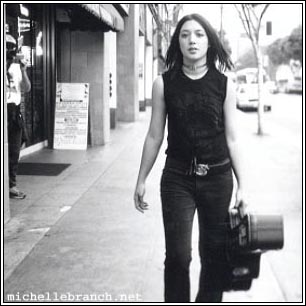
| Clever Girl >> Writing >> Michelle Branch review Michelle Branch The Spirit Room It seems fitting that 18-year-old Michelle Branch entered the big leagues via a support slot on Hanson's 2000 'This Time Around' US tour. Like the former teen pop idols turned rock music critic darlings, Branch was a prodigal musician and prolific songwriter by her early teens. Like Hanson, she ditched the public school system for home schooling and the chance to spend more time on her music. And, perhaps most significantly, like Hanson's 1997 debut Middle of Nowhere, Branch's first major label release, The Spirit Room, is soured by the scent of excessive corporate intervention. It's not that there's anything wrong with The Spirit Room per se -it's 43 minutes of pleasant enough pop music - it's merely that the very quality that drew people to Branch's music, the quality that presumably got her the recording contract with Madonna's Maverick Records in the first place, is gone. Branch's appeal lay in her 'realness', the emotion that seeped through her voice whenever she sang one of her self-penned songs, accomapnied only by her accoustic guitar. Branch was |
 |
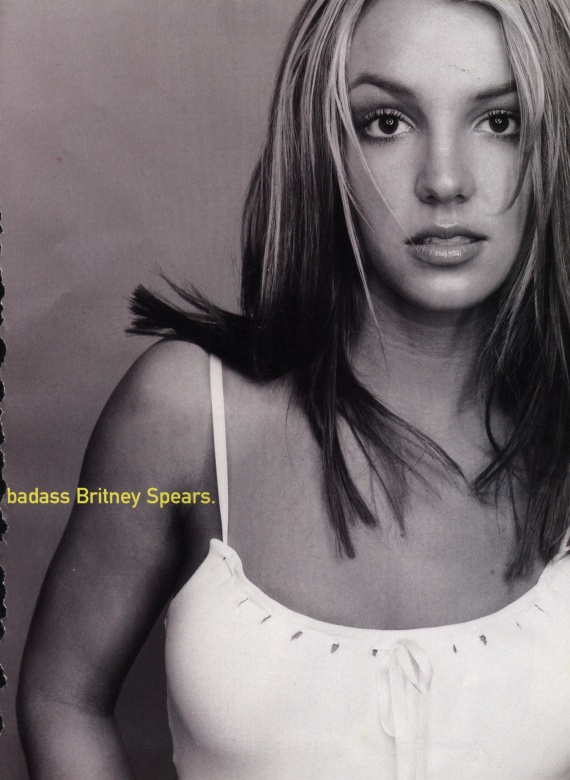
| distinguishable from the likes of Britney Spears and Christina Aguilera not only because she was a brunette who wrote her own songs, but because of the very nature of the songs she wrote. Unlike Spears' songwriter, Max Martin, whose lyrics always retain a sense of certainty, Branch wrote like an ordinary teenage girl. Her lyrics possessed a more genuine angst, a real uncertainty about her feelings and her place in the world. It was Branch's uncertainty that made her real, and her reflectiveness that made her interesting. While the Maverick publicity machine would have you believe Branch the more 'real', passionate alternative to her manufactured blonde counterparts, Branch's individual spark, her unique combination of raw emotion and reflection, is all but absent in The Spirit Room. While might be encouraged to compare her to female rockers Jewel, Alanis Morissette, and Lisa Loeb, but the CD lends itself more to comparisons with Mandy Moore's latest effort (itself a slight departure from standardised teen pop) or Hanson as they were in 1997. |
This is not necessarily a bad thing. Moore's release has been met with almost universally favourable reviews, albeit poor sales, and Hanson's debut, despite their protestations of manipulation three years later, saw them heralded child geniuses. Certainly, The Spirit Room is a likable enough release. Branch's voice is pleasant, if a little nasal at moments, and producer and co-writer John Shanks creates a wall of sound reminiscent of 1960s AM radio. To one who has never heard Branch's independent release, Broken Bracelet, there is nothing to forgive. Even for those who have heard Broken Bracelet, an aching collection of ten acoustic pop-rock songs that make sense of all those Jewel comparisons, the first six tracks on the record are inoffensive enough. 'Everywhere', the first single off the album, is an upbeat, appealing three-minute slice of pop that attaches itself to your consciousness like velcro. 'Something To Sleep To', |
the album's best track, strongly evokes The Beatles' 'Eleanor Rigby' in the line: "she puts on her makeup - the same way she did yesterday - hoping everything's the same". That song, along with 'Here With Me', almost provides a glimpse of the old Branch, with her genuine vocal expression and emotive combination of lyric and melody. The old Branch, as well as what can only be described as the butchered Branch, however, is most visible in the reworking of the four songs from Broken Bracelet, the only songs on the album Branch wrote alone. Most horrifying is 'If Only She Knew', once a sad piece about a girl reflecting over the possibility of confessing her true feelings for a (taken) close friend. The tragedy of the original is all but obliterated with the addition of an extra chorus, in which Branch tritely tells us: "I still love you like I did before - I know it for sure - That you still feel the same way I do - If only she knew". What was once a tale of unrequited love and misguided morality becomes a song about, to put it bluntly, stealing someone's boyfriend. The debasement of the song is only exacerbated by the addition of a part pop, part country beat that jars not only with the sentiment of the song but with Branch's vocals and melody. The newly synthesised introduction to 'Sweet Misery' does the same. The only song that comes close to retaining the emotive, reflective nature of Branch's independent release is 'Goodbye To You, the least adulterated of the four lifted from Broken Bracelet. Here alone we gain a sense of Branch's genuine uncertainty ("It hurts to want everything and nothing at the same time") and actually feel the emotion in her voice. The Spirit Room isn't totally devoid of spirit, but it comes far short of demonstrating the true breadth of Branch's abilities. She may be closer to Mandy Moore than Britney Spears, but in trying too hard to appeal to both the teen pop and musical connoisseur markets, Branch may lose out on both. back |