I have been touched by all of you who have written me, and with your permission I will post your experience of post-gastric bypass addiction.
----------------------------------------------------------------------------------------------------------------------
Have you had gastric bypass surgery and are now experiencing the following symptoms: anxiety, panic, depression, alcoholism, insomnia, addiction, difficulty focusing? I think there is a strong correlation with long-term malnutrition associated with gastric bypass surgery and neurologic psychoses. This must be immediately corrected by hypernutrion and supplementation including, but not limited to, B-12 injections, iron injections, calcium injections and oral vitamin/mineral/amino acid supplements.
These symptoms of malnutrition cannot be identified by a single test on a CBC blood test. They are often diagnosed as depression, generalized anxiety disorders, addiction transfer, bi-polarism, schizophrenia, panic attacks, etc. Often, if you do go to a medical doctor, you are simply prescribed any number of anti-depressants, perhaps a sleeping pill and even a benzodiazapene (like Xanax, Ativan, Valium..)
You are not alone. As I've finally opened up to people about my own experience and the experiences of family and friends that have also had gastric bypass surgery, the overwhelming response has been an amazing interest in what I've discovered and have been urged to write a book or something about this. People then usually tell me, in a whispered or hushed voice, that they are experiencing many of these things, but have been too ashamed and frightened to talk with anyone about it. It's such a "shameful" thing (a character flaw of some kind that you mysteriously just developed). This is especially true if this has manifested itself into abuse of alcohol, prescription drugs, sex, or even shopping.
I want to find out the answers to the following questions:
1. What is the functionality of the duodenum and upper portion of the jejunum (which is now lost)?
2. How does this loss of functionality affect brain chemistry over long periods of time?
3. What is the most effective way to compensate for this lack of functionality?
So this is a bit of what I've come up with!
--------------------------------------------------------------------------------------------------------------------------------------------
I've learned that there are only four things human beings need to live:
1. Water
2. Oxygen
3. Sunlight
4. Nutrients (what a concept - food as nutrition)
On March 1, 2001, I surgically reduced my body's ability to absorb nutrients. I chose to have Roux-en-Y gastric bypass surgery to lose weight and no longer be considered morbidly obese and the surgery was a success (depending on how success is measured). Seven years later I had maintained greater than 100-lb weight loss, but my body and mind had decayed into that of a fatigued, depressed, dysfunctional addict - from a very successful functioning engineer (albeit overweight). It's difficult to remember now how bad I was. I was always so optimistic and happy and I knew something was wrong - but I just couldn't figure out how to get better. I can't describe how good it feels to feel good again and want to do things and have hope and dreams and desires again.
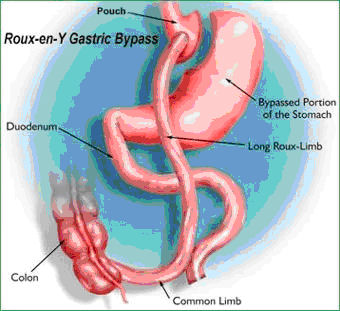
One of the reason's why Roux-en-Y gastric bypass is used is because it not only makes the stomach smaller (from the size of a quart of milk to the size of a thumb), but it also bypasses part of the small intestine. This is done to aid in weight loss maintenance by malabsorbing calories. This upper part of the intestine is also the site where approximately 90% of your nutrients are absorbed. The intestines are also where much of your seratonin is created.
But what does this mean? I had this surgery, so what? I could just take a multi-vitamin, some calcium supplements and B-12 injections and be good to go, right? Wrong! I have since learned how important vitamins, minerals and amino acids are to healthy brain function. I'm not sure why it took me so long to put this all together. But, it seems no one else did either, certainly not the doctors, psychiatrists, nutritionists, endocrinologists, etc.
Prior to this surgery it seemed people were either born addicts or not. It seemed very obvious that alcoholics had some sort of genetic component, but it wasn't identified. But with this surgery, addicts were "created". Could this effect provide some new insight into addiction treatment? If you could surgically create an addict via malnutrition, could you then use hypernutrition to unmake the addict? This is how I began. I knew that I wasn't like this before the surgery and people I knew did not have these problems either, and the further along in this surgery, the worse we all seemed to get. The one common denominator in this picture was the surgery. Well, what does the surgery do? It causes malnutrition and malabsorption.
I have learned in my quest that proper neurotransmitter function is the key to healthy brain function and "feeling good". Most of the amino acids required for proper mental health and brain function can come from adequate intake of protein However, if this surgery has inhibited the absorption and digestion of these protein into the amino acids, your mental well being will be impaired.
The major bio-chemical mechanisms of "feeling good" include seratonin and endorphins. How does nutrition and/or malnutrition affect the delicate bio-chemical balance? We know that food does affect mood and some foods affect mood differently than others.
To attempt to try and understand these brain chemicals I started with the basic building blocks of the brain - neurotransmitters. The three types of neurotransmitters are Amino Acids, Peptides and Monoamines. Of the amino acids, eight are considered "essential", meaning they must come from your diet. These eight are histidine, isoleucine, leucine, lysine, methionine, phenylalanine, tryptophan and valine. However, some of the "non-essential" amino acids (meaning they can be derived from the essential amino acids), may not be sythesized in sufficient quantities due to a metabolic or synthesis disorder.
1. Amino Acids
a. Alanine
b. Cysteine
c. Aspartate
d. Glutamate: This is the major "workhorse" of the neurotransmitters and is synthesized into GABA (gamma aminobutyric acid) in the central nervous system
e. Phenylalinine: This amino acid is converted into tyrosine and is used to create dopamine and norepinephine,
which affect alertness, mood, memory, pain alleviation, and appetite suppression. Low tyrosine levels
have been associated with depression and hypothyroidism.
f. Glycine
g. Histidine: associated with improving sexual arousal, functioning and enjoyment. Also, associated with
tissue repair and the synthesis of both white and red blood cells. May improve symptoms of
rheumatoid arthritis.
h. Isoleucine
i. Lysine
j. Leucine
k. Methionine: helps to break down fats and helps lower histamine levels. Elevated histamine levels can make
you feel agitated or anxious, similar to that fight or flight feeling if you are startled.
l. Asparagine
m. Proline
n. Glutamine
o. Arginine
p. Serine
q. Threonine
r. Selenocysteine
s. Valine
t. Tryptophan: a precurser to seratonin.
u. Tyrosine: aids in brain alertness - see phenylalanine
**Taurine: aids in the feeling of well-being and relaxation, is being studies as an effective treatment for bi-polar
disorder, and it has recently been touted for it's benefits as a hangover remedy.
2. Peptides
3. Monoamines
Well, how does your body convert the protein you eat into the essential amino acids that your brain needs. As you eat your protein the normal stomach is full of acid and digestive enzymes to break down the food you eat. However, in gastric bypass surgery, because of the smaller stomach, the food you eat doesn't come into contact with all of the digestive enzymes produced by a normal size stomach. In theory, where the old intestine junctures at the "Y" some of these gastric juices and enzyme will once again mingle with the food. However, without the food actually stimulating the enzymes, does this occur sufficiently and is it too little too late?
Small intestine
A normal small intestine is made up three levels (the duodenum, the jejunum and the illium), where each level has its own absorption and digestive responsibilities. This is why the small intestine does not absorb all nutrients homogenously. It's almost like levels on a ladder. The gastric bypass patient has completely bypassed the duodenum and the upper portion of the jejunum (but also bypassing their nutrient absoption capabilities).
The top rung, (the duodenum) is responsible for the absorption of specific vitamins/nutrients like calcium, magnesium, iron and others. So in the gastric bypass patient, the ability to absorb these is drastically diminished and this MUST be compensated for. Specifically the calcium ion (Ca 2+) is vital to the neuron function of the brain (not just for strong teeth and bones which is what I thought).
The surface area of the interior of the small intestine (which is proportional to absorption) isn't merely as if you are looking into an empty paper towel tube. Inside the walls of the small intestine are millions of little tiny "nipples" called villi. This dramatically increases the absorption surface area. And these little villi have even smaller villi on them, increasing the surface area even more. So bypassing the upper portion of the small intestine has a far bigger impact than you might initially realize. It's not just three feet by 1 inch diameter, for example, but may be more accurately calculated by 3 feet x 2 feet. In addition, the intestines are where 90%-95% of your body's enterchromaffin cells are located. The function of these cells, located at the base of the crypts of Lieberkuhn, is to squirt seratonin into the intestine as they are stimulated by food. Whether this seratonin crosses the blood brain barrier to affect mood is unknown, but I do know when I eat certain foods I "feel" better. For example, eating a baked potato improves my mood more than a steak, although this is relatively short-lived.
What remains at the end of the ileum are mostly water, electrolytes, such as sodium and chloride and waste products, such as plant fiber and dead cells shed from the lining of your digestive tract.
Do not start this supplement regime without first talking with your doctor. This is very important. You may need to have many tests run first so you know where you are.
DO NOT STOP TAKING YOUR MEDICATIONS without first talking with your doctor.
On the more practical side, in order to get the amount of Omega-3's you may need to take between 10-30 capsules per day (depending on the makeup of the capsule and if you are seeking therapeutic benefits or just a maintenance benefit). Sometimes, with that many capsules you may find yourself burping up fish oil (not pleasant). I'm trying a liquid lemon-flavored fish oil. You can mix this in a beverage or just take it like a medicine (which is what I do).
From what I've read there doesn't seem to be much that Omega-3's cannot do. It has been attributed to decrease in arterial placque, weight loss, treatment of alcoholism, depression, bi-polar, and schizophrenia. I'm not sure about that, but every doctor I've talked to recommends this. One doctor did explain that he doesn't often bring it up to his patients because the quantity of pills/liquid you need to take to get the benefit is so great that he didn't feel his patients would be compliant with this treatment (One Lipitor is just easier I suppose). A study of manic-depressives showed that 9,600 mg/day of DHA/EPA was very effective an an anti-depressant. 1,800 mg - 3,600 mg per day may be adequate for maintenance (but you need to consider how many of the harmful Omega-6's you consume.
mood and associate with diet, supplements ...
Tryptophan
DL-phenylalanine: 1500 mg
Tyrosine: 1500 mg 3 x per day (great in the am)
Taurine: 2,000 mg 3x per day
GABA: 2,000 mg
Calcium Supplement: 4 capsules
NOW Omega-3 Liquid: 12 oz per day or approximately 9 grams of EPA (read the label carefully to make sure how much of your Omega-3 is EPA)
Ester C: 2,000 mg (4 capsules)
Vitamin D3: 1000 ug (4 capsules)
Multi-Amino Acid Capsule: 3 capsules
Multi-Trace Mineral: 3 capsules
Liquid Centrum or Multi-Vitamin: 2 servings
Iron: 40 mg (only once per day)
Zinc Picolinate: 1 capsule (22 mg)
Digestive Enzymes: three with every meal
Niacin: one capsule daily
B-12 injection: 0.75 cc once per week (by rX)
Synthroid 0.75 mg daily (by rX only)
Cytomel 10 ug daily (by rX only)
Wellbutrin XL (150 mg/day started 3/17/07)
Designer Whey Protein (40 grams of protein per serving) 2 scoops in Lactaid milk - 2 x daily plus I pour in some Liquid Calcium