
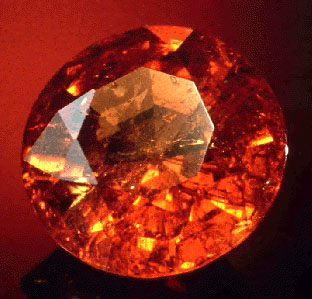
Color(s)- All, except blue
Specific Gravity- 3.4 to 4.2
Hardness- 6.5 to 7.5
All garnets have a general formula, A^3B^2(SO^4)^3, the colors come from the elements listed above plus others such as magnesium, manganese, titanium, or chromium.
|
|
|
|
|
|
|
|
|
|
|
|
|
|
|
|
|
|
|
|
|
| January- Garnet | ||||||||||||||||||||
|
||||||||||||||||||||
| Crystal Structure- Isometric or cubic Color(s)- All, except blue Specific Gravity- 3.4 to 4.2 Hardness- 6.5 to 7.5 |
||||||||||||||||||||
|
||||||||||||||||||||
| Chemistry | ||||||||||||||||||||
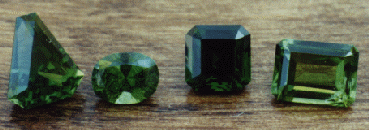
| Garnet can be found around the world from, Colorada to Nepal, Mexo, Italy, Canada and more. Garnets color comes from what elements it is made up of and the regoin those elements are found in. Dark red or purple garnets are found is Colorado and Alaska, they contain Iron (Fe+2) and Aluminum. Garnets from Italy are usually a yellow or lime green color, they contain Calcium (Ca+2) and Iron. All garnets have a general formula, A^3B^2(SO^4)^3, the colors come from the elements listed above plus others such as magnesium, manganese, titanium, or chromium. |
||||||||||||||||||||
|
||||||||||||||||||||
| The birthstone for January, Garnet, comes in many colors and shades; the most common being a red or reddish color. Garnet does not refer to just one color stone, but to a whole range of different colored stones, shareing the same crystal structure and basic chemical formula. Garnet comes in every color and shade execpt blue. Many of the most popular types and shades have their own name, and the less common colors are more valuable. | ||||||||||||||||||||
| Main Page Chem X Home | ||||||||||||||||||||
| February | ||||||||||||||||||||