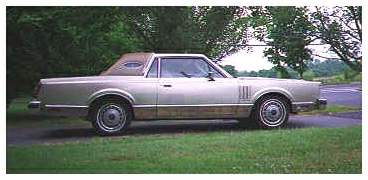
 1981 CONTINENTAL 1981 CONTINENTAL MARK VI
"Large, bright stainless steel moldings covered the rocker panels. The tall, upright grille would have been appropriate on a 1930's conveyance of the most regal type. The hidden headlights elimintaed the styling interruption normally caused by headlights. And, as it is generally acknowledged among automotive stylists, the numerous 90-degree angles of the vehicle's lines proclaim that here is a car with an air of elegance."
� � � Sitting on the Ford "Panther" chassis, the new Mark VI did not sacrifice interior space one iota. In fact, legroom and luggage capacity were increased from previous models. There was a new addition to the line, the Mark VI 4-door Sedan, which sat on the same 117.4 in. wheelbase (which was over three inches shorter than the Mark V,) as it's cousin the Continental. The two-door versions sat on a wheelbase of 114.4in. and the overall size was nearly 15 inches shorter than the Mark V. The Mark VI also weighed in about 900 lbs. lighter than the '79 Mark V.
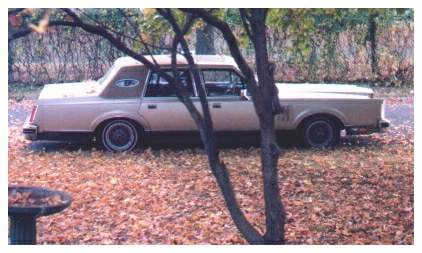
� � � The overall styling of the car was angular and masculine, carrying on in a natural evolution from both the Mark IV and V. The hidden headlights remained, as did the opera window (except for the Bill Blass Designer Edition,) and the three louvres on the front fenders. Jim Raymond's words at the opening of this page speak much more eloquently on this than any I can conjure, but in my honest opinion the only flaw in styling that carried over from the Mark V were the large red reflectors (or, as FoMoCo described them "red reflective lower back panel appliques"?!)on the trunk lid. In fact two additional small reflectors were actually added on the front fenders of some models, just below the louvres. � � � Gone for good were the mighty big-block engines that had become a Lincoln trademark. The standard engine for the Mark VI was the small block 302 C.I.D. (5-liter) equipped with Electronic Fuel Injection. An optional carberated 351 C.I.D. Windsor was available in 1980, but as the 1981 model year production began the option was withdrawn leaving the 130 hp 302 C.I.D. engine as the only choice. Controlling the engines were an Electronic Engine Control (or EEC), which incorporated an on-board computer and seven sensors that monitored various engine functions.
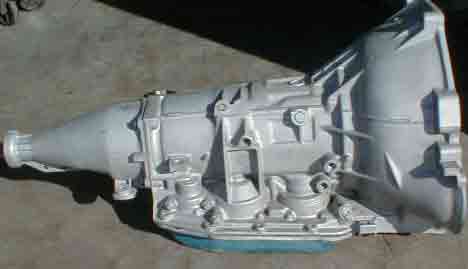
The engines were mated to a super-tall four-speed automatic overdrive transmission, or the "AOD". This transmission featured a mechanical lock-up overdrive fourth gear that engaged at aprox. 40 m.p.h. and provided a final drive ratio of 0.67/1. Overall the cars seemed underpowered to those Lincoln fans who had grown used to the overly abundant horsepower of the earlier big-blocks, but performance was comparable to most of the full-size luxury cars of the day. Fuel economy (the main reason for the choice to downsize, use aluminum parts and to use small-block engines,) was increased to an estimated 16 mpg in the city and 24 on the highway, an increase of nearly 38% over the Mark V. In addition totally new brake and steering systems mated with a redesigned suspension all added to the vehicle's overall luxuriousness.
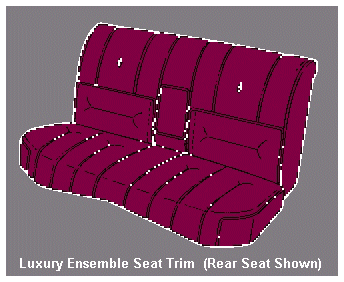
� � � Standard creature comforts included power steering, power brakes, power windows, tilt steering wheel, an electronic instrument cluster/message center (another industry first,) cruise control and illuminated keyless entry system. The sumptuous interior was available with six-way power seats covered in either leather (optional) or velour. A number of courtesy lights were located throughout the car (in the front door panels, under the dash and in the opera windows as well as in the glove compartment, trunk and engine compartment.) Cigarette lighters were located in the dash ash tray as well as the ash trays of the front passenger and both rear doors. The front door panels also featured small, lighted hidden storage compartments as an option and the glove compartment also featured a slotted area which held various denominations of change. Each little detail showed this car had as much integrity as any Lincoln that preceeded it. A padded dash with polished woodgrain-looking accents and deep pile carpeting also gave notice that Lincoln didn't skimp when it comes to luxuriousness.
� � � There was also a vast array of available options for the 1981 Mark VI. These included a power moon-roof, a six-speaker AM/FM Cassette Premium Sound System or a Quadrasonic AM/FM 8 Track Player, power antenna, a one-handed CB radio, illuminated vanity mirrors, automatic garage door opener, your choice of four different style wheels, automatic headlights and headlight dimmer and rear window defogger w/ heated mirrors, among others. � � � The electronic instrument cluster seemed especially fascinating to those who attended the 1980 Lincoln Continental Owner's Club National Meet, as one lincoln owner brought his brand new 1981 Mark VI there and offered any club member a trial spin. According to the Winter 1980-1981 issue of Continental Comments: "...a number of vintage Lincoln owners tried out the latest model Lincoln and most were considerably impressed by the advances in the state of the art among prestige automobiles."
� � � In 1981 the Mark VI was available in 21 colors ,seven of which were new to the Lincoln line, and 11 of which were standard. Color co-ordinated pinstriping completed the exterior appearance along with the famed Continental tire hump on the trunk. The roof of the car could be adorned with either a half or full vinyl top in various grain patterns.
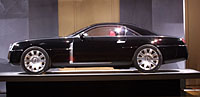
� � � In addition to the standard Mark VI two-door and four-door models, a Signature model (also available in two or four doors,) and four two-door Designer Series models were available, each of these bore a specific color scheme that was chosen/created by a noted fashion designer - Bill Blass, Givenchy, Pucci and Cartier. The Signature and Designer models are considered to be most sought after today, however it has been noted by many automotive enthusiasts that the Mark VI seems destined for the classic status all Lincolns do eventually attain. In his book The Lincoln Motorcar", Thomas Bonsall stated that the Mark VI's were "...perhaps the finest Lincolns ever built." � � � In 1983 the last Mark VI's rolled off the assembly line into history. The Mark lineage continued on with the Mark VII and VIII, but in 1998 the last Lincoln to "wear the Mark" rolled out of the doors at the Ford Wixom Assembly Plant. It should be noted, however, that Lincoln has since created a concept car they named the Mark X (or Marque 10) back in the late 90's and at the 2001 New York Auto Show they unveiled a concept car dubbed the "Mark IX" which has styling that harkens back to the glory days of Lincoln while still reaching ahead into the 21st. Century. While no plans for production of the vehicle are definite, it would appear that the Mark Series may grace the roads again.
"For generations, ownership of a Lincoln has meant you've 1981 Consumer Report for the Mark VI
A Gallery of Mark VI Photographs
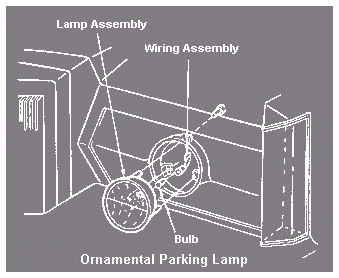
Light and Electrical Information
|
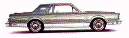
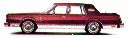
 When the Ford Motor Company debuted their new "downsized" 1980 line on October 12, 1979, response was (to say the least,) mixed. Arguably the most notable changes were made to the Lincoln Mark Series. While some critics of the period called the Mark VI "not particularly stylish" and a "dressed up LTD/Crown Victoria,"
Car and Driver proclaimed:
When the Ford Motor Company debuted their new "downsized" 1980 line on October 12, 1979, response was (to say the least,) mixed. Arguably the most notable changes were made to the Lincoln Mark Series. While some critics of the period called the Mark VI "not particularly stylish" and a "dressed up LTD/Crown Victoria,"
Car and Driver proclaimed: 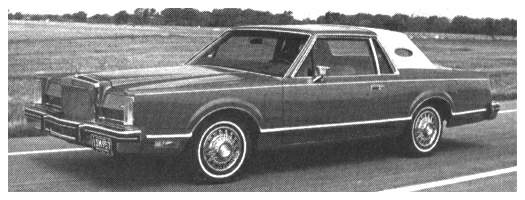

All sounds and images (c)copyright 2000-2001-2002 The Art of Syd Edwards, all rights reserved and protected. Reproduction without permission is a violation of applicable laws.
This page hosted by
 Get your own Free Home Page