|
|
 Life in the West Bank
A Visit to Jenin
by Jonathan Smith
September 4, 2002
|
|
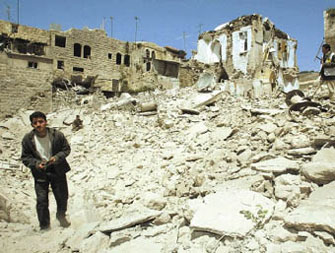 Jenin has become the most famous (or infamous) city in this region in
the past year because of the much publicized battle that resulted in the
destruction of much of Jenin Camp, a refugee camp located on the outskirts
of Jenin city. I was interested to learn more about Jenin. How have
months of curfews and military action affected the city and its inhabitants?
Jenin has become the most famous (or infamous) city in this region in
the past year because of the much publicized battle that resulted in the
destruction of much of Jenin Camp, a refugee camp located on the outskirts
of Jenin city. I was interested to learn more about Jenin. How have
months of curfews and military action affected the city and its inhabitants?
On September 4, I had the opportunity to visit Jenin with some other English teachers at my university and two university employees who were our guides because they live in Jenin. At first it seemed like the trip would never happen due to all-day curfews (for an explanation of curfews, 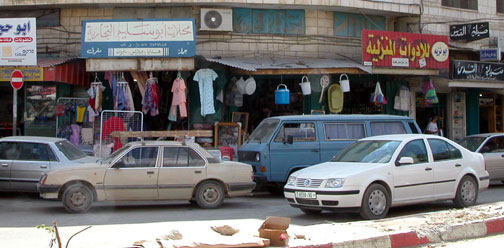 click here
) over the past week. As it turned out, the day we went was
perfect. For that entire day (before 6 p.m.), there were no Israeli
tanks or troops in Jenin, and the people of the city were out
en masse to buy food and supplies that they had not been able to get
for the past week of curfews. The streets were packed with people
shopping and enjoying being outside for a change. The next day
the all-day curfews were reinstated, so we got in on the perfect day.
click here
) over the past week. As it turned out, the day we went was
perfect. For that entire day (before 6 p.m.), there were no Israeli
tanks or troops in Jenin, and the people of the city were out
en masse to buy food and supplies that they had not been able to get
for the past week of curfews. The streets were packed with people
shopping and enjoying being outside for a change. The next day
the all-day curfews were reinstated, so we got in on the perfect day.
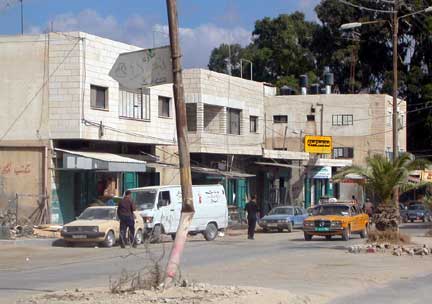
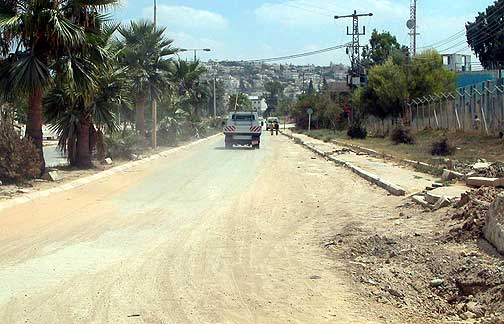 We spent the day driving around the city, stopping at various shops
to buy stuff for our apartments. The most amazing thing to me was
the general destruction of the city itself. The roads
were dusty and littered with debris, and covered with tank tracks rutted
into them from the many tanks that had driven over the streets. These
pictures show the type of damage that tanks can do without even firing
a shot, just by by driving through a city.
We spent the day driving around the city, stopping at various shops
to buy stuff for our apartments. The most amazing thing to me was
the general destruction of the city itself. The roads
were dusty and littered with debris, and covered with tank tracks rutted
into them from the many tanks that had driven over the streets. These
pictures show the type of damage that tanks can do without even firing
a shot, just by by driving through a city.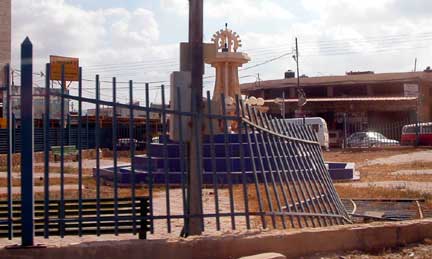
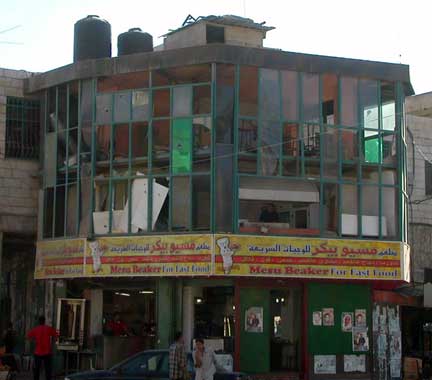 But there definitely were shots fired. As we drove down one
of the main streets, I could see bullet holes in store windows and restaurants
that lined the main street. This restaurant has really taken a beating
from Israeli firing.
But there definitely were shots fired. As we drove down one
of the main streets, I could see bullet holes in store windows and restaurants
that lined the main street. This restaurant has really taken a beating
from Israeli firing. 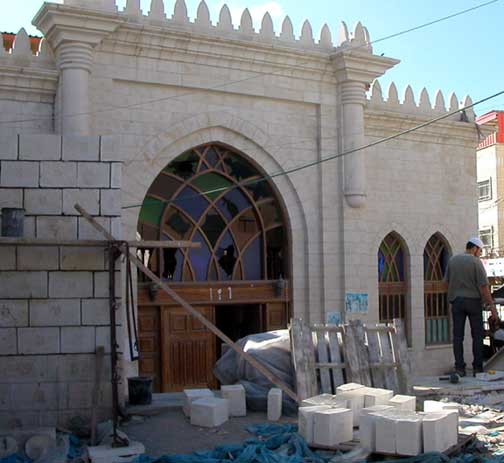 Even the large mosque in the city center had
its windows broken out by bullets. As you can see, it is in the process
of being repaired, but the people never know if it will be damaged again.
Since there is shooting in Jenin's streets daily, it's always a possibiliy.
Even the large mosque in the city center had
its windows broken out by bullets. As you can see, it is in the process
of being repaired, but the people never know if it will be damaged again.
Since there is shooting in Jenin's streets daily, it's always a possibiliy.
Top of page 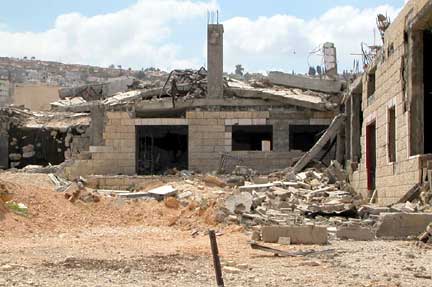 The government sector of the city was also quite a sight because
it is now mostly a ruin. This former police station had been reduced
to rubble, and other buildings around were not much better. Makes
it difficult for the Palestinian Authority to enforce any kind of law here.
In Jenin the primary law now is Israeli army martial law.
The government sector of the city was also quite a sight because
it is now mostly a ruin. This former police station had been reduced
to rubble, and other buildings around were not much better. Makes
it difficult for the Palestinian Authority to enforce any kind of law here.
In Jenin the primary law now is Israeli army martial law. 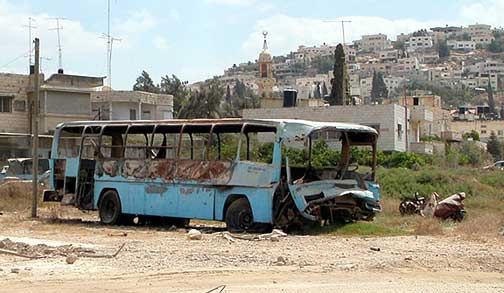
After buying some towels and kitchen utensils that I needed (yes I do try to cook, although it’s not always successful!), we went to a restaurant to have felafel sandwiches for lunch (one of my favorite foods here). 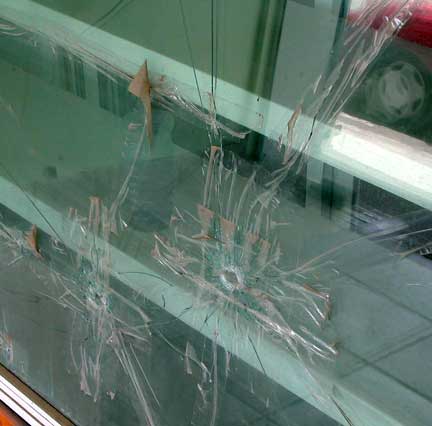 The first sight when we entered the restaurant was the display counter
filled with bullet holes. It must be difficult to run a business
when you do not know from day to day if your business will be damaged or
destroyed. I was glad that this place was still open, because the
felafel was excellent!
The first sight when we entered the restaurant was the display counter
filled with bullet holes. It must be difficult to run a business
when you do not know from day to day if your business will be damaged or
destroyed. I was glad that this place was still open, because the
felafel was excellent! Top of page 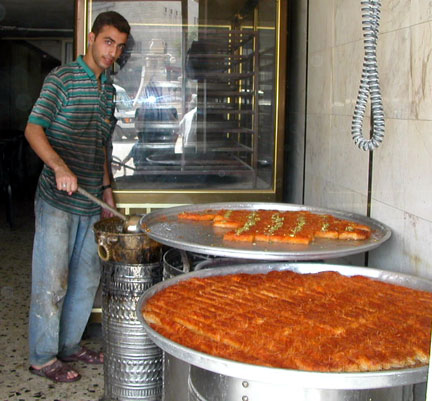 After a great lunch we went back to shopping. But first we
stopped for a special Palestinian dessert called kanafa. It is kind
of like baklava, very rich and sweet. They actually make it in
a separate restaurant that sells only kanafe. This guy had just brought
a fresh batch out of the oven. Delicious!
After a great lunch we went back to shopping. But first we
stopped for a special Palestinian dessert called kanafa. It is kind
of like baklava, very rich and sweet. They actually make it in
a separate restaurant that sells only kanafe. This guy had just brought
a fresh batch out of the oven. Delicious! During our shopping spree I happened upon this billboard and thought it was really funny. It's not often that 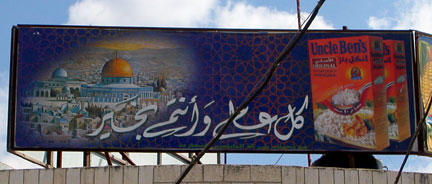 I see an ad for Uncle Ben's rice anywhere. I have never seen
one with Uncle Ben's sharing the spotlight with the Dome of the Rock
mosque in Jerusalem!
I see an ad for Uncle Ben's rice anywhere. I have never seen
one with Uncle Ben's sharing the spotlight with the Dome of the Rock
mosque in Jerusalem! 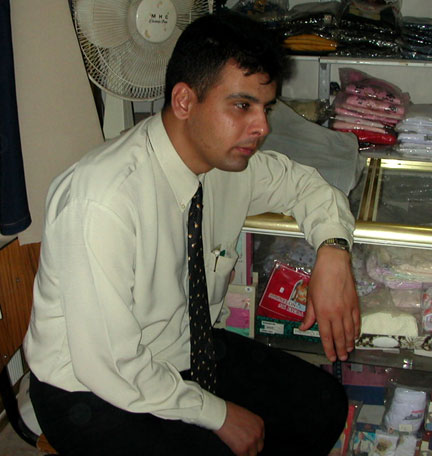
After a couple more hours of shopping, we were getting tired. Naser (one of our guides) expressed our condition well in this picture. It was time to go back. Top of page So we started to head back to the university to beat the 6 p.m. curfew. On the way out we drove through an industrial sector and saw the results of some of the recent Israeli military activity. A whole section of mechanics’ shops had been torn up. Doors were ripped off their hinges and debris was everywhere. A telling example of how the Israeli army destroys the Palestinian "terrorist infrastructure." Sometimes they find the bomb factories, and sometimes they don't. But the buildings always get destroyed, and it is the people who suffer. 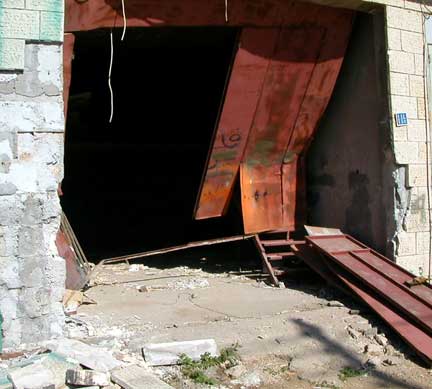
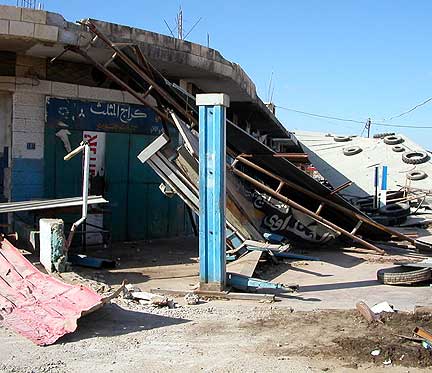
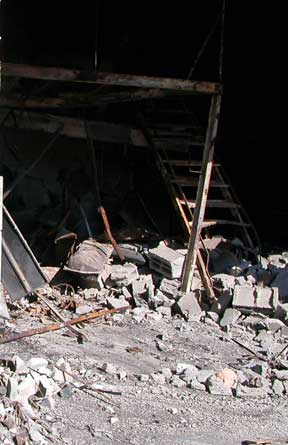
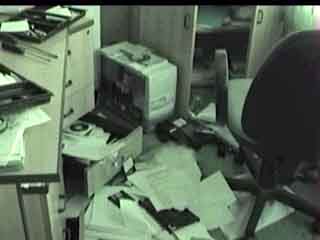
On that note, my Internet Service Provider here in Palestine just received a similar visit from the Israeli army, and this was the result. There is no way to recover lost money or damaged property. They can only cut their losses and move on. If you want to see more pictures of the destruction of this office, click here. 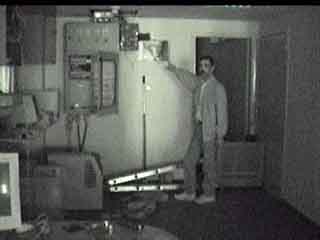
Top of Page
Physical things (like these buildings) are just propery. What interests me more is what is happening to the people’s lives who live here. Many university employees live in Jenin, and I have been able to keep up with their lives through regular contact. Their lives are characterized by uncertainty (as they have been since the Israeli troops moved in). Every day they wake up and look around to see if there are tanks in the streets 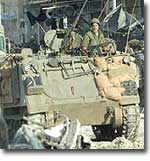 and if they are allowed to leave their houses. Sometimes the
tanks move out in the morning and they go to work late. Other
days they venture out and try to avoid meeting up with tanks. One
employee told me about her trip to work one day. Her father was driving
her to work, and there didn’t seem to be any tanks around. Suddenly
after rounding a corner, they ran right by a tank. They quickly veered
off the road into some brush and continued on driving in the undergrowth.
Just a week earlier she had been on a bus from Jenin and shots were fired
in the area. Everyone in the bus hit the floor and stayed there until
the shooting stopped. Fortunately, the bus was not hit. I asked
her, “How can you live with this?” She replied with the common statement
here, “This is the life." Fortunately, they were not shot.
and if they are allowed to leave their houses. Sometimes the
tanks move out in the morning and they go to work late. Other
days they venture out and try to avoid meeting up with tanks. One
employee told me about her trip to work one day. Her father was driving
her to work, and there didn’t seem to be any tanks around. Suddenly
after rounding a corner, they ran right by a tank. They quickly veered
off the road into some brush and continued on driving in the undergrowth.
Just a week earlier she had been on a bus from Jenin and shots were fired
in the area. Everyone in the bus hit the floor and stayed there until
the shooting stopped. Fortunately, the bus was not hit. I asked
her, “How can you live with this?” She replied with the common statement
here, “This is the life." Fortunately, they were not shot.
Every meeting between Palestinians and Israeli troops is tinged with fear. They never know if they will be shot at, and there is no real accountability for the troops if they do shoot people (which does happen at times). The people of Jenin are caught between a rock and hard place. They need to leave their homes in order to work and make a living, but they are frequently forbidden to leave. So they must choose to risk a dangerous commute to work or face the loss of needed income. If this was a temporary situation it would be one thing. But this is how they have been living for many months. And there is no sign of it stopping at the present. It is amazing to see how they manage to somehow get around and keep positive in the midst of this difficult situation. Their attitude is definitely an inspiration for me in dealing with the comparatively petty obstacles in my own life. |