Go outside, grab a shovel and start digging a hole. After your hole is one hundred meters deep, take a break and feel the earth. It will probably feel cool, but not cold. When your hole is one thousand meters deep, the earth should start to feel warm. If you can keep digging, you'll find that the earth continues to feel warmer as you dig deeper.
Imagine wearing a concrete bodysuit all of the time. After a while, you'd feel extremely hot because of the tremendous pressure you'd feel on your body. If you think about it, the mantle wears a huge, heavy bodysuit that is about seventy kilometers thick. It's not too hard to believe, then, that there is extreme pressure and heat in the mantle. The high temperature and the push and pull forces cause some of the mantle to melt. This molten rock is known as magma.
If you were wearing that concrete bodysuit, you'd probably fight to break free from it. You'd probably wiggle your fingers and stretch your toes to try and poke some small holes. The mantle tries to do just that. The outer layer of the earth has some weak spots and cracks in it. The magma in the mantle pushes and pulls against the outer layer until it finds a place where it can poke a hole and break free. Those places are called volcanoes. Once the magma bursts free it becomes lava. Magma and lava are the same substance. Both are melted rock. The different names help scientists know where the melted rock is located.
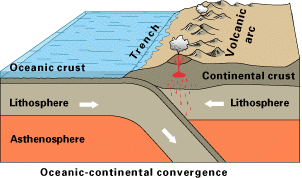
Scientists know that the outer layer of the earth is made of solid rock and that it warms as you dig deeper. Based on many years of investigations, scientists now estimate that the crust of the earth, the solid outer layer, is about 44 miles deep at its thickest point. Beneath the crust is a deep, fiery layer of rock called the mantle. Even deeper is the core which scientists believe is made of solid iron and nickel. The mantle pushes and pulls between the solid rock of the core and the solid rock of the crust. Big pieces of the crust, called plates, form along the cracks. The huge plates, like giant rafts, drift on the waves of the liquid magma in the mantle. Most of the world's volcanoes are found along the margins of these huge plates. Eventually, two plates will bump into each other and one plate's edge will slip beneath the edge of the other plate. Much of the Pacific Ocean is encircled by a ring of volcanoes. This Pacific Ring of Fire exists because of the presence of trenches and subduction zones.
A volcano is a vent in the Earth from which molten rock (magma) and gas erupt. The molten rock that erupts from the volcano (lava) forms a hill or mountain around the vent. All volcanic eruptions are not alike. Some eruptions, are quiet, with lava slowly oozing from a vent. Other eruptions are very violent, with lava and other materials being hurled hundreds of miles into the air. Gases from within the earth's interior mix with huge quantities of dust and ash and rise into the air as great dark clouds that can be seen from many kilometers away. Some dark-colored lava is thin and runny, and tends to flow. The islands of Hawaii and Iceland were formed by many lava flows. But light colored lava causes explosive eruptions. Because light -colored lava is rich in the element silicon, it tends to harden in the vents of a volcano. Explosive eruptions are caused when lava in the vents hardens into rock. Steam and lava build up under the rocks. When the pressure of the steam and new lava becomes great, a violent explosion occurs.