| THE AMERICAN
LEGION:
As victory became more evident in World War I, soldiers, who had
been serving in the trenches, saw need for an organization to
include veterans of all branches of the service at home and
abroad. At a gathering in St. Louis, early in 1919,
"The American Legion" was approved as the official name,
and a constitution committee was set up. Headquarters were to be
in New York City. THE "HARRY HIGGINS" POST: Former post
historian and charter member Day Mason....wrote that in August of
1919, Major J. B. Blue, who had returned to Ashland, was contacted
by New York officials to organize a post here. He had been in
command of the Ohio National Guard here when it had been
federalized. At a first meeting held at the old armory, a frame
building on West Main Street north of Quarry Street, 17 men signed
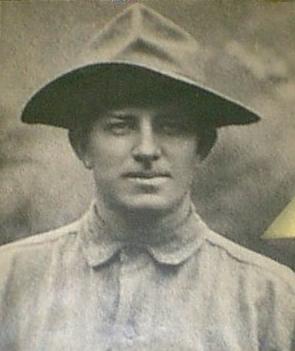
the charter. They chose "Harry Higgins" as the
name to honor, a man who had joined Company 'E' while working in
Ashland and who was killed on Armistice Day. His body was
returned to his native Crestline where he is buried.
A Sunday meeting was at the opera house
on Sept. 12, 1919, and 42 more men signed up. The Chamber of
Commerce rooms then located above the Ashland Hardware at 42 W.
Main St., offered their place as a meeting place. Dues were
established at $1 per year and an initiation fee of $1 was
assessed.
After a Sept. 19 meeting, a goal of 115
members was set and J.B. Blue and William Chalmers were elected to
be delegates to the state convention in Columbus.
On Armistice Day, 1919, Mayor Davis
requested that an American flag be displayed at every home and
business place, and that factory whistles should blow and church
bells be rung at 11 a.m. By 1920, membership had reached 180
and the dues were raised to $3. The American Legion Weekly, now
the American Legion Magazine, began publication. This also was the
first year of the National Essay contest for high school students
which continues today.
One of the first money raising
projects was a boxing match at the opera house. Matches continued
at the opera house and later at the present armory. A total of
$5,000 was collected for furnishings in the back room of the
Farmers' (now the Huntington) Bank building, the new post home.
However, quarters were cramped, and rent was high. When J. Locke
Mason was elected Commander in 1925, he worked out a deal to move
headquarters to the third floor of the Opera House building, which
was known as "Firemen's Hall." Rent was $10 monthly and
the volunteer fire department was allowed to continue using the
hall for their annual ball.
Here they remained for 20 years until the
building was condemned by the State Fire Marshall's office.
The decision was made to purchase the former M.A. Bowman home
which stood where the Van Hove parking lot is today. Early
in 1941, when Harry Eaton was the commander, who later was a state
commander, the post moved into its new home.
Following World War II, there was some
doubt as to whether the age difference between the veterans of the
two wars would be a barrier to the future of the American Legion.
However, this did not become a factor.
With a growing enrollment, the decision
was made to move into the former Scott Plumbing and Heating Co. at
1338 Claremont Ave., "just south of the city limits" in
1953.
In 1949, Albert Michael became the first
World War II veteran to be elected commander. By 1957, the
largest paid membership of 639 was reached.
It is difficult to list all the
contributions and programs of Post 88 in its long history.
Among them are serving as an auxiliary to the State Highway
Patrol, sending delegates to Boys' State, providing flags for
schools and public buildings, sponsoring a Junior Baseball
program, furnishing color guards for parades and military burials,
organizing an American Legion band, supporting a bowling team and
a Boy Scout troop, and participating in numerous foreword moving
city projects.
Mason concludes his remarks with the
following: "Harry Higgins Post should continue to grow
with the city for many years to come, and who knows what may
happen in the future to assure that The American Legion will
continue as a potent organization in the service of God and
country." |