

Antlia
Apus
Aquarius
Aquila
Ara
Aries
Auriga
Bootes
Caelum
Camelopardalis
Cancer
Canes Venatici
Canis Major
Canis Minor
Capricornus
Carina
Cassiopeia
Centaurus
Cepheus
Cetus
Chamaeleon
Circinus
Columba
Coma Berenices
Corona Austrina
Corona Borealis
Corvus
Crater
Crux
Cygnus
Delphinus
Dorado
Draco
Equuleus
Eridanus
Fornax
Gemini
Grus
Hercules
Horologium
Hydra
Hydrus
Indus
Lacerta
Leo
Leo Minor
Lepus
Libra
Lupus
Lynx
Lyra
Mensa
Microscopium
Monoceros
Musca
Norma
Octans
Ophiuchus
Orion
Pavo
Pegasus
Perseus
Phoenix
Pictor
Pisces
Piscis Austrinus
Puppis
Pyxis
Reticulum
Sagitta
Sagittarius
Scorpius
Sculptor
Scutum
Serpens
Sextans
Taurus
Telescopium
Traingulum
Traingulum Australe
Tucana
Ursa Major
Ursa Minor
Virgo
Volans
Vulpecula




Temperature
_________________________________________________
O 25,000 K Blue star
B 11,000 K-25,000 K White-blue star
A 7,500 K-11,000 K White star
F 6,000 K- 7,500 K Yellow-white star
G 5000-6000 K Yellow, solar star
K 3500-5000 K Orange-yellow star
M 3500 K Red star
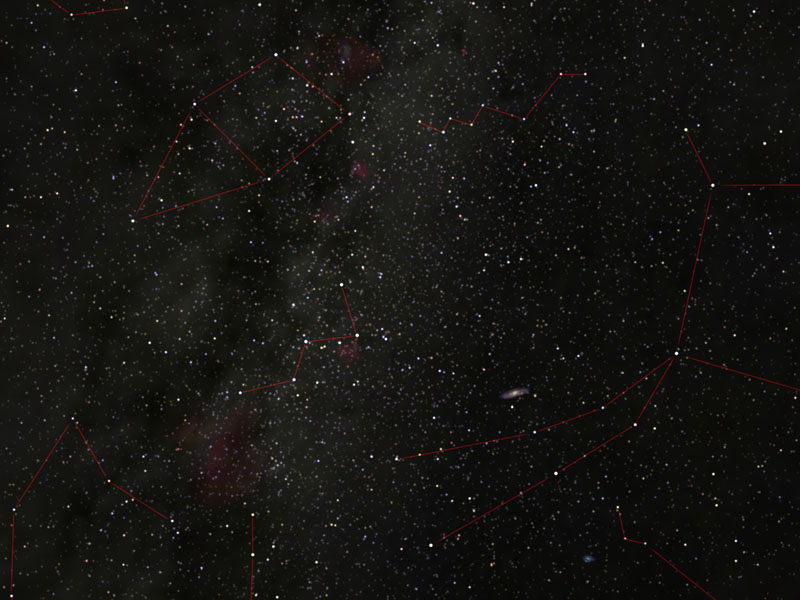
My favorite constellation.
There's a story behind it which is:
Cassiopeia and Cepheus were the Queen and King of Ethiopia. Cassiopeia and her daughter Andromeda were both blessed with exceptional good looks. Many gods kept close watch over mortal affairs. Unmindful of this, Queen Cassiopeia boasted about her and her daughters beauty. How they were more beautiful then the Nereids, or sea nymphs. The Nereids heard of this and went to Poseidon, god of the sea, to punish the Queen. Poseidon sent Cetus, sea monster, to the shore of Cehpeus' territory. The Kind consulted the Oracle of Ammon who told him to sacrifice his daughter to the sea monster, so as to appease it.
Perseus, son of Zues, while returning home after killing Gorgon Medusa, saved Andromeda's life., by killing the monster. And was given her hand in marriage.
Cassiopeia conpsired with Phineus, Cepheus' brother, to kill Persues, so Phineus may marry Andromeda. Persues killed the attackers by showing them the head of Medusa. Which turned them into stone.
As punsihment, Poseidon took Cassiopeia, the Queen, sitting on her throne to the stars. Where for 6 months of the year she would hang upside down with her dress in her face and the blood running to her head.
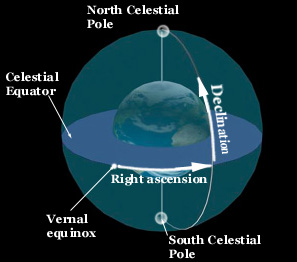
The Sun is the nearest star to the Earth. The stars visible to the naked eye, all in the Milky Way, are at a number around 5,000 (Not all 5,000 can be seen at any given time or given place). Astronomers today believe there are more then 1,000,000,000,000,000,000,000 stars in the universe. Big number, eh?

Astronomy
Phil Plait's Bad Astronomy: Home Page
History of Astronomy
Constellations