 Early Rockets and Sputnik
 Early Rockets and Sputnik
The techniques of rocket propulsion originated long ago. Ancient rockets used gunpowder as fuel, very much as in fireworks today. In AD 1232 in China, a city was reportedly defended against attack by the use of rockets.
From the Renaissance onward, reports of military use of rockets in warfare began to grow. As early as 1804, the British army established a rocket corps equipped with rockets that had a range of about 6,000 feet.
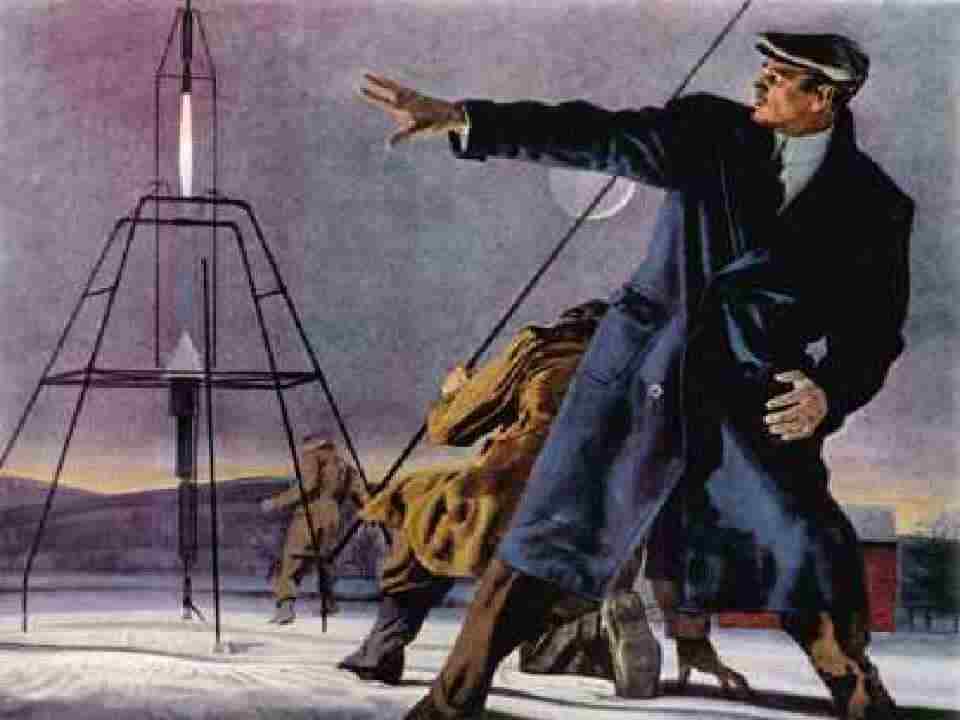
In the United States the foremost pioneer in rocket propulsion was Robert Goddard, a physics professor. He launched the first successful liquid-propelled rocket in 1926. Although it only flew twenty-six feet, it was considered an engineering triumph.
World War II provided the motivation for the development of long-range rockets. The U.S., U.S.S.R., Britain, and Germany all developed rockets for military purposes. The most successful were the Germans who developed a rocket used to bombard several villages in London.
The modern space age began with Sputnik 1, a small football-sized satellite, launched by the Soviets in 1957. It circled the earth for fifty-seven days relaying back information on meteoroids, cosmic rays, and the temperature in the upper atmosphere. On the 58th day, it reentered the earth's atmosphere and burned up.
Sputnik
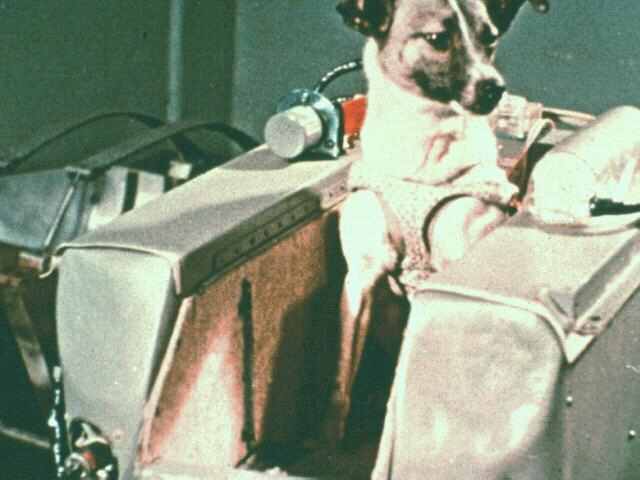
Sputnik II, also launched in 1957, carried on board a dog named Laika.
Laika: first Russian dog is space

one of several Russian monkeys sent into space
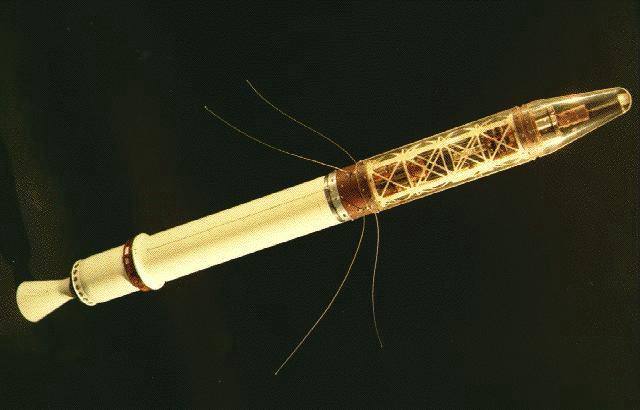
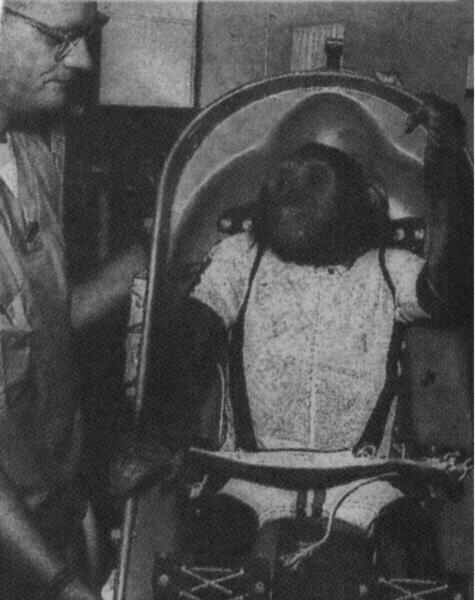
The Explorer 1 was launched by the United States in 1958 soon after the National Aeronautics and Space Administration (NASA) was created. Over the next three years numerous probes were launched by both the U.S.S.R. and the U.S. Carefully monitored dogs and chimpanzees were sent into orbit to study the effects of weightlessness on living creatures.
Explorer 1 satellite
"Ham" the American chimp returns safely from space
back to index
Questions and comments: [email protected] last revised 7/2005