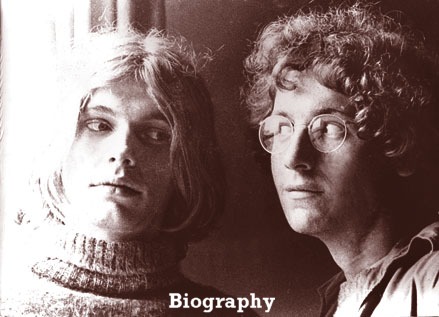
Craig Nuttycombe was born on March 24, 1947 in Los Angeles, California. The son of a classically-trained viola player, Craig was always surrounded by music during his childhood. He received a guitar for Christmas one year and eventually began taking lessons. By the mid-60s, Craig enjoyed listening to a wide variety of artists, including Bob Dylan, the Beatles, Joni Mitchell, the Byrds, and Aretha Franklin. The melodicism and vocal harmonies of the Beach Boys fascinated the budding musician. While in high school, Nuttycombe played guitar in the surf band the New Dimensions. The group also included guitarist Michael Lloyd and keyboard player Jimmy Greenspoon, who would later form Three Dog Night.
Meanwhile, teenager Denis Lambert was adjusting to life in southern California. Born on January 7, 1950 in Lewiston, Maine, Lambert experienced a troubled childhood. When he was 7, his parents split and placed him in an orphanage. After a few years, Denis�s uncle Jerry Lambert took the young boy and moved to California. Like Nuttycombe, Denis quickly became involved in music and began playing the guitar in his early teens. The two first met when Denis went to Fife & Nichols, an instrument store located inside Wallach�s Music City in Hollywood, to buy a guitar and was helped by Nuttycombe. Craig�s band, the New Dimensions, started to gain a following in Los Angeles. The group played the Santa Monica Surf Fair in the mid-60s with the legendary Beach Boys headlining. Around this time, the Beatles invaded America and changed the entire landscape of rock music. Craig and his bandmates were among those affected and inspired by the new sound. Nuttycombe began to lose interest in playing surf instrumentals, and he left the New Dimensions around 1964.
Several of Craig�s former New Dimension bandmates started a new group in 1965. The Eastside Kids were managed by Jerry Lambert, and soon his nephew Denis would be asked to join the group, playing rhythm guitar. Jerry Lambert pushed the band in a direction in which Joe Madrid, the handsome lead singer, was the center of attention. After only a few months, Denis was fired from the Eastside Kids. Craig Nuttycombe, now a graduate of Hollywood High, was brought into and fired from the band in a similar fashion. The two young men had become acquainted through their bandmates in the Eastside Kids. Craig and Denis were not fast friends, however. Youthful insecurity fueled antagonism between the two, as they traded insults and picked on each other regularly. Lambert and Nuttycombe shared a musical bond, however, and they would combine their talents for the first time in the next phase of their lives.
Shortly after he was fired from the Eastside Kids, Craig approached Denis about starting a band. Lambert commented on the overabundance of existing bands and suggested they form a duo. The two formed a duo in the truest sense of the word: understood was the fact that they would not rely on instruments other than guitars when writing and performing their songs. Lambert & Nuttycombe naturally gravitated toward a rootsy, folk-influenced sound with simple arrangements and frequent vocal harmonization. In the late �50s, a small group of acts including the Kingston Trio revitalized folk music and brought it into the mainstream, spawning many grass-roots folk acts. After Beatlemania hit the States, groups like the Byrds and Buffalo Springfield, both based in Los Angeles, fused traditional folk sounds with modern pop-rock. Folk singer-songwriters such as Gordon Lightfoot emerged and quickly gained a following. By the late-60s, folk influences could be identified in a large number of rock acts in the U.S. as well as England.
Although the duo performed their songs in a sparse, folk-influenced manner, both Denis and Craig had influences outside the folk genre. Nuttycombe listened to the Byrds as well as pop bands like the Beatles, and Lambert was heavily influenced by British singer-songwriter Donovan. Simon & Garfunkel, a New York-based folk-pop duo rising to fame, accentuated their sound on record by including a backing band, strings, horns, and quirky interludes, as heard on their classic 1968 LP Bookends. With their short, melodic tunes played in a traditional, guitar-based style, Lambert & Nuttycombe played a unique brand of folk that emphasized simplicity and accessibility.
For the most part, Denis and Craig would write lyrics on their own and unite to work on arrangements and vocal parts. Although they were both active songwriters, Denis would prevail as the more prolific of the two. In addition to original compositions, Craig and Denis learned several covers to be integrated in their act, including the Mamas and the Papas� �California Dreaming,� Ian & Sylvia�s �Gifts are for Giving,� and several Donovan tunes. While still refining their sound, Lambert & Nuttycombe began performing at the Hullabaloo, a famous club on Hollywood�s Sunset Strip. During late-night hours after headlining acts had played, the duo would perform a short set including a mix of originals and cover songs. Craig and Denis also began playing Monday nights, open-mic night, at the famous Troubadour club in Hollywood. The duo found a manager when they were referred to a talent scout for a new television show. After Denis and Craig performed for the scout, he referred them to Howard Wolf, manager of the Australian folk-rock group We Five. Although Howard was aware of the duo�s youth and inexperience, he decided to become Lambert & Nuttycombe�s manager.
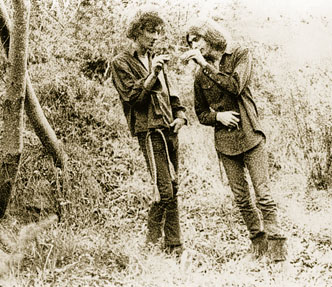
Wolf handled all of the duo�s business matters, which gave Craig and Denis time to write and rehearse. Craig and Denis continued to perform live and soon began recording demos of their original songs. Elektra Records signed the duo in 1969, but Wolf soon became interested in a new offer from a different label, A&M. Howard invited the label�s founders, Herb Alpert and Jerry Moss, to listen to the duo perform at his home. Instantly impressed, Alpert and Moss signed Lambert & Nuttycombe to their label. After Wolf released the duo from their contract with Elektra, the two began work on their debut album. Howard found a house in Sausalito, a community just north of San Francisco, for twenty-two year-old Craig and nineteen year-old Denis to rent while working on their first album. Homesickness provided a boost of inspiration for Nuttycombe, resulting in songs like �Something on My Mind� and �2 or 3 Maybe 4.� Lambert wrote a number of songs about past relationships, including �Many Times� and �Funny You Should Ask.� In December of 1969, the two worked on songs in a mobile recording truck parked outside their Sausalito home. Glyn Johns, David Anderle, and Chad Stuart were brought in to produce the album. Johns was an accomplished producer who worked with the Who and the Beatles and would go on to produce the Eagles in the mid-70s. Stuart, of Chad & Jeremy fame, worked primarily on arrangements, but as the sessions progressed, everyone involved agreed that the material needed no extraneous instrumentation.
Simon & Garfunkel, a folk-pop duo on the other side of the country, created a musical link from the �60s to the �70s with their landmark album Bridge over Troubled Water. Released in January of 1970, the album topped the Billboard charts the following month, and the LP�s gospel-influenced title track topped the singles charts in February as well. Recorded in just a week, Lambert & Nuttycombe�s At Home was released in 1970. Unlike Simon & Garfunkel, who flavored their album with an array of instruments and sometimes ornate arrangements, Craig and Denis attempted to keep their album as musically uncomplicated as possible. With �Lambert & Nuttycombe� written at the top of the album cover and Craig pictured at the left, the sleeve might have generated confusion regarding the members� names.
The album featured eleven original songs plus a cover of Jerry Jeff Walker�s �Mr. Bojangles,� which would become a hit for the Nitty Gritty Dirt Band later in the year. The sound was direct and easily accessible, as Denis�s guitar and voice occupied the left channel and Craig�s the right. No other musicians or instruments were used in the making of the album. In typical folk tradition, the lyrics dealt with everyday topics and occasionally used nature as a form of symbolism. Protest songs, common in the folk genre, were nowhere to be found in Lambert & Nuttycombe�s repertoire. With �Morning,� the album�s opener, Denis added the song�s bridge after Craig completed the verses and basic melody, and then the two added vocal harmonies to the song. The result was arguably the best representation of Lambert & Nuttycombe�s essence. Nuttycombe wrote �Something on My Mind� while in Sausalito thinking about home. �Ode to Drugan� featured music by Craig and lyrics by Denis about one of Nuttycombe�s guitar mentors who Craig worked with at Fife & Nichols.
�Mouse� and �Putting Myself Together Again� both dealt with the trials and tribulations of relationships. Lambert�s �Time� addressed the uncertainty of the future, while Nuttycombe�s �My Own Beat� offered a more optimistic view of life in unpredictable times. �Heaven Knows� dealt with Lambert�s struggle with heroin, a drug that would soon seriously affect his creativity and performance. Drug experimentation is often a common part of the culture surrounding musicians of popular music, regardless of era or location. How the music is affected by the experimentation varies. While most of Lambert & Nuttycombe�s music didn�t contain obvious drug references and wasn�t the result of drug-induced performances, Denis�s addiction to heroin was present as early as the duo�s first album.
Lambert & Nuttycombe played gigs in the bay area and around Los Angeles to promote At Home. The duo continued to perform live without the aid of a backing band. Onstage, Craig and Denis would create a friendly atmosphere by talking to their audience and occasionally divulging into improvised comedic bits. Fans and fellow musicians agree, however, that a musical connection existed between the two, and they took their music seriously. The duo would often mingle with their audience before their performance and visit with friends and fans after the show. Nuttycombe was usually more outgoing and friendly than Lambert, who was often reserved and kept to himself. With his good looks and mysterious aura, Lambert contributed greatly to the number of the duo�s female fans. Nuttycombe, less prolific lyrically but more grounded and responsible, provided the duo with a solid foundation, emphasizing music as the group�s focus.
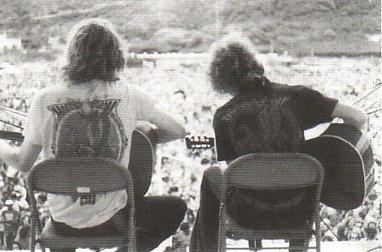
At Home became a minor hit on the west coast, selling around 30,000 copies. Although it failed to sell in other areas, Lambert & Nuttycombe made a connection with a small but loyal group of fans. In 1970, the duo began performing at the Ice House in Pasadena, located in northern Los Angeles. Comedians such as Steve Martin and Lily Tomlin performed at the club early in their career, often opening for more popular musical acts. Denis and Craig would play there consistently until their split, opening for such artists as local folk legend Tim Morgon. With the help of their manager, Howard Wolf, Lambert & Nuttycombe began playing shows outside California. The duo played a handful of shows in Hawaii including the Crater Festival, sharing the bill with Little Feat and Steve Miller. As their popularity increased, Lambert & Nuttycombe were invited to open for the blues-rock band Canned Heat on their European tour.

