Gems Of Sri Lanka
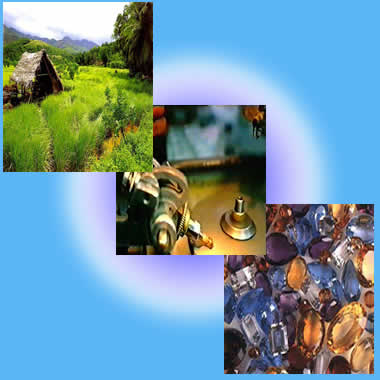
A gemstone is the naturally occurring crystalline form of a mineral which
is desirable for its beauty, valuable in its rarerity, and durable enough
to be enjoyed for generations.
There are more than 30 popular gem varieties
and many more rare collector gemstones. Some varieties also come in a range
of Colors. Some of the rarest of gemstones of exquisite beauty have taken
pride of place, in the Crown jewels of Kings and Queens from time of Great
Roman Emperors.
From time immemorial, Sri Lanka
has had a sparkling reputation for highly treasured gems.
Nature in her bounty has chosen the bosom of Sri Lanka to enshrine some of
her rarest treasures.The Gem industry in Sri Lanka (also known as Ceylon,
Serendib, etc..) has been in existence for over 2500 years.
Batik
Industry
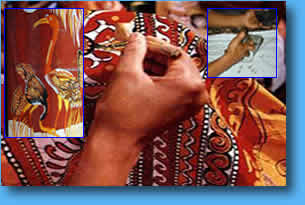
From traditional, religious and cultural motifs, Batiks have progressed to the
depiction of the natural beauties of Sri Lanka.The calm and tranquillity of
a full moon seeping through the protective branches of an old Bo tree to bathe
the ivory dagoba nestling beneath, must have been experienced by many local
craftsmen who have depicted this scene of peace in masterful technique.
The Handicrafts
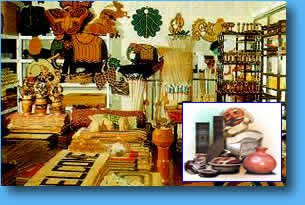
Sri Lanka have a large verity of traditional handy crafts and tradition of
making handicraft is as old as it’s nation. according to Mahavansa (The
great chronicle) when the prince Vijaya from India landed in Sri Lanka in
the 6th century BC he met Kuveni spinning cotton. Our ancient kings looked
after the craftsmen and encouraged them and it was the main reason for it's
development.
Coconut
Industry
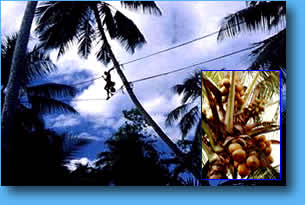
Coconut grows widely in the coastal regions of the wet zone. Described as the
"tree of life".Every part of it is made use of. Coconut milk, the
extract of the kernel, is used for daily cooking.Other products obtained from
coconut are oil, copra, dessicated coconut, vinegar and arrack, the local drink.
Coconut fibre is used to make rope, rugs, matting, brooms and brushes.
Tea
Industry
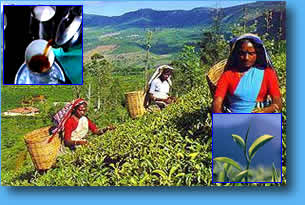
Tea was firstly introduced in Ceylon (Sri Lanka known as Ceylon then) in 1824
at the botanical gardens at Peradeniya in Kandy.they were brought from China
and later more were introduced from Assam in 1839.A Scottish planter call James
Taylor planted tea seedlings on eight hectares of forest land which had been
actually cleared for coffee plantation. Two years later blight destroyed the
whole coffee corp. and the all planters had to turn to tea as a result of James
Taylor’s encouragement
Farmers and Rice
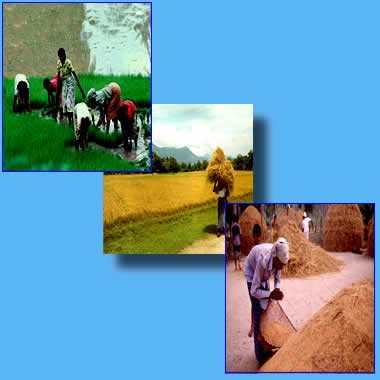
Rice is the single most important crop occupying 34 percent (0.77 /million
ha) of the total cultivated area in Sri Lanka. On average 560,000 ha are cultivated
during maha and 310,000 ha during yala making the average annual extent sown
with rice to about 870,000 ha. About 1.8 million farm families are engaged
in paddy cultivation island-wide. Sri Lanka currently produces 2.7 million
t of rough rice annually and satisfies around 95 percent of the domestic requirement.
Rice provides 45% total calorie and 40% total protein requirement of an average
Sri Lankan. The per capita consumption of rice fluctuates around 100 kg per
year depending on the price of rice, bread and wheat flour.
It is projected that the demand for rice will increase at 1.1% per year and
to meet this the rice production should grow at the rate of 2.9% per year.
Increasing the cropping intensity and national average yield are the options
available to achieve this production targets.
Fishing in Sri Lanka
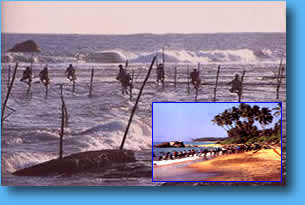
Sri Lanka is much admired for its abundance of sub-aquatic life. Its unspoiled
seas and fishing zones hold an abundance of game fish for the keen angler.
Species of Marlin, Sail Fish, Wahoo, Spanish Mackerel, Giant Trevallie, Benito,
Queen Fish (the world record is held in Sri Lanka by our boat charter captain),
Barracuda, Grouper, Cobia and Tuna make this beautiful island second to none
when it comes to sea angling.