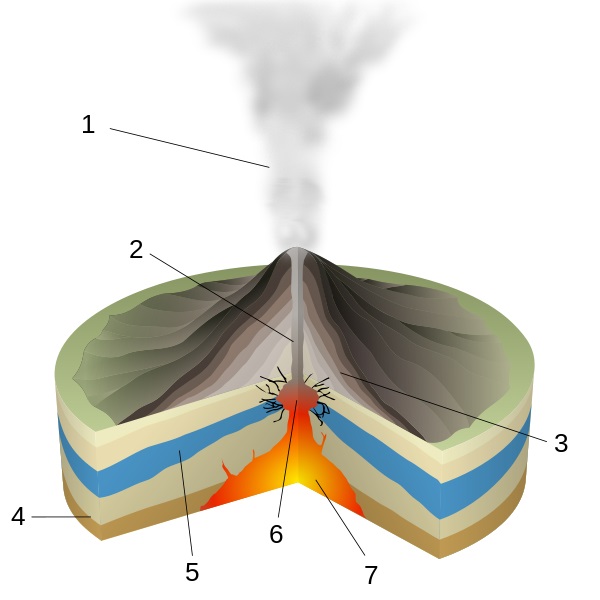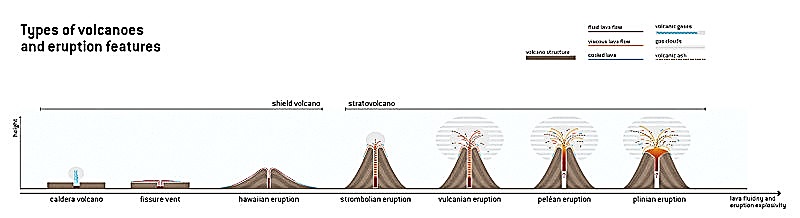
Dominated by the flow of lava and formation of fountains and lakes;
generated by lavas with low silica content, thus less viscous and flow
more rapidly.
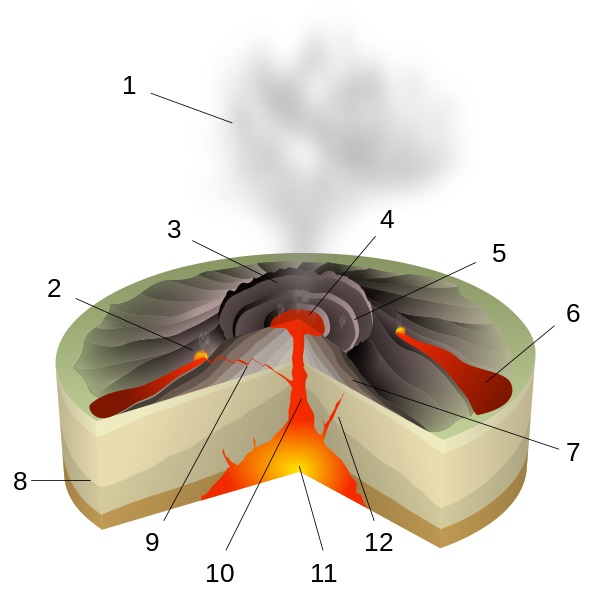
Ejects ash and larger fragments of broken pyroclastic materials, forming
ash clouds that eventually collapse and cover the slopes of the volcano;
generated by lavas with high silica content, thus more viscous.
In a Hawaiian Eruption, fluid basaltic lava is thrown into the air in jets
from a vent or line of vents at the summit or on the flank of a volcano.
They are distinct bursts of fluid lava from the mouth of a magma-filled
summit conduit. The explosions usually occur every few minutes at regular
or irregular intervals.
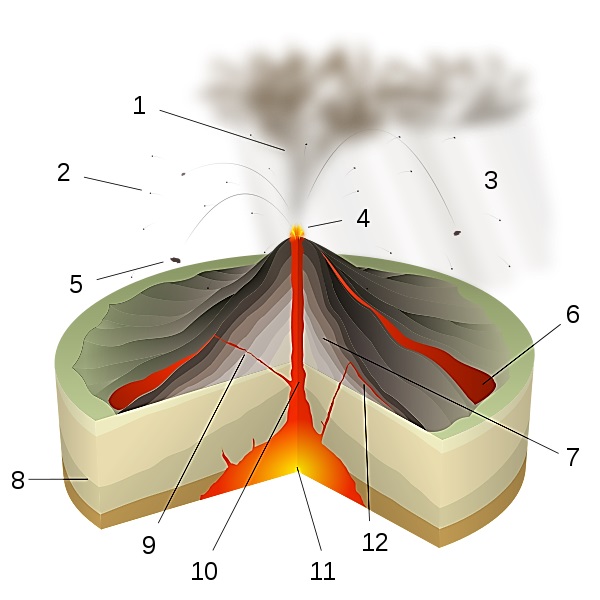
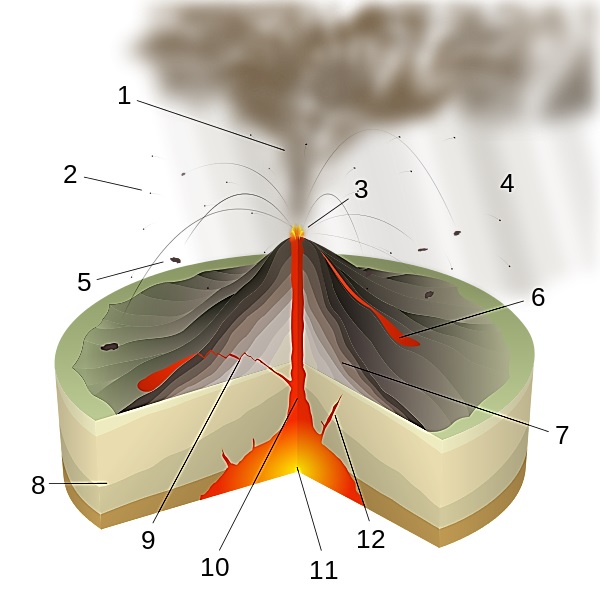
A short, violent, relatively small explosion of viscous magma. This
type of eruption results from the fragmentation and explosion of a plug
of lava in a volcanic conduit, or from the rapture of a lava dome.
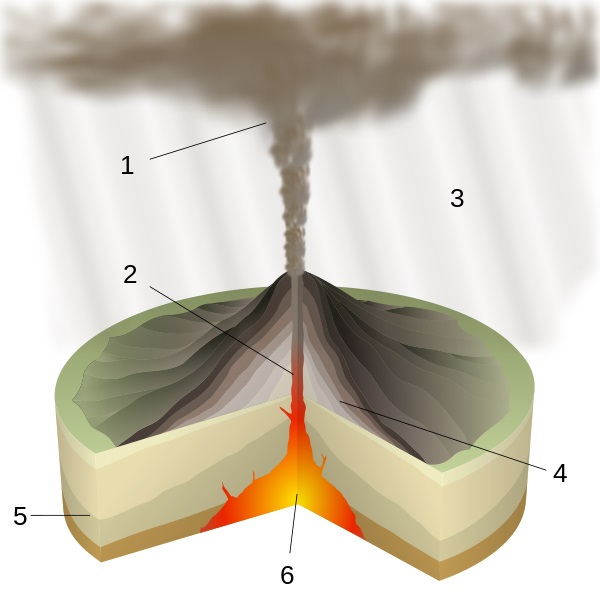
Caused by fragmentation of gassy magma, and are usually associated
with very viscous magmas.
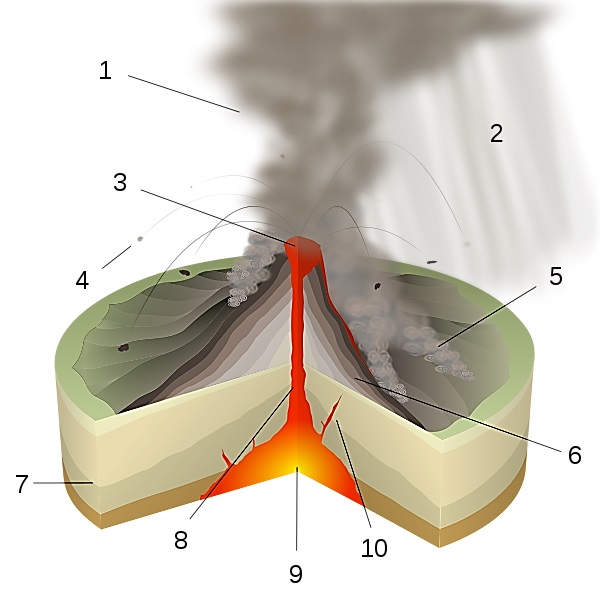
In Pel�an eruptions, a large amount of gas, dust, ash, and lava
fragments are blown out the volcano's central crater,�driven by the
collapse of�rhyolite,�dacite, and�andesite�lav dome�collapses that often
create large�eruptive columns.
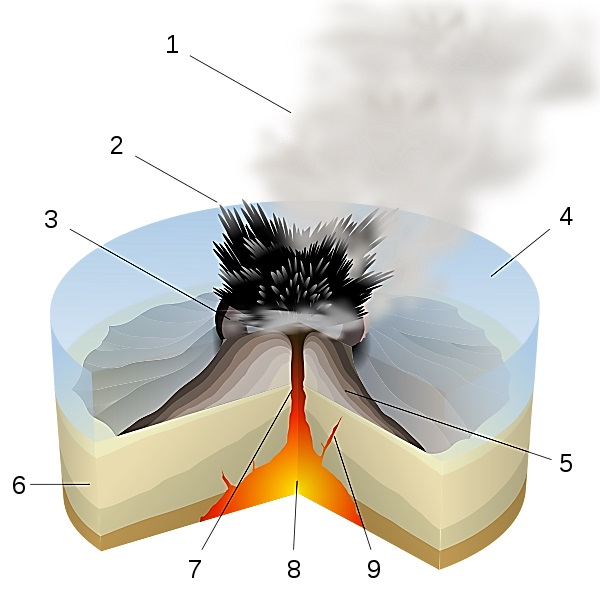
Surtseyan eruptions are the "wet" equivalent of ground-based�Strombolian
eruptions, but because of where they are taking place they are much more
explosive.
A type of volcanic eruption that occurs underwater. An estimated 75%
of the total volcanic eruptive volume is generated by submarine eruptions
near�mid ocean ridges�alone, however because of the problems associated
with detecting�deep sea�volcanics, they remained virtually unknown until
advances in the 1990s made it possible to observe them.
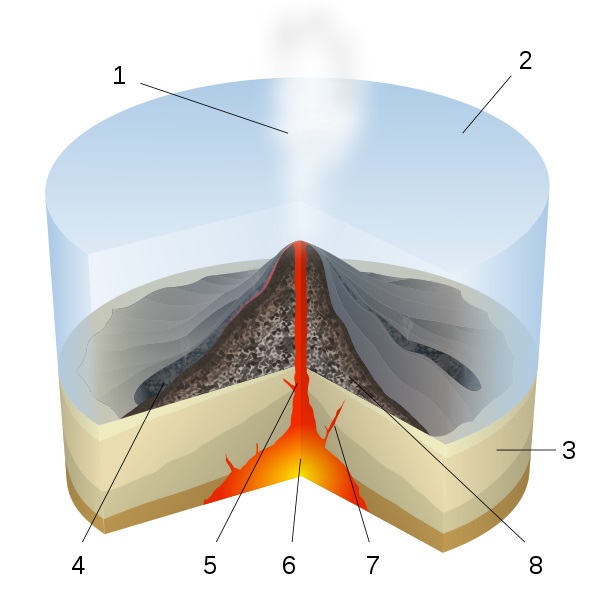
Are a type of volcanic eruption characterized by interactions between
lava and�ice, often under a�glacier. The nature of glaciovolcanism
dictates that it occurs at areas of high�latitude�and high�altitude.
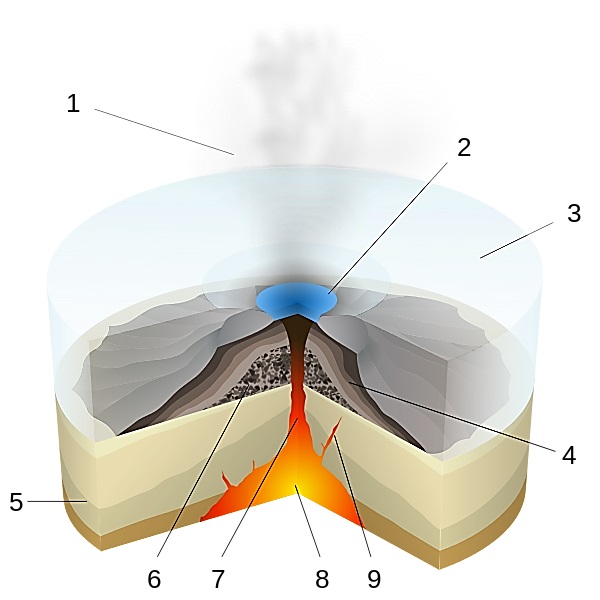
A type of eruption driven by the expansion of�steam. When cold ground
or surface water come into contact with hot rock or magma it�superheats
and�explodes, fracturing the surrounding rock�and thrusting out a mixture
of steam,�water,�ash, volcanic bombs, and�volcanic blocks.