Sea
During the years of 1861 to 1865, our nation was at war. The North was opposed to the idea of slavery and the 11 Southern sates were considering seceding from the Union and forming the Confederate Nation. The controversy over rights of the federal government and how it should exercise its powers granted by the Constitution helped stir the war to a start. In the election of 1860, Abraham Lincoln was elected for President of the United States. He was opposed to slavery and was determined to end it. The Civil War set fellow countrymen and women against each other. South Carolina, Mississippi, Florida, Alabama, Georgia, Louisiana, and Texas all voted for the secession of the South in 1661 and the war was launched.
The economic rivalry of the agricultural South and industrial North gave each an advantage. The March to the Sea, was a campaign proposed by William T. Sherman, it would create a blockade between two parts of the south. By creating this �Blockade,� the transportation of military supplies would come to a halt. The other part of his campaign was to scorch the South; the command was to � destroy anything useful to the enemy.� The president supported this campaign because of his want to be reelected, if the Union lost he would not be.
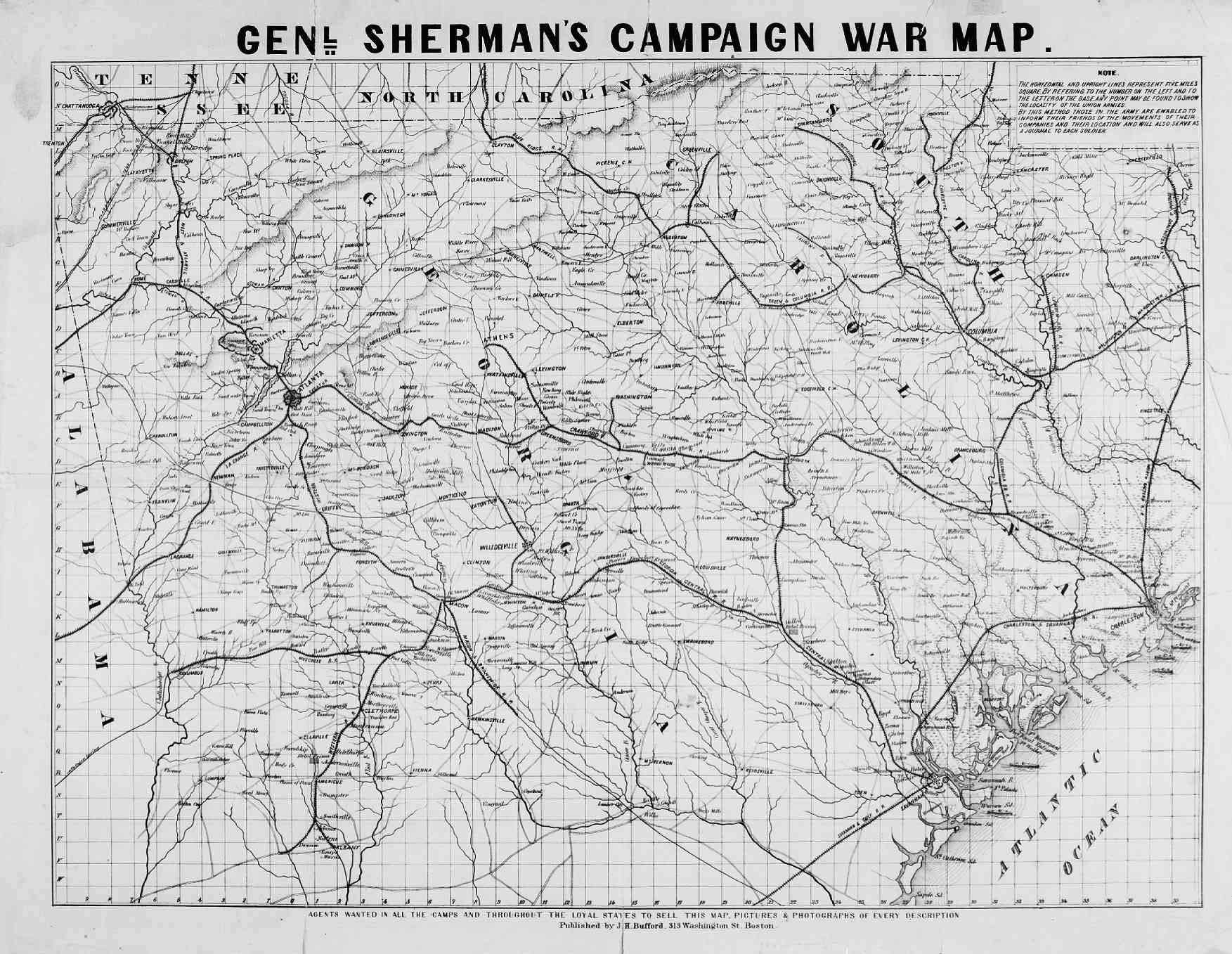
Tecumseh Sherman was born to Charles R. and Mary Hoyt Sherman, on February 8th, 1820 in Lancaster, Ohio. His father died and as one of eleven children, his mother gave him up for adoption. Originally his name was Tecumseh, he was named after a Shawnee Chief, but his foster parents Thomas and Eleanor Ewing we Christian, and wanted their son to be to0, so they changed his name to William. In 1836 he went to West Point military academy in New York he was noted to have a behavior problem. Then in 1840 he graduated 6th in his class but because of behavior was not appointed a military career. For six years, he served at duty stations in the south, and during the Mexican war, he was transferred to California. In 1848 he became a lenient and proposed to burn Mexico to teach the Southern States what would become of them if they tried to secede from the Union. He then resigned in 1853, married his sister, and started a family; he had various jobs during this time. In 1859, he became a superintendent for the southern military academy (LSU) but in January 1861 resigned to maintain his allegiance to the Constitution. However in May he became an officer for the Union. William was dissatisfied with being in the military during the war; he became depressed and again wanted to resign. Abraham did not allow his resignation. He was then assigned to the command of Ulysses S. Grant, and later became a General in 1864. During 1864, he began his March to the Sea; it began at Chattanooga and worked its way to the coast of Savanna.
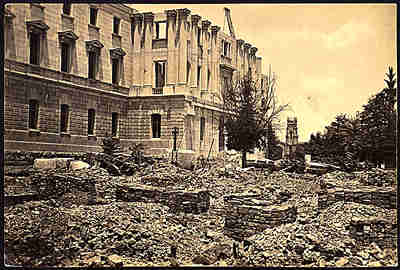
On May 4th 1864 the Atlanta Campaign began, a section of his March. The march would crush the southern economy and lower their spirit. The �blockade� would slice the confederacy into pieces and become easily defeated by the Union as it isolated the South. The complete March to the Sea covered 285 miles of land. He began a Chattanooga and burned everything to Savanna�s coast. Atlanta was at the center of the south, it was heavily populated and its railroads lead to all of the southern cities. It was abandoned days before his march reached it and Sherman�s army had no trouble conquering the city. In fact he easily defeated the Confederacy and was able to make the March. When he conquered Atlanta, many knew the fait of the Confederacy.
The Civil War was the last classical style of war; it was also the first modern war. This was because of technological advancements of the time. Sherman�s March to the Sea targeted not just the military but civilians. Sherman had been inside of the Confederate military, which allowed him to predict their weaknesses, and work in the Unions favor. His campaign was a new type of war, � total war� or �burn and scorch.� It was a reaction to the war and for the need to end the war in a quick manor. Sherman was the cause of a quick end; the Union would have won without him however not in the manor it did, or with the grace or swiftness.
The south was the agricultural section of the nation and his march burned the land therefore destroying and limiting the crops produced. Also, slaves were freed and labors had to be paid the south had to be rebuilt, and the issues that built up to the war needed to resolve.