There are many great resources to learn about carnivorous plants (cp) such as books, websites and cp club journals. The LACPS meetings are a great place to see and learn more about them. There are no nurseries in the L.A. area that carry a large selection of plants for sale, but there are plenty of collectors who sell and trade plants for fun.
Basic Questions and Answers
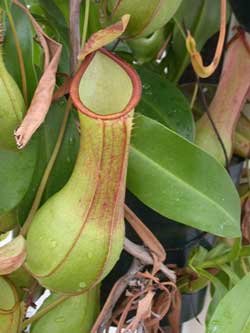
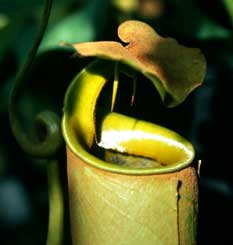
What are carnivorous plants? They are plants that attract, capture and digest prey (usually insects; Nepenthes are known to trap birds, frogs, reptiles and mice).
Why do they eat insects? Most live in nutrient poor soils and need to trap prey for nutrients to grow and reproduce.
How do they attract prey? Color, odor and nectar.
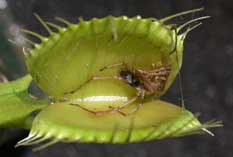
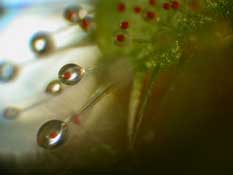
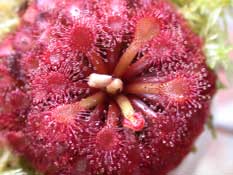
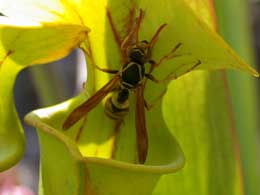
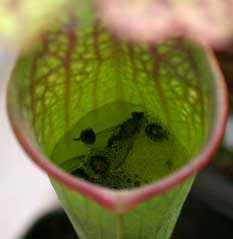
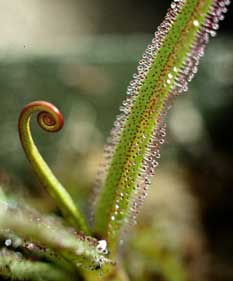
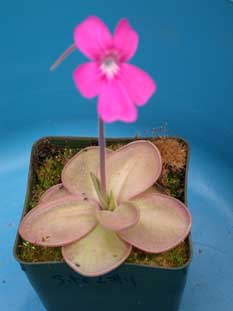
How do they trap prey? Some have traps that quickly shut, some have sticky tentacles that the prey stick to, and others have liquid filled cup shaped traps that the prey fall into.
How do they digest prey? Once the plants capture prey they secrete digestive enzymes to digest the prey. Nutrients are absorbed into the plant body through the traps.
What should I feed my plants? If you grow your plants outdoors you will find that they do a good job catching bugs on their own. If you grow them indoors or in terrariums you can catch bugs to feed them.
Water your cp with distilled or reverse osmosis filtered water. Tap water has minerals that will quickly build up to toxic levels to these plants.
Edward Read April 2003 |