 "
"
list of journals
Abstract: There have been varied opinions about the approaches, methods and implementation of knowledge management initiatives. The varied approaches can be integrated to ensure that the right knowledge can be created, captured, stored, and disseminated. In addition, managing both explicit and tacit knowledge will enable knowledge in individuals to be transferred and shared for new knowledge to be created, further expanded and embodying it quickly in new products and services, technologies and systems. One of the perspectives on knowledge management which is given much emphasis is the Japanese perspectives that focuses on cultural behavioural approach. This paper explains how the theory of knowledge conversion can be an influential element in knowledge management initiatives programmes. Another area that requires much attention is the tool and enabler that includes the application of technology and resources to enhance content intelligence to expedite access and reuse of the knowledge captured and stored. On the contrary, this paper highlighted on the issue whether access itself will have a substantial impact on business performance especially as mountains of new information are placed online. To address such issue, organizations need to consider the systematic approach that do not merely focus on process and technology. Thus, the cultural behavioural aspect of knowledge management discussed in great length is integrated into the knowledge management system architecture which is designed, based on the fact that knowledge management relies heavily on human intellectual effort and skills.
Keywords: Knowledge Management Initiatives Programmes, Knowledge Management System, Knowledge Conversion, Human Intellectual Approach.
- Strategizing Knowledge Management
- Service Quality and User Satisfaction
- .Usability Evaluation Dimensions
- Perception of Knowledge Management
- Digital Libraries in Malaysia
- Elements of Trust in E-commerce
- Reviewing the Issue of Managing and Sharing Organisation’s Knowledge
- A Survey on the Use of Library Resources
Abstract: Military knowledge management (KM) is about the processes and techniques used to swiftly transfer experience and provide a common understanding from an experienced soldier to an inexperienced soldier. As an integral part of the Malaysian Armed Forces (MAF) transformation to achieve Future Force, the KM strategy will play a valuable role in leveraging existing knowledge and converting new knowledge into action. A study on military officers of the MAF attitudes towards' KM applications was conducted to show the importance of KM in the military environment. Focus of the study is to examine the attitudes of MAF personnel toward KM key drivers, which include the knowledge creation, processes, applications, and technology. The findings of the study may be used as the basis to develop a KM implementation strategy in the MAF which should focussed on the tenet of people, process, and technology. The results of the study indicated that the KM key drivers that include knowledge creation, KM processes, KM application and technology were perceived as key elements in the military organization. In order to develop KM implementation strategy successfully, the MAF needs to focus on factors that include people, KM processes, and infostructure.
Keywords: MAF, Military, Knowledge Management, Knowledge, Technology, Implementation
Abstract: This study identified what the users of the UPM library perceive to be the quality of the Reader’s Advisory Desk Service, to establish the extent to which the reader advisor meets the users’ satisfaction of the services provided, and to investigate the quality of the Reader’s Advisory Desk Service and its relationship with satisfaction. This study was done in UPM library and 40 respondents were selected. SERVQUAL questionnaires were distributed as the research for the data gathering. Purposive sampling/judgment sampling was the sampling technique chosen to determine the size of respondents selected. Purposive sampling was chosen because it represents only the respondents who posed questions and problems to the Reader’s Advisory Desk Service of the UPM Library or the respondents who have been identified as a frequent users of the Reader’s Advisory Desk Service. Thereby, it is confined to the specific types of respondents or specific target groups who can provide the desired information. Overall, majority of the users were satisfied with Reader’s Advisory Desk service offered based on the service parameters of “tangibles, responsiveness, reliability, assurance and empathy of service.” Arising from these results, this study revealed that there is significant positive relationship between the effectiveness of the Reader’s Advisory Desk service and users’ satisfaction; and by further improving the quality of the service; it will lead to users’ needs being met and their level of satisfaction being fulfilled. This study systematically examined a reference activity which is the effectiveness of Reader’s Advisory Desk service views on the nature and practice in UPM library specifically.
Keywords: Service Assurance, Information Needs, Empathy, Quality Service, Reader Advisors, Reader’s Advisory Desk Service, UPM Library, Reference Librarians, Reference Service, Reliability, Responsiveness, Users’ Satisfaction, SERVQUAL, Service Quality, Tangible, Users
Abstract: Explosion in information and information system (IS) technology has brought dramatic changes in learning and library system environments. Through the passage from physical library to digital library era, the use of academic digital library systems do witness spectacular impact on academic societies’ way of performing their study/research. Thus, evaluating the system is of paramount importance in understanding how useful it is and how it can be beneficial for its targeted community. Usability design approach is widely used in the literature for evaluating digital libraries. In this article, we review and examine the usability dimensions in usability evaluation for digital libraries. Based on the literature, usability engineering model is one of usability models applied in the context of human-computer-interaction basis. This article reviews on this usability engineering model that defines interface usability dimensions idea together with its extended version to organizational usability dimension. Both of these usability dimensions, interface and organizational, are potential in evaluating academic digital library, from the perspective of the users’ requirements, as well as from the academic institutions’ requirements.
Abstract: Academic Digital Library, Usability Evaluation, Usability Dimensions, Interface Usability, Organizational Usability
Abstract: Knowledge management is a growing field that has attracted the organizations all over the world. Organizations are now considering knowledge as the most important intangible asset that needs to be fully managed and utilized. In the new millennium, the concern of Government of Malaysia in developing the nation through knowledge economy has become apparent. Nevertheless, the implementation of knowledge management, especially in the public sector organizations is inevitably challenging nowadays. Strong demands and expectations from the public for efficient public services delivery coupled with global challenges in the knowledge economy era are driving organizations to consider knowledge management as the strategy to cope with these dynamic factors. However, knowledge management as a discipline is still in the earlier stage of implementation in Malaysia. To achieve an in-depth study, selected federal government departments in Kelantan are chosen as the targeted population. Data is collected through questionnaires survey with the middle and senior management government officers. Responses from the survey determined to what extent their perceptions about the knowledge management. Thus, this study also attempted to improve the level of understanding on the topic among officers from these departments to assist them in formulating a well-defined knowledge management strategy.
Keywords: Knowledge Management, Government of Malaysia, Knowledge Economy, Federal Government Departments, and Kelantan
Abstract: The article is based on the doctoral research findings from both the questionnaire (223 respondents) and interview sessions with 36 libraries (9 academic, 21 special and 6 state/public libraries). It was found that Malaysian libraries were facing various kinds of problems. Top in the list was the lack of Information Technology (IT) personnel; followed by the lack of budget, lack of digital library initiatives (DLIs) and ICT training, renewal of online subscriptions, lack of and under utilization of digital resources, and lack of suitable integrated library system. Digital library related problems were lack of staff (professional, support and IT), absence of a blueprint and National Information Infrastructure (NII) policy, digital project was too expensive which could be due to budget constrain, lack of role model and problems related to Copyright Act clearance. As the outcome of the findings, a total of eleven factors for future growth have been proposed.
Keywords: Digital Libraries, Malaysia Academic Libraries, Special Libraries, Public Libraries and Copyright Act
Abstract: Trust was often cited as the main reason why many customers are still sceptical about some online vendors. The purpose of this paper is to identify the elements of trust in e-commerce interactions and how far the element of trust has influence a business transactions electronically. A survey was conducted on information system personnel in Selangor State government office. The result revealed policy clearly stated on the website has been identified by the researcher as a dominant element to the Internet user to trust a certain website. 69.4 percent of the respondents considered the element of return policy in e-commerce website as significant and a core trust element in e-commerce applications.
Keywords: Trust, E-Commerce, Interaction, Information System Personnel
Abstract: Knowledge sharing is essential in the implementation of any knowledge management initiatives. The real sharing required is between the employees and their co-workers. The success depends on individuals’ willingness to encourage and share their organisational knowledge through internal organisational social exchanges. The process requires the element of reciprocal arrangement and trust. It requires intra-team trust and intra-team relational bonds, leadership and also intercultural training that foster regular and frequent mutual cross-cultural exchange of ideas. The advantage of knowledge management initiatives can be realised by empowering the members of the organisation. The main aim of this article is to generally discuss and assess the issue of managing and sharing organisation’s knowledge by underlining the challenges. In reality if members of the organisation believe that the knowledge contributed is a strategic resource then it will create the appropriate conditions for the situation to happen. Or else, no matter how adequate the organisational structure design may be, members of the organisation will not be motivated to transfer and share the organisation’s knowledge.
Keywords: Knowledge Sharing, Managing Knowledge, Organisational Knowledge, Knowledge Management
Abstract: This study investigates the usage of library resources, services and facilities among first and third year medical students in the Faculty of Medicine and Health Sciences (FPSK), Universiti Putra Malaysia (UPM). The study attempts to identify the usage of library services, resources and facilities. Questionnaire employed in this study was based on the previous works that measures the frequency of usage of library resources, services and facilities in the library by daily, weekly, monthly, once per semester or never. With regards to the library usage all respondents, 205(100%) claimed that they visied the library to study and use the Internet. They also frequented the library to do their assignments 199 (97.1%); discussions with friends 176 (85.9%) and for leisure reading 192(93.7%). For resources, the Internet was rank first, second the newspaper, and the third are library websites. This is followed by library online database, dictionaries, handbooks and textbooks. The less frequently used resources are library OPAC, project paper, EZ-Proxy, Full text journal, encyclopedia, thesis and statistical reports. For frequency usage of library facilities the computer is rank first, followed by the reading area. The third is facilities which include discussion room, then the rest such as prayer room, printing, photocopy and self check machine.
Keywords: Library Use, Medical Library, Medical Students
Journal Reviewers
REVIEWERs (LOCAL)
-

Associate Prof. Dr. Juhana Salim Associate Prof. Dr. Juhana Salim is currently a professor of Information Systems at the Faculty of Information Science and Technology, Universiti Kebangsaan Malaysia (UKM). She is actively involved with various research grants from UKM and Malaysian government. She published many books in the area of Information Technology, various high impact journals, and several numbers of indexed conference proceedings. She also took part in IT technology competitions and have won several gold medals. Among her areas of expertise include Information Technology, Information Retrieval and Knowledge Management. For her keynote session, she will focus on research methodology including advantages and challenges of conducting research as a graduate student.
-
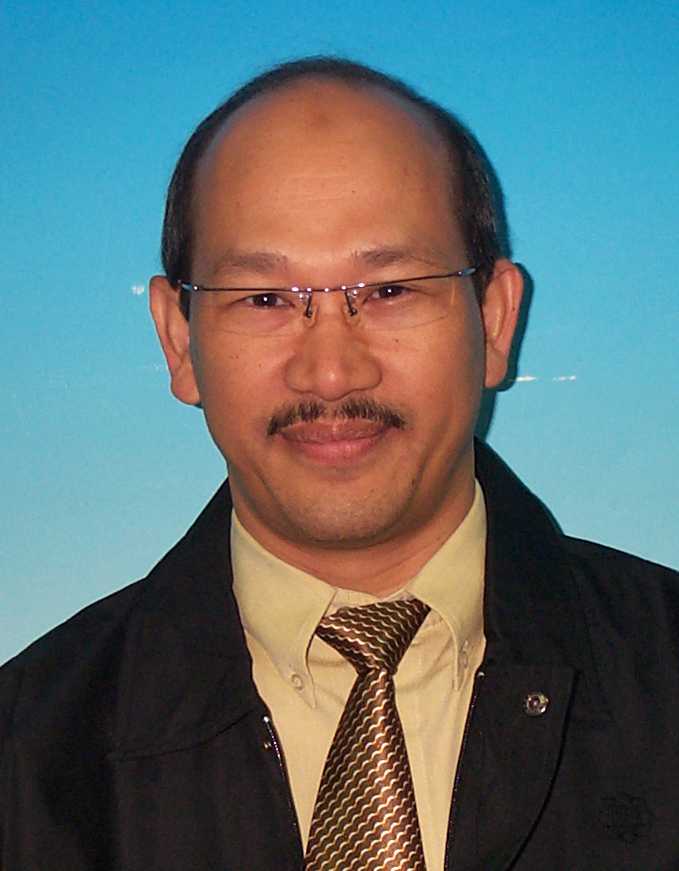
Dr. Basri HassanDr. Basri Hassan is currently an Assoc. Prof. and Dean, Kull. of Tech. & Information Sc. at Insaniah University Colleg. Before this,he was a Dean, Kulliyyah of Technology & Information Sc. & Director of IT Centre at Insaniah University College, an Asst. Prof. at International Islamic University Malaysia, a Dean Kulliyyah ICT at International Islamic University Malaysia. He further study in Loughborough University, UK since 1997 until 2001.
-
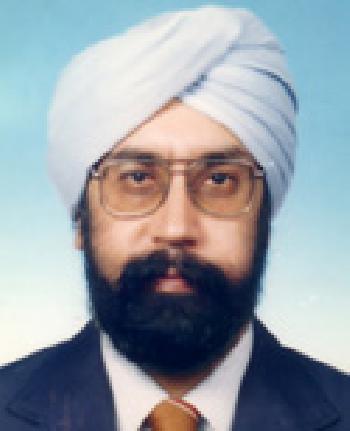
Dr. Diljit Singh A/L Balwant SinghnDr. Diljit Singh A/L Balwant Singh is currently a consultant in Department of Library Science & Information, Faculty of Computer Science & Information Technology, Universiti Malaya (UM). He was a teacher since 1976 before become Assistant Director of Pahang Education Department in 1985. He joined the Institut Aminuddin Baki on 1994. His research focus were depth into Library and information science education, Management of libraries and information services, School libraries, User needs and use studies,Information literacy, Human resource needs for library and information services in Malaysia as Co-Investigator.
REVIEWERS (OVERSEAS)
-

prof. Dr. Michael CookProf . Dr. Michael Cook is among his degrees, he holds a B.A. in Economics and an M.A. in General Social Sciences from the University of Chicago. He earned his Ph.D. in Economics with a Masters in Latin American Studies from Vanderbilt University in 1983. It was during a teaching fellowship while writing his Doctoral dissertation that Dr. Cook discovered his passion for teaching economic.
-

Prof. Dr. Edie RasmussenProf. Dr. Edie Rasmussen is currently a Professor at University of British Columbia. In 1988,she was a Professor at University of Pittsburgh. Her education started in 1962 until 1966 in B.Sc., Chemistry field at The University of British Columbia. Then, she further her studies in M.Sc., Chemistry at McMaster University. In 1968, the continue her study in MLS, Library and Information Science field at The University of Western Ontario. In 1985, at The University of Sheffield she further study inPh.D., Information Studies. Her area research interest is in Information retrieval in text, multimedia, and web environments,Digital libraries, Data mining, Bibliometrics.
-

Prof. Peter ClaytonProf. Peter Clayton is a lecturer in Canberra University in Australia. He is currently working as Adjunct Professor of Information Management since 2007. He produced book entitle Qualitative Research for the Information Professional: A Practical Handbook in 2005.
-

Prof. Dr. Christopher S.G. Khoo Prof. Dr. Christopher S.G. Khoo is an associate professor and former head of the Division of Information Studies at Nanyang Technological University, Singapore. He teaches courses in knowledge organization, information behavior, data mining and Web-based information systems. He obtained his PhD at Syracuse University and his MSc in Library & Information Science at the University of Illinois, Urbana-Champaign. He has also worked for several years as a science reference librarian, cataloger and online information searcher at the National University of Singapore Libraries. His main research interests are in text mining (information extraction, text summarization and sentiment analysis), medical decision support system, knowledge organization, and human categorization behavior.His PhD thesis was on "Automatic Identification of Causal Relations in Text and Their Use for Improving Precision in Information Retrieval." He was the editor of the Singapore Journal of Library & Information Management, from 1997 to 2002.