Beauty and the Beast: Vanquishing Shadows At A Time Of Change

Kyle Altis

Beauty and the Beast: Vanquishing Shadows At A Time Of Change |
||||
|
Kyle Altis |
|
||
 |
|||||||||||||||||||||||||||||||||||||||||||||||||||||||||
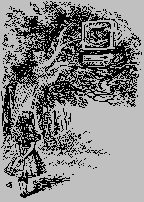
| The Cat only grinned when it saw Alice. It looked | |||||||||||||||||||||||||||||||||||||||||||||||||||||||||
good-natured, she thought: still it had very long claws and a great many teeth, so she felt that it ought to be treated with respect. “Would you tell me, please, which way I ought to go from here?” |
|||||||||||||||||||||||||||||||||||||||||||||||||||||||||
| “That depends a good deal on where you want to get | |||||||||||||||||||||||||||||||||||||||||||||||||||||||||
| to,” said the Cat. | |||||||||||||||||||||||||||||||||||||||||||||||||||||||||
| “I don’t much care where –”said Alice. | |||||||||||||||||||||||||||||||||||||||||||||||||||||||||
| “Then it doesn’t matter which way you go,” said the | |||||||||||||||||||||||||||||||||||||||||||||||||||||||||
| Cat. | |||||||||||||||||||||||||||||||||||||||||||||||||||||||||
“
– so long as I get somewhere,” Alice added as an
|
|||||||||||||||||||||||||||||||||||||||||||||||||||||||||
| explanation. | |||||||||||||||||||||||||||||||||||||||||||||||||||||||||
| “Oh, you’re sure to do that,” said the Cat, “if you | |||||||||||||||||||||||||||||||||||||||||||||||||||||||||
| only walk long enough.”22 | |||||||||||||||||||||||||||||||||||||||||||||||||||||||||
Sartre urges
us to be authentic, to be honest with ourselves “without seeking
… true motivations in the reactions of others.”23
Although at the extremes of the gyres the falcon may be on the verge of
snapping its sensory tether, has in fact escaped beyond the reach of the
falconer’s unaided sensory summons, it cannot be authentic in its
actions (and so cannot be free to define its own essence)24
so long as it continues to define itself in the reflective eyes of the
falconer – as all human eyes reflect. |
|||||||||||||||||||||||||||||||||||||||||||||||||||||||||
| The Sphinx’s eyes, “blank and pitiless as the sun”, do not. | |||||||||||||||||||||||||||||||||||||||||||||||||||||||||
| The Sphinx will never reveal something we do not ourselves bring. We will | |||||||||||||||||||||||||||||||||||||||||||||||||||||||||
find nothing
there of reflective value. We look into those blank eyes seeking a falconer’s
inverted justification – and do not find it. The Sphinx has no answers,
only, ever, a question, the same question as ever it has posed of us:
What is man? |
|||||||||||||||||||||||||||||||||||||||||||||||||||||||||
| We cannot know that answer until we choose to release ourselves from our | |||||||||||||||||||||||||||||||||||||||||||||||||||||||||
| own reflections within the falconer’s eyes, until we act as we act, authentically, without externalising justification. Unlike Camus’ “only serious philosophical question”, Nietzsche was prepared with an alternative: what else could we ever fill void with, except ourselves? | |||||||||||||||||||||||||||||||||||||||||||||||||||||||||
| Lacking personal authenticity, lacking the will to vanquish the gruesome | |||||||||||||||||||||||||||||||||||||||||||||||||||||||||
shadow of
the Buddha,25
terrified of being condemned to freedom,26
we of the dark moon seek our image elsewhere. Without a unique sense of
self, identity shatters, becoming a phenomenal function of perception
fragmented into an infinity of external points, external reflections of
self. Those eyes become not windows but mirrors: we look into them no
longer to identify who we are, but who we should be. Hell is other people.
We are bound by how we want to be perceived, being extrapolated into the
gaze of other people – and increasingly existing solely in the gaze
of other people: we do not exist except in the reflections of their eyes.
Having learned that nothing which cannot be measured has value, we seek
our justification through increasingly quantifiable external validation.
We measure it against the percentage of time others devote to us, against
test scores claiming to measure intelligence; especially against money
(or potential earnings) and the perceived fiscal value of time.27
Money has become not only metaphor for28
but primary measure of personal value. The secondary conic focus has been
pulled through the point of balance into a hyperbolic external. |
|||||||||||||||||||||||||||||||||||||||||||||||||||||||||
| The sensory technologies of mass media extend those reflecting eyes far | |||||||||||||||||||||||||||||||||||||||||||||||||||||||||
beyond the
reach of the immediate reflection – and we have grown so accustomed
to seeing our interpreted reflections that we grow uncomfortable in moments
of its absence: |
|||||||||||||||||||||||||||||||||||||||||||||||||||||||||
| When I can’t see myself I begin to wonder if I really and truly exist. … | |||||||||||||||||||||||||||||||||||||||||||||||||||||||||
| My reflection in the glass never did that; of course, I knew it so well. Like something I had tamed …29 | |||||||||||||||||||||||||||||||||||||||||||||||||||||||||
|
|||||||||||||||||||||||||||||||||||||||||||||||||||||||||
…
why do you think that Truman has never come close to discovering the true
nature of his world until now? We accept the reality of the world with which we’re presented. It’s as simple as that … He can leave at any time. If it was more than just a vague ambition, if he was absolutely determined to discover the truth, there’s no way we could prevent him from leaving. What distresses you, really … is that ultimately, Truman prefers his “cell”, as you call it.30 |
|||||||||||||||||||||||||||||||||||||||||||||||||||||||||
At the changing
of the gyres, at the return of man to spirit, we seek guidance from the
Weltgeist: only to discover that we have drowned out Spiritus Mundi |
|||||||||||||||||||||||||||||||||||||||||||||||||||||||||
with
infinite external reproduceable reflections of ourselves. |
|||||||||||||||||||||||||||||||||||||||||||||||||||||||||
 |
|||||||||||||||||||||||||||||||||||||||||||||||||||||||||
| The gyres spiral around their | |||||||||||||||||||||||||||||||||||||||||||||||||||||||||
mutual
centres without centring, a dynamic balance consisting of continual imbalance.
Successive layers of technologies incorporate and amputate those preceding
them in a continuing externalising gyre. Each level of technology embraces
the previous one, supersedes it – and effectively amputates it.
Symbolic representation of language amputates memory (and thus implicitly
redefines the Body of Fate), moveable print amputates the need for direct
contact between author and viewer on a mass basis, distance aural communication
amputates the need for literacy.31,32
It does |
|||||||||||||||||||||||||||||||||||||||||||||||||||||||||
not matter
whether that previous “technology” happened to be our unaided
senses, even direct aspects of individual personality: they, too, are
subject to that amputation, for, unused, they atrophy. Each amputation
creates a new monopoly, not of information but of dissemination of information,
a type of technological theology33
built on precisely the same foundations as any colonising power. Imagination,
too, becomes amputated: externalised by a series of media which increasingly
do the work of interpretation for the human mind by extending the human
senses beyond what mind can physically process. Shifts of image, of sound,
of perspective, now occur more quickly than sensory pathways can incorporate
and become whole substitutes for individual cognitive analysis.34
Rather, it is the human physiological body alone which reacts instantaneously
to each shift with mind only later resolving dissonance by creating a
rationale for physiological reaction after the fact.35
Thus the existential inference of essence from personal behaviour, psychologically
supported by attribution theory of self-perception in ambiguous36,37
or challenged38
situations, is reinforced and even supplanted by inference on the sole
basis of our bodies’ reactions. This in turn creates a collective,
external, and very controllable imagination: not one born of the gyres’
Creative Mind but of a technologically incarnated Will served by a very
rational aristocracy of experts and specialists who, as the new secular
priesthood, have themselves internalised the faith in rational methodology
and technology which defines Technopoly: |
|||||||||||||||||||||||||||||||||||||||||||||||||||||||||
Technocracy
does not have as its aim a grand reductionism in which human life must
find its meaning in machinery and technique. Technopoly does. Society
is best served when human beings are placed at the disposal of their techniques
and technology, that human beings are, in a sense, worth less than their
machinery.39
|
|||||||||||||||||||||||||||||||||||||||||||||||||||||||||
This is
entirely in accord with the increasing level of rationalisation as the
gyres approach their extremities, and is further reflected in another
principle of scientific management: the affairs of the common citizenry
are best guided and conducted by experts, with the potential irrationality
of individual judgement replaced by rules, laws, and principles which
relieve the individual of any responsibility to think at all.40
Method replaces goal within the cause-effect model and indeed becomes
its own end and its own justification, invisibly, without seeming to have
changed anything at all: |
|||||||||||||||||||||||||||||||||||||||||||||||||||||||||
Technopoly
eliminates all alternatives to itself. It does not make them immoral.
It does not even make them unpopular. It makes them invisible, and therefore
irrelevant. It does so by redefining what we mean by religion, by art,
by family, by politics, by history, by truth, by privacy, by intelligence,
so that our definitions meet our new requirements. Technopoly …
is totalitarian technology.41
|
|||||||||||||||||||||||||||||||||||||||||||||||||||||||||
The collective,
external imagination is only one part of an increasing tendency to delegate
to technology further aspects of our beliefs, attitudes, individuality
itself. To some extent we have been doing this as individuals for likely
as long as the existence of language, but now for the first time it is
possible to create the same external identifications on a global basis
without even the need of prior military conquest: an average of over 70%
of people in the countries evaluated by Gallup polling had received their
information about the attack on the World Trade Center by television within
the first hour of its occurrence.42
Reporting (description) and interpretation of current events has become
not only simultaneous, but synonymous. |
|||||||||||||||||||||||||||||||||||||||||||||||||||||||||
|
|||||||||||||||||||||||||||||||||||||||||||||||||||||||||
Chomsky’s premise that everybody can know and everybody can judge a |
|||||||||||||||||||||||||||||||||||||||||||||||||||||||||
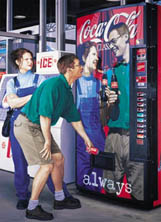
| given body of information44 has become undermined by the format of its presentation: a strange and largely invisible return to behaviourism. Headless of Arnold’s warning,45 the Weltgeist continues to be increasingly opaqued by the technological claws of a Cheshire Cat treated with insufficient respect by a | |||||||||||||||||||||||||||||||||||||||||||||||||||||||||
rationalist
world, claws hooked into our own bodies and gradually reshaping our minds.
Reluctant to face our own void, we find ourselves gradually in a senseless
place as seemingly empty as the Sphinx’s eyes, wherein the only
meaning to be discovered is that granted by control over others. We dare
not look in the nightmare of nothingness in the Sphinx’s eyes but
will instead make it bow its head, force upon it a thousand empty reflections
to replace the Daimon we have lost, conquering the world within our Truman
Show shell. |
|||||||||||||||||||||||||||||||||||||||||||||||||||||||||
 |
|||||||||||||||||||||||||||||||||||||||||||||||||||||||||
| But infinite expansion is not sustainable. The | |||||||||||||||||||||||||||||||||||||||||||||||||||||||||
beginning
of reading is the beginning of forgetting. The beginning of the printed
word is the beginning of distance. The Gutenburg Bible spelled the end
of |
|||||||||||||||||||||||||||||||||||||||||||||||||||||||||
Roman Catholic monopoly in Europe – and the beginning of a publisher’s monopoly (echoed in literacy, echoed in the educator, echoed in the schools): not of information, but of the distributionof information. Now the Internet spells the end of the publisher’s monopoly – and the beginning of a technocratic monopoly, again not of the information itself, but of the distribution of information. The very technologies intended to serve us have enslaved us in an endless hell we have learned to identify as other people: while a “rough beast, its hour come round at last/ Slouches towards Bethlehem to be born”. |
|||||||||||||||||||||||||||||||||||||||||||||||||||||||||
| “In the beginning was the word: and the word was God.”46 | |||||||||||||||||||||||||||||||||||||||||||||||||||||||||
| Beauty, beast: these are distinctions of perspective. Beauty, often, has a | |||||||||||||||||||||||||||||||||||||||||||||||||||||||||
strong association
with the familiar, the comfortable; beast, equally, of what is unknown,
vast, uncontrolled, uncontrollable. We cannot extrapolate personal perspective
to that unknown. It is too far outside our familiar bounds. Every observation
is an interpretation. What we observe, what labels we choose to apply,
define, not what is observed, but ourselves. What we expect to see, we
will find: not because it exists independently of ourselves – but
because we ourselves see it so. |
|||||||||||||||||||||||||||||||||||||||||||||||||||||||||
| There is a natural tendency to observe the outside world through the lens of | |||||||||||||||||||||||||||||||||||||||||||||||||||||||||
our own
paradigm. After all, we are the only persons whom we can more or less
know and by whose standards we can to some extent attempt to impose logic
upon the world around us. If we react in one way to a particular stimulus,
it stands to reason that we might expect another to react in a similar
fashion. |
|||||||||||||||||||||||||||||||||||||||||||||||||||||||||
| When they don’t, we become uncomfortable. | |||||||||||||||||||||||||||||||||||||||||||||||||||||||||
| This is not quite the same thing as having been surprised by the reaction of | |||||||||||||||||||||||||||||||||||||||||||||||||||||||||
another.
Rather, it is that the other seems to have jumped in an entirely inappropriate
or extreme direction in our perspective. We may say to ourselves, “They
are not me, there is no reason they should act as me” – but
this is intellectual analysis, not gut reaction – and we still see
no reason for the other’s reaction. Without that apparent reason,
the other has become unpredictable, “unstable”, within the
familiar paradigm. |
|||||||||||||||||||||||||||||||||||||||||||||||||||||||||
| We can pretend the aberration never happened, continuing to operate within | |||||||||||||||||||||||||||||||||||||||||||||||||||||||||
the familiar
paradigm, without requirement to resolve the cognitive dissonance between
what is seen and what we expect to see. Very rarely we attempt to redefine
the paradigm so as to allow for the aberration: doubly difficult in that
we begin by extrapolating from our own experiences, motivations, perceptions,
often without appreciating the source of that extrapolation to begin with,
and without guarantee of identifying the true cause of the perceived aberration,
a cyclic empirical matching of observation to circumstance – but
what after all is life, but a continually expanding paradigm? |
|||||||||||||||||||||||||||||||||||||||||||||||||||||||||
| It is easiest, however, simply to accept Beast qua Beast, and attempt to ring it | |||||||||||||||||||||||||||||||||||||||||||||||||||||||||
in comfortable
if meaningless labels: “unpredictable”, “unstable”,
“unbalanced”, “stupid”, “idiot”. They
tell us no more about Beast than we knew before: but they also tell us
there is no need to know anything more. In the true tradition of Technopolist
methodology, the “aberrant” behaviour has become its own explanation:
the Beast acts without apparent reason because it is unpredictable; it
is unpredictable because it acts without apparent reason. |
|||||||||||||||||||||||||||||||||||||||||||||||||||||||||
| We have not yet developed a United Field Theory of self. The very term is | |||||||||||||||||||||||||||||||||||||||||||||||||||||||||
meaningless.
To identify environment and implicitly essence and/or existence, we would
have to step outside all environment, all individual nature – outside
the endlessly whirling gyres themselves. The tools we create to examine
from inside are shaped both by the perspective of the examiner and by
what they examine: a Heisenburgian encircling of a forever unknowable
– yet safely and rationally predictable – centre. Heisenburg’s
circumferences are strictly defined, even where the exact point escapes
strict definition. The Heisenburg tool, refined and adapted to a different
genre by Foucault, Derrida, Beckett, Sartre, is itself a function of its
environment. |
|||||||||||||||||||||||||||||||||||||||||||||||||||||||||
| New environments cease to become boundlessly encompassing the moment | |||||||||||||||||||||||||||||||||||||||||||||||||||||||||
they are
identified. The new attempts at a United Field Theory of self must also
necessarily be linear and temporal, since in the act of encompassing and
amputating what has gone before they implicitly acknowledge that something
has gone before. Our new millennium attempts at a United Field Theory
of self are as old as thought within time. There is no innocent child
running in, Newton-clockwork-predictable, with this new year. Our innocence
– our ignorance – has been savaged by the unknowns, the quantum
unpredictables, the uncontrollables. |
|||||||||||||||||||||||||||||||||||||||||||||||||||||||||
|
|||||||||||||||||||||||||||||||||||||||||||||||||||||||||
 |
|||||||||||||||||||||||||||||||||||||||||||||||||||||||||
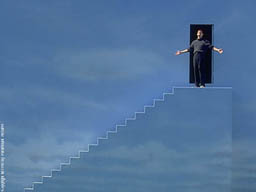
| TRUMAN [to the audience]: In case I don’t see you, good afternoon, good evening, and good night.47 | |||||||||||||||||||||||||||||||||||||||||||||||||||||||||
Click.
The door opens – to the infinite, unimaginable, anguish of absolute
freedom. There is unity – but one must be willing to abandon the
falconer, to step beyond the bounds of the safe to achieve it. Yeats challenged
Lady Gregory to “accept the baptism of the gutter”,48
to go beyond easy Cartesian dualities and embrace mind and heart, objectivity
and subjectivity, beauty and beast: to return to the centre and erase
circumference altogether. Yet how very easy it is to cling to innocence,
to our caterpillar shells, and refuse to emerge … |
|||||||||||||||||||||||||||||||||||||||||||||||||||||||||
| APPENDIX | ||||||||||
© 2003 Kyle Altis |
||||||||||
|
Home |
Crossroads |
|
||||||||